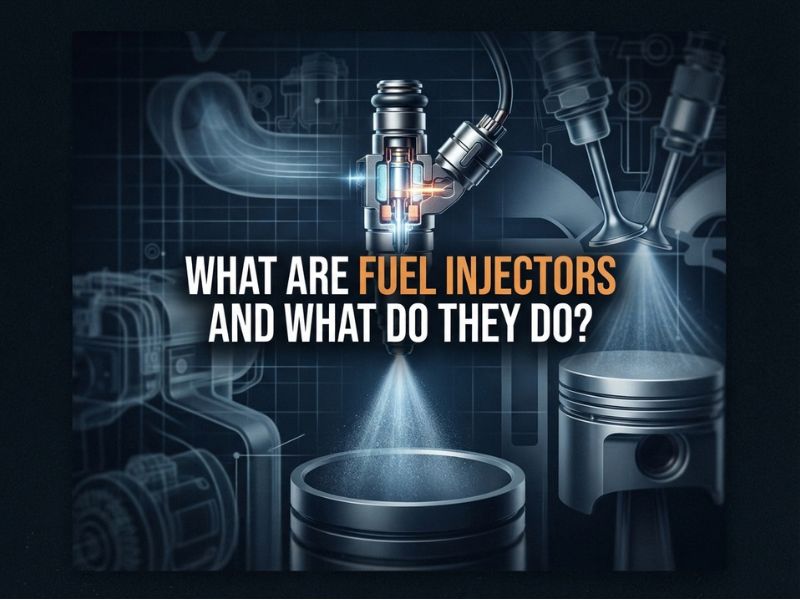
If you are asking, “how do I know if fuel injectors are bad,” start with the engine symptoms rather than replacing parts at once. Fuel injectors control how much fuel enters each cylinder. When one sticks, clogs, leaks, or loses its electrical control, the engine may run poorly.
In practice, the tricky part is that injector symptoms can look like other faults. A bad spark plug, weak ignition coil, vacuum leak, low fuel pressure, or sensor problem can also cause a rough engine. That is why a good diagnosis uses several clues together.
The good news is that you can do some useful checks before paying for a repair. This guide explains the main signs of injector trouble, simple checks you can do at home, professional tests, and the signs that mean you should stop driving the vehicle.

What Does a Fuel Injector Do?
A fuel injector is a small valve that sprays fuel into the engine. The engine computer tells each injector when to open and how long to stay open. This helps the engine get the right amount of fuel for the current driving conditions.
Most modern gasoline engines use one injector for each cylinder. Diesel engines also use injectors, but their design and operating pressure can be very different. The exact test method therefore depends on the engine and fuel system.
A healthy injector should deliver fuel in the amount and pattern the engine needs. If it becomes blocked, sticks open, leaks, or stops receiving the right electrical signal, the fuel mixture can become too lean or too rich.
- ✦ Clogged injector
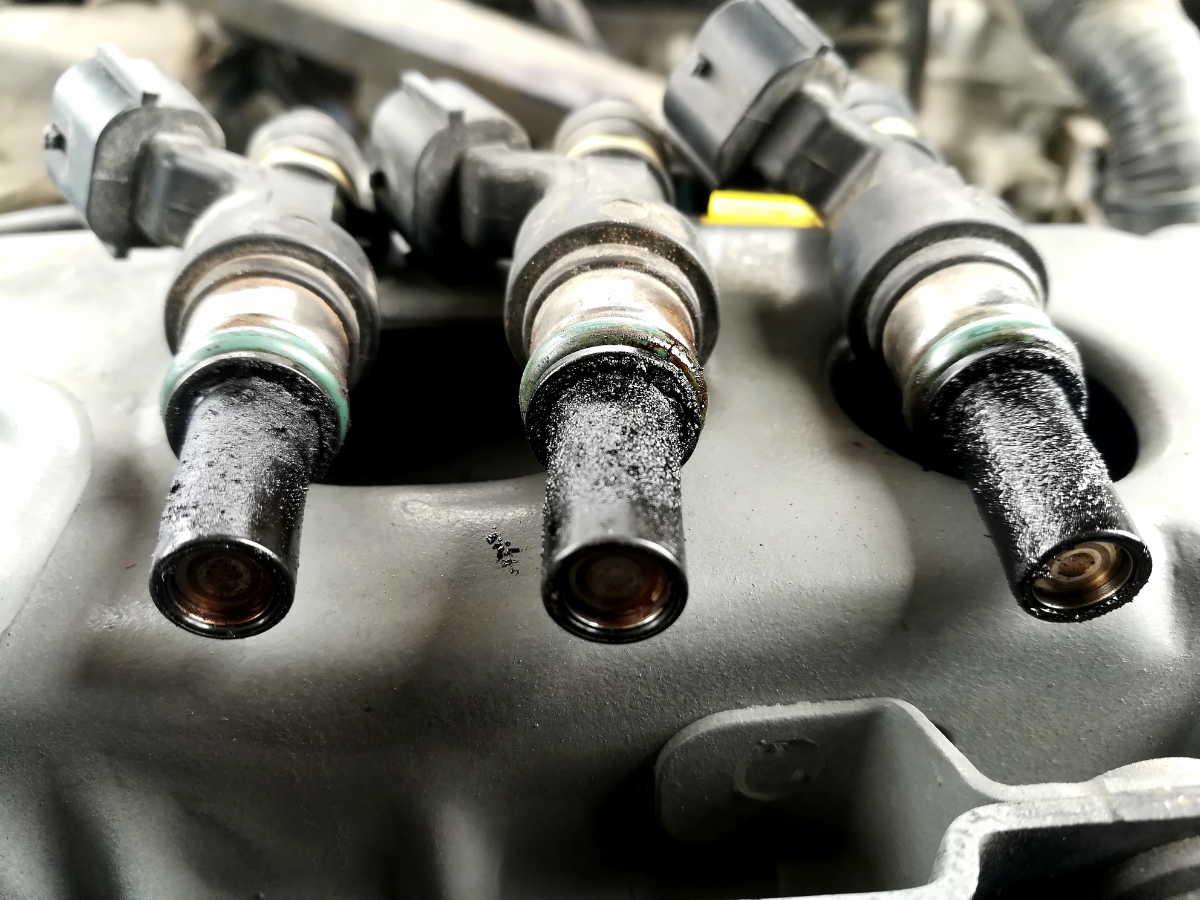
A clogged injector may deliver too little fuel or spray fuel poorly. This can cause a lean condition, hesitation, misfire, or weak acceleration.
- ✦ Leaking injector
An injector that does not seal can allow too much fuel into a cylinder. It may cause a rich condition, fuel odor, hard starting, or other running problems.
- ✦ Electrical failure
An injector needs the correct power and control signal. A failed injector coil, damaged connector, broken wire, or control problem can stop it from working.
- ✦ Sticking injector
An injector can stick open or closed. The result depends on how it fails, but rough running, misfires, poor fuel economy, and hard starting can occur.
10 Common Signs of Bad Fuel Injectors
The answer to “how do I know if fuel injectors are bad” often starts with a group of symptoms. One symptom alone does not prove an injector has failed. Several symptoms that appear together can give you a much stronger clue.
Pay attention to when the problem happens. Note whether it occurs at idle, during acceleration, under load, during cold starts, or all the time. This information can help separate an injector issue from an ignition or air problem.

- ✦ 1. Rough or uneven idle
The engine may shake, stumble, or feel uneven while stopped. A cylinder that receives too little or too much fuel can disturb the engine’s normal idle.
- ✦ 2. Engine misfires
A weak or failed injector can cause a cylinder to misfire. The check engine light may turn on, and the engine may shake or lose power.
- ✦ 3. Poor acceleration
The engine may hesitate when you press the accelerator. A restricted injector may not supply enough fuel when the engine needs more power.
- ✦ 4. Hard starting
A vehicle may take longer to start when an injector does not supply the correct amount of fuel. A leaking injector can also make starting difficult by adding too much fuel.
- ✦ 5. Poor fuel economy
A leaking or stuck-open injector can waste fuel. However, poor mileage can also come from tire pressure, driving habits, thermostat issues, sensors, or other engine faults.
- ✦ 6. Strong fuel smell
A raw fuel smell may indicate a leaking injector or another fuel system leak. Never ignore a strong fuel smell because gasoline vapors can create a fire risk.
- ✦ 7. Check engine light
The computer may detect a cylinder misfire or fuel mixture problem and turn on the check engine light. A scan tool can reveal useful diagnostic codes.
- ✦ 8. Engine hesitation
The engine may pause or stumble when you press the gas. This can happen when fuel delivery does not match the engine’s demand.
- ✦ 9. Reduced engine power
A severely restricted or failed injector can cause noticeable power loss. The problem may become clearer when climbing a hill or accelerating onto a highway.
- ✦ 10. Failed emissions test
A fuel injector problem can disturb the air-fuel mixture and increase emissions. In some cases, this can contribute to an emissions test failure.
Which Symptoms Point Most Strongly to an Injector Problem?
A single symptom is rarely enough to identify a bad injector. A combination of a cylinder-specific misfire, injector-related test result, and abnormal injector operation gives a much stronger case.
For example, if a scan tool shows a misfire on one cylinder and that cylinder has normal compression and a good spark, the injector becomes more suspicious. Swapping components during diagnosis can also help isolate the fault.
- ✦ Cylinder-specific misfire
A repeated misfire on one cylinder can make that cylinder’s injector worth testing, especially after ignition and compression checks.
- ✦ Fuel trim changes
Fuel trim data can show that the engine computer is adding or removing fuel. The pattern can help a technician decide whether to investigate fuel delivery.
- ✦ Injector test failure
A failed electrical, balance, leak, or flow test provides stronger evidence than symptoms alone.
How Do I Know If Fuel Injectors Are Bad Without Removing Them?
If you want to know how do I know if fuel injectors are bad without removing them, start with basic observations and scan data. You can often find useful clues without taking the injectors out of the engine.
Do not treat a quick visual check as a final diagnosis. An injector can look normal from the outside and still have an internal blockage, electrical fault, or leak.

Listen for Injector Operation
A mechanic may use a mechanic’s stethoscope to listen to an injector while the engine runs. A working injector often makes a regular clicking sound as its internal valve opens and closes.
A missing or unusual click can be a clue, but sound alone cannot prove that an injector is delivering the correct amount of fuel. Mechanical noise from the engine can also make this check harder.
- ✦ Normal click
A steady click can show that the injector is receiving some form of control and moving internally.
- ✦ No click
No click can point to an electrical problem, a stuck injector, or a control issue. Further testing is needed.
Check for a Fuel Smell or Visible Leak
Look around the injector area for signs of wet fuel, damaged seals, or a strong fuel odor. Do this only when the engine is cool and keep all flames, sparks, and smoking materials away from the vehicle.
A fuel leak is a safety problem, not just a performance problem. If you see fuel leaking, avoid driving the vehicle until the leak is repaired.
- ✦ Wet fuel
Visible fuel around an injector or fuel rail can indicate a leak. Do not run the engine to investigate an active fuel leak.
- ✦ Fuel odor
A strong raw fuel smell may indicate a leak or a rich-running condition. The whole fuel system should be checked.
Use an OBD-II Scanner
An OBD-II scanner is one of the most useful tools for modern vehicles. It can show trouble codes and, on many vehicles, live data such as engine speed, misfire counts, oxygen sensor readings, and fuel trims.
A code does not always name the failed part. For example, a cylinder misfire code tells you which cylinder has a problem, but the cause could be an injector, spark plug, ignition coil, compression problem, or air leak.
- ✦ Misfire codes
Codes for a specific cylinder can help identify where the problem is occurring.
- ✦ Fuel mixture codes
Lean or rich mixture codes can point toward fuel delivery, air leaks, sensor faults, or other causes.
- ✦ Live data
Fuel trims and misfire counters can provide more information than stored trouble codes alone.
How to Test Fuel Injectors at Home
If you have basic automotive skills, you can perform a few injector checks at home. The safest approach depends on the vehicle, engine, and injector design. Always follow the service information for your specific vehicle before disconnecting fuel system parts.
Fuel is flammable, so work in a well-ventilated area. Keep the vehicle away from flames, heaters, cigarettes, and other ignition sources. Wear eye protection and avoid opening a pressurized fuel system unless you have the correct tools and know the procedure.

Check Injector Resistance
A digital multimeter can measure injector coil resistance on many port fuel injection systems. Disconnect the injector connector and measure across the injector terminals according to the manufacturer’s procedure.
Compare the reading with the specification for your vehicle. The exact resistance varies by injector type, so there is no single value that applies to every car.
- ✦ Compare cylinders
When the manufacturer allows it, comparing injectors can reveal one reading that is very different from the others.
- ✦ Use factory specifications
Do not reject an injector based on a generic resistance number from another vehicle.
- ✦ Resistance is not a complete test
An injector can have acceptable coil resistance and still have a clogged nozzle, poor spray pattern, or mechanical problem.
Check for an Injector Pulse
A noid light can help check whether the engine computer is sending an electrical pulse to an injector connector. This test can help separate an injector problem from a wiring or control problem.
If there is no pulse, replacing the injector may not fix the vehicle. The wiring, connector, fuse, relay, driver circuit, and related controls may need inspection.
- ✦ Pulse present
A pulse shows that the control circuit is operating to some degree, but it does not prove the injector itself is healthy.
- ✦ No pulse
A missing pulse requires electrical diagnosis before an injector is condemned.
Perform an Injector Balance Test
An injector balance test measures how much fuel pressure changes when each injector is commanded to open. A cylinder with a much smaller pressure drop than the others may have a restricted injector.
This is a more useful test than simply listening for an injector click. It can compare injector performance across the engine, although the exact procedure and equipment vary by vehicle.
- ✦ Small pressure drop
A smaller-than-expected pressure drop can suggest that an injector is restricted or not opening correctly.
- ✦ Large pressure drop
An unusually large pressure drop may suggest an injector that flows too much or leaks, depending on the test setup.
How a Mechanic Confirms a Bad Fuel Injector
A professional diagnosis usually starts with the vehicle’s symptoms and trouble codes. The technician then checks ignition, air, fuel pressure, electrical signals, and engine condition before blaming the injector.
This matters because an injector is only one part of a larger system. Replacing an injector without finding the real cause can waste money and leave the original problem in place.
- ✦ Scan the vehicle
The technician checks stored and pending codes, misfire data, fuel trims, and other live data that may point toward the affected cylinder.
- ✦ Check ignition
Spark plugs and ignition coils are checked because ignition faults can produce symptoms that look very similar to injector failure.
- ✦ Check compression
Low compression can cause a cylinder misfire even when the injector works correctly.
- ✦ Check fuel pressure
Low or unstable fuel pressure can affect several injectors at once and can be caused by a pump, filter, regulator, or fuel supply problem.
- ✦ Test injector operation
The technician may check injector resistance, electrical pulse, flow, balance, leak-down behavior, or spray performance.
The Swap Test
On some vehicles, a technician can move a suspected injector to another cylinder and see whether the misfire follows it. If the misfire moves with the injector, that is strong evidence that the injector is involved.
This method is not suitable for every injector system. It can also introduce fuel leaks or other problems if performed without the right tools and procedures.
- ✦ Misfire moves
If the same misfire moves to the cylinder that receives the suspect injector, the injector becomes a strong suspect.
- ✦ Misfire stays
If the misfire stays with the original cylinder, the cause may be ignition, compression, wiring, air leaks, or another cylinder-specific fault.
Bad Fuel Injector vs. Clogged Fuel Injector
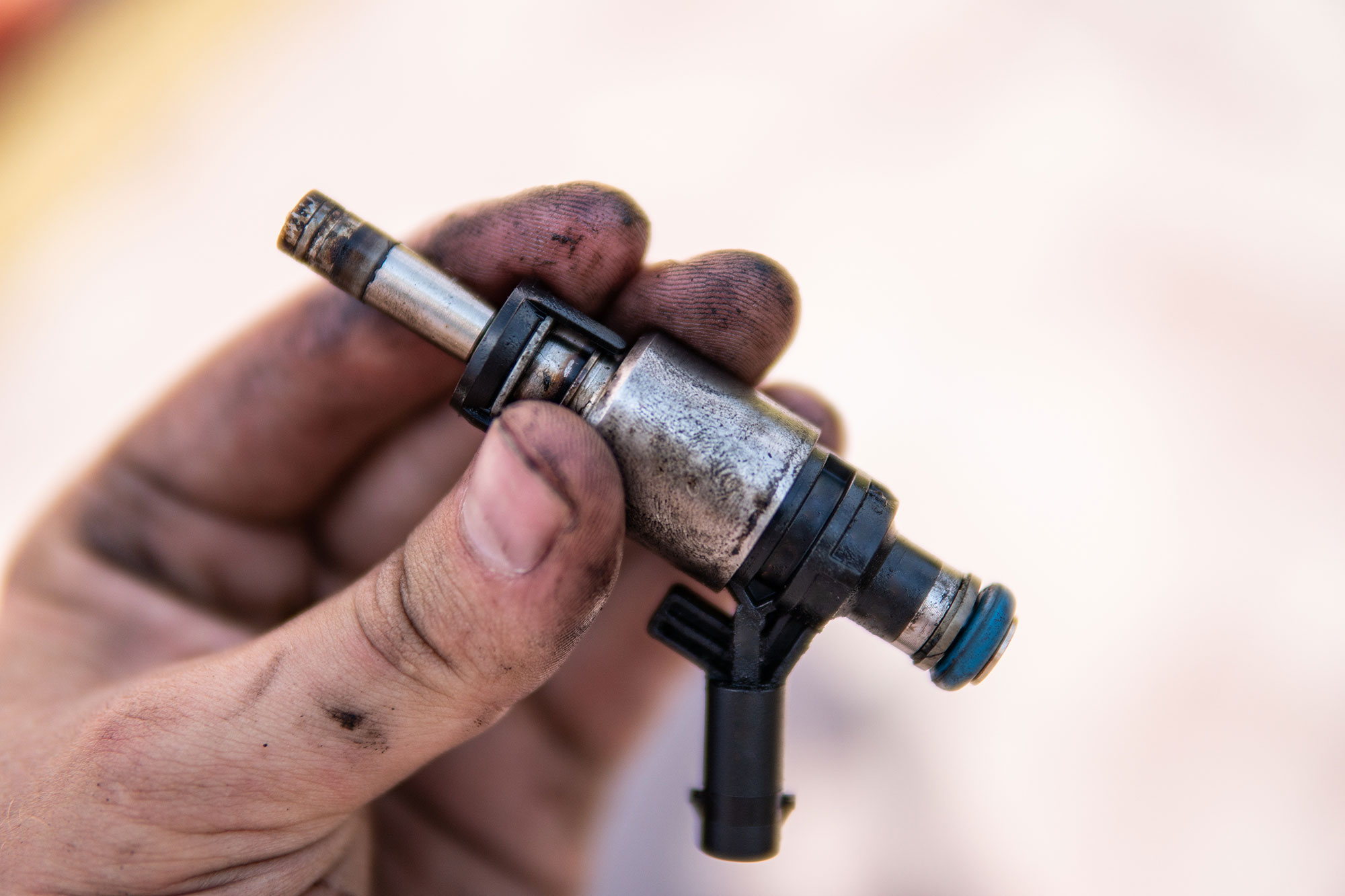
People often use “bad injector” and “clogged injector” as if they mean the same thing. They do not. A clogged injector is one type of injector problem, while a bad injector may have an electrical, mechanical, sealing, or flow problem.
A dirty injector may sometimes respond to proper cleaning. An injector with a failed electrical coil, damaged internal parts, or a serious leak may need replacement instead.

- ✦ Clogged injector
Restricted fuel flow can cause hesitation, lean running, or a cylinder-specific misfire.
- ✦ Stuck-open injector
Too much fuel can enter the cylinder and create a rich condition, fuel smell, poor economy, or difficult starting.
- ✦ Electrical failure
A failed coil or control circuit can stop the injector from operating even if the nozzle is clean.
- ✦ Leaking injector
An injector may leak fuel when it should be closed. This can create both engine and safety concerns.
Can Fuel Injector Cleaner Fix a Bad Injector?
Fuel injector cleaner may help with some deposits or mild restrictions. It cannot repair a broken injector coil, damaged wiring, worn internal parts, or a physical fuel leak.
If the engine has a serious misfire, fuel leak, or repeated injector fault, do not keep adding cleaner and hope the problem disappears. A proper diagnosis is a better next step.
- ✦ Cleaner may help
A suitable cleaner can sometimes reduce deposits in an injector that is only mildly restricted.
- ✦ Cleaner cannot fix electrical faults
No bottle of cleaner can repair a broken injector coil, connector, wire, or computer control circuit.
- ✦ Severe problems need testing
Persistent symptoms should be diagnosed rather than treated repeatedly with fuel additives.
Other Problems That Can Look Like Bad Fuel Injectors
Knowing how do I know if fuel injectors are bad also means knowing what can imitate an injector problem. Many engine faults produce the same basic symptoms: shaking, hesitation, misfires, poor acceleration, and a check engine light.
Before buying injectors, check the common alternatives. A good diagnostic process tests the whole system instead of assuming the most obvious part is at fault.

- ✦ Bad spark plug
A worn or fouled spark plug can cause a cylinder misfire and rough running.
- ✦ Weak ignition coil
A failing coil may cause hesitation and misfires, especially under load.
- ✦ Vacuum leak
Unmetered air can make the mixture too lean and may cause rough idle or lean codes.
- ✦ Low fuel pressure
A weak fuel pump, restricted filter, faulty regulator, or supply problem can reduce fuel delivery to multiple cylinders.
- ✦ Low engine compression
Mechanical engine damage can cause a persistent misfire even when fuel and ignition systems work.
- ✦ Faulty sensor
Problems with sensors that help control fuel mixture can create rich, lean, hesitation, or starting symptoms.
- ✦ Bad injector wiring
A damaged wire or connector can prevent a good injector from receiving the correct electrical signal.
Why Replacing Injectors Without Testing Can Fail
Suppose one cylinder has a misfire code. It is tempting to replace that cylinder’s injector right away. But the real cause could be a spark plug, coil, compression problem, wiring fault, or intake leak.
Testing first helps you spend money on the failed part instead of guessing. This is especially important on vehicles where injector replacement requires significant labor.
- ✦ Follow the evidence
Use codes, live data, electrical checks, and component tests to narrow the fault.
- ✦ Check simple parts first
Ignition and air problems can be easier and cheaper to test than replacing injectors.
Can You Drive With a Bad Fuel Injector?
Driving with a suspected bad fuel injector is not always safe for the engine. A mild injector issue may let the vehicle run, but a severe misfire or leaking injector can create much larger problems.
A flashing check engine light is a serious warning. It can indicate an active misfire that may damage the catalytic converter. If the engine is shaking badly, losing power, or leaking fuel, stop driving and arrange for diagnosis.
- ✦ Strong fuel smell
Stop and inspect the vehicle safely. A fuel leak can create a fire hazard.
- ✦ Flashing check engine light
Avoid continued driving and have the vehicle checked as soon as possible because an active misfire can cause expensive exhaust damage.
- ✦ Severe shaking
A severe misfire means the engine is not running normally. Continued driving can make the problem worse.
- ✦ Major power loss
If the vehicle cannot safely keep up with traffic, do not continue driving it.
When Should Fuel Injectors Be Replaced?
An injector should be replaced when testing shows that it has failed or cannot deliver fuel within the required range. Symptoms alone are not always enough to justify replacement.
If one injector fails, the other injectors do not automatically need replacement. However, a technician may recommend servicing several injectors when they show similar wear, contamination, or poor flow.

- ✦ Replace a failed injector
Replacement is usually the correct fix for an injector with a failed coil, internal damage, severe leakage, or an unacceptable flow problem.
- ✦ Consider professional cleaning
Cleaning may be useful when testing shows deposits or restricted flow and the injector itself remains serviceable.
- ✦ Inspect seals
Injector O-rings and seals should be inspected and replaced when required during injector removal.
- ✦ Check the cause
If contamination caused the failure, inspect the fuel system so the replacement injector does not face the same problem.
What Affects Fuel Injector Replacement Cost?
The cost varies widely by vehicle. Injector price, labor time, engine layout, injector type, and whether other parts need replacement all affect the final bill.
Some engines make injector access easy. Others require removal of intake parts or other components. Diesel injectors can also have different service needs and much higher parts and labor costs than many gasoline systems.
- ✦ Vehicle model
Parts and labor rates vary by make, model, engine, and location.
- ✦ Injector type
Direct-injection and diesel injectors can use more complex designs and higher operating pressures.
- ✦ Labor access
An injector that is difficult to reach can take much longer to replace.
- ✦ Related repairs
Seals, fuel rail parts, wiring, or fuel system contamination may add to the repair.
A Simple Diagnostic Checklist for Bad Fuel Injectors
If you are still asking how do I know if fuel injectors are bad, use a step-by-step process. Start with symptoms, then check codes and basic engine systems before testing the injector itself.
This approach can prevent unnecessary parts replacement. It also gives you useful information to share with a mechanic if you decide to have the vehicle professionally diagnosed.
- ✦ Step 1: Note the symptoms
Write down when the engine runs poorly. Include cold starts, idle, acceleration, highway driving, and heavy loads.
- ✦ Step 2: Scan for codes
Use an OBD-II scanner to check for misfire, fuel mixture, and other related codes.
- ✦ Step 3: Identify the affected cylinder
If the scan shows a cylinder-specific misfire, focus diagnosis on that cylinder.
- ✦ Step 4: Check ignition
Inspect or test the spark plug and ignition coil before blaming the injector.
- ✦ Step 5: Check air and compression
Look for intake leaks and test compression when the symptoms point toward a mechanical issue.
- ✦ Step 6: Check fuel pressure
Confirm that the fuel system supplies the pressure the engine requires.
- ✦ Step 7: Test the injector
Use resistance, pulse, balance, flow, or leak testing as appropriate for the vehicle.
- ✦ Step 8: Repair the confirmed fault
Clean or replace the injector only when testing supports that repair.
- ✦ Step 9: Clear and retest
After repair, verify that the engine runs correctly and that the fault does not return.