If you are replacing a fuel injector, it is easy to wonder whether new O rings are already in the box. The answer is not always the same. Some replacement injectors include every seal you need, while others include the injector alone.
The safest step is to check the exact injector listing, package contents, or manufacturer instructions before starting the job. If the injector does not include new seals, buy the correct O ring kit before removing the old injector.
Fuel injector O rings may look like simple rubber rings, but they have an important job. They seal the injector where it meets the fuel rail and intake area. A poor seal can lead to fuel leakage, an air leak, hard starting, rough running, or a fuel smell.
For a typical U.S. vehicle, the right replacement part depends on the engine, injector design, fuel pressure, and location of each seal. Never assume that a similar-looking O ring will work just because it fits over the injector.

Do Fuel Injectors Come With O Rings?
So, do fuel injectors come with O rings? Often, yes. Many new replacement injectors are sold with the O rings already fitted or included in the package. This makes installation easier and helps ensure that the injector has the correct seal.
However, you cannot treat this as a universal rule. Injector packages vary by manufacturer and application. Some listings include upper and lower seals, while others include only the injector itself.
The same issue can occur with remanufactured injectors. A remanufactured unit may come with new seals, but the package contents can vary. Always confirm what is included before ordering.
If you are buying a complete injector set, the kit may include several injectors plus O rings, clips, filters, and other small parts. A single replacement injector may have a different package from a full set.
- ✦ New aftermarket injector
It often includes new O rings, but the package can vary by brand and application.
- ✦ Original equipment injector
Some OEM injectors include seals, while others are sold with seals as separate service parts.
- ✦ Remanufactured injector
A remanufactured injector may include new seals, but you should verify the package contents.
- ✦ Injector set
A complete set may include O rings for every injector along with other installation parts.
Why Package Contents Vary
Injector manufacturers do not all package their parts in the same way. One company may supply a ready-to-install injector with seals, while another may expect the buyer to reuse or purchase the correct seals separately.
The injector design also matters. Some injectors use one O ring, while others use two or more sealing points. Direct-injection systems can use different seals and installation methods than many port fuel injection systems.
- ✦ Brand
Different brands use different packaging and service-part policies.
- ✦ Vehicle application
The correct seals depend on the engine and injector design.
- ✦ Injector design
Some injectors need more than one seal or use a special seal instead of a common O ring.
What Do Fuel Injector O Rings Do?
A fuel injector O ring creates a tight seal between the injector and the part that holds it. On many port fuel injection systems, one seal sits near the fuel rail and another may seal the injector where it enters the intake manifold.
The seal keeps fuel where it belongs. It also helps prevent outside air from entering the intake system around the injector. Even a small sealing problem can affect engine operation.
O rings must handle fuel, heat, pressure, and engine vibration. That is why the material and size matter. A general-purpose rubber ring is not automatically safe for use with gasoline or modern fuel systems.
When an injector is removed, the old O ring can stretch, flatten, harden, or tear. That is why installing fresh seals is often a sensible part of injector service.

- ✦ Fuel sealing
The O ring helps prevent fuel from escaping around the injector.
- ✦ Air sealing
The seal helps keep unwanted air from entering around the injector mounting point.
- ✦ Vibration control
A properly fitted seal helps maintain contact as the engine vibrates.
- ✦ Heat resistance
The correct material must withstand the heat found around the engine and fuel system.
Upper and Lower Injector O Rings
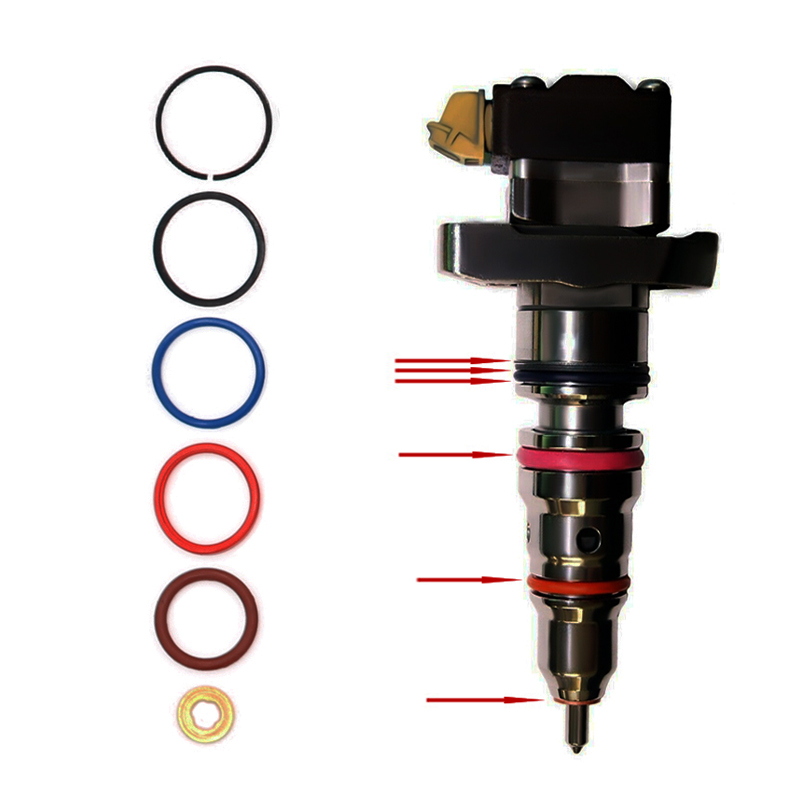
Many port fuel injectors use an upper O ring and a lower O ring. The upper seal usually sits where the injector meets the fuel rail. The lower seal commonly sits where the injector enters the intake manifold.
Not every injector uses the same arrangement. Some designs use different seals, spacers, clips, or special sealing systems. Check the service information for your exact engine before ordering replacement parts.
- ✦ Upper O ring
This seal commonly sits between the injector and fuel rail.
- ✦ Lower O ring
This seal commonly sits between the injector and intake manifold or injector seat.
How to Tell if New Fuel Injectors Include O Rings
The easiest way to know whether fuel injectors come with O rings is to check the exact product description. Look for terms such as O ring included, seals included, complete with seals, or ready to install.
Do not rely only on the product photo. A picture may show an injector with O rings fitted even when the actual package does not include them. The written package contents are more useful.
If the listing does not say what is included, contact the seller or manufacturer. This small check can prevent a delay after you have already removed the injectors from the engine.
When buying an OEM part, the manufacturer’s parts catalog can also show whether the injector and seals have separate part numbers. This is useful because the seal may be sold as a separate service item even when it is shown near the injector in a diagram.

- ✦ Read the package contents
Look for a clear statement that O rings or injector seals are included.
- ✦ Check the part number
Use the exact injector part number to confirm the correct seal arrangement.
- ✦ Do not trust the photo alone
Product images may show an installed O ring without confirming that it is included.
- ✦ Ask before ordering
If the listing is unclear, ask the seller whether all required injector seals are included.
What to Look for in a Product Listing
A good product listing should identify the vehicle application and describe what comes in the box. If it only says fuel injector and gives no information about seals, do not assume that O rings are included.
A complete listing may state that upper and lower O rings are supplied. It may also list injector filters, clips, or other parts. These details can help you compare two otherwise similar injectors.
- ✦ Included seals
Look for clear wording that identifies the O rings or seals as included.
- ✦ Application data
Make sure the injector matches your engine and fuel system.
Should You Replace Fuel Injector O Rings When Replacing Injectors?
In most cases, installing new O rings with replacement injectors is the safer approach. New seals cost far less than the labor and trouble caused by removing the injectors again because an old seal leaks.
Old O rings can look fine at first glance but still lose their flexibility. Heat and fuel exposure can make the rubber harder over time. Once an injector is removed, the seal may not return to its original shape.
If your new injectors already include the correct seals, use those seals unless the manufacturer gives different instructions. If the injectors do not include them, buy a seal kit made for the exact application.
Do not mix random O rings from a hardware store with fuel system parts. The ring needs the right size, material, and fuel resistance. A ring that fits loosely or stretches too much can fail.

- ✦ Replace old seals
Fresh seals reduce the chance of leaks after injector replacement.
- ✦ Use the correct material
Choose seals designed for automotive fuel system use.
- ✦ Match the exact size
A seal can look similar but still be the wrong size for the injector.
- ✦ Inspect the injector seat
Clean dirt and debris from the sealing area before installing the injector.
Can You Reuse Fuel Injector O Rings?
It is generally better not to reuse an O ring after removing an injector. The seal may have been compressed in its original position for years, and removal can stretch or damage it.
If a manufacturer specifically allows reuse under a certain service procedure, follow that instruction. Otherwise, a new seal is a simple way to reduce the risk of a fuel or vacuum leak.
- ✦ Hard or brittle
Replace an O ring if it no longer feels flexible.
- ✦ Cracked or cut
Any visible damage means the seal should not be reused.
- ✦ Flattened
A flattened ring may not seal correctly after installation.
How to Replace Fuel Injector O Rings Safely
Replacing an injector O ring is not hard on many port-injection engines, but fuel system work needs care. Gasoline is highly flammable, so work in a well-ventilated area and keep sparks, flames, cigarettes, and other ignition sources away.
Before removing an injector, follow the vehicle service procedure for releasing fuel pressure. Disconnect the battery if the service information calls for it, and protect the work area from fuel spills.
Remove the old O ring without scratching the injector body. A damaged sealing surface can create a leak even when you install a new ring.
Before installing the new seal, compare it with the old part and confirm the size and shape. Apply a small amount of clean engine oil or another lubricant approved by the injector manufacturer if the service instructions allow it. Avoid installing a dry O ring when the manufacturer calls for lubrication.
- ✦ 1. Relieve fuel pressure
Follow the vehicle service manual before disconnecting fuel system parts.
- ✦ 2. Remove the old seal
Take care not to scratch or cut the injector sealing surface.
- ✦ 3. Inspect the injector
Check the injector body and sealing grooves for damage or debris.
- ✦ 4. Install the new O ring
Fit the correct seal into its groove without twisting or stretching it excessively.
- ✦ 5. Lubricate as directed
Use the lubricant specified or approved for the application.
- ✦ 6. Install the injector
Press the injector into place with even force and avoid cutting the O ring.
- ✦ 7. Check for leaks
After reassembly, follow the correct procedure to pressurize the system and inspect for fuel leaks before driving.
Why Lubrication Matters
A dry O ring can drag against the injector bore during installation. That friction can roll, pinch, or cut the seal. A suitable lubricant helps the ring slide into position without damage.
The lubricant must be compatible with the seal and fuel system. Follow the injector or vehicle manufacturer’s instructions rather than using a random grease.
- ✦ Prevent twisting
Proper lubrication helps the O ring move into place without rolling.
- ✦ Reduce installation damage
A suitable lubricant lowers friction during insertion.
What Happens if a Fuel Injector O Ring Leaks?
A leaking injector O ring can cause different symptoms based on where the seal fails. A leak on the fuel side can allow gasoline to escape. A leak on the intake side can allow unwanted air to enter the engine.
A fuel leak deserves immediate attention. Gasoline near a hot engine or ignition source creates a serious fire risk. If you smell raw fuel or see wet fuel around an injector, stop and inspect the problem before normal driving.
An intake-side seal leak may cause rough idle, unstable engine speed, or a lean mixture. The symptoms can look like other engine problems, so a proper diagnosis is important.
Do not assume that every rough idle or fuel smell means a bad O ring. A faulty injector, cracked fuel rail, damaged hose, loose connection, or another fuel system problem can create similar symptoms.
- ✦ Fuel smell
A strong gasoline smell around the injector area can indicate a fuel leak or another fuel system issue.
- ✦ Visible fuel
Wetness around an injector should be treated as a potential fuel leak.
- ✦ Rough idle
An intake-side leak can affect the air-fuel mixture and may contribute to rough running.
- ✦ Hard starting
A fuel system sealing problem can contribute to starting problems, depending on the vehicle and leak location.
Do Bad Injector O Rings Cause a Vacuum Leak?
They can. On engines where the injector O ring seals the injector to the intake manifold, a damaged lower seal may allow unmetered air into the intake. This can create a vacuum or intake leak.
The engine may then show a lean condition or unstable idle. A smoke test, fuel-trim data, visual inspection, or other diagnostic method can help confirm an intake leak.
- ✦ Lean condition
Extra air can change the air-fuel mixture and may result in lean fuel-trim readings.
- ✦ Unstable idle
An intake leak near an injector can be more noticeable at idle.
How to Choose the Correct Fuel Injector O Rings
Choosing an injector O ring is more than finding one with the same outside diameter. You also need the correct inside diameter, cross-section, material, and fit. The seal must work with the fuel used by the vehicle and the temperatures found around the engine.
Many modern gasoline fuel systems use materials such as fluorocarbon rubber, often called Viton, because of their resistance to fuel and heat. However, the correct material still depends on the application. Diesel systems and special fuel systems may require different materials.
The best source is the injector or vehicle manufacturer’s specified seal. An injector seal kit made for the exact application is usually safer than trying to identify a generic O ring by appearance.
If you are unsure, compare the part number and application data. A professional parts supplier can also help identify the correct seal when given the vehicle year, make, model, engine, and injector part number.

- ✦ Inside diameter
The ring must fit the injector groove and sealing surface correctly.
- ✦ Outside diameter
The outer size must match the bore or mating component.
- ✦ Cross-section
The thickness of the O ring affects how well it seals.
- ✦ Material
The material must resist the fuel, heat, and conditions found in the application.
- ✦ Part number
A vehicle-specific or injector-specific part number provides a stronger match than appearance alone.
Why a Generic O Ring May Not Work
Two O rings can look almost identical but behave very differently in a fuel system. The wrong material may swell, soften, harden, or break down when exposed to fuel or heat.
Size also matters. An O ring that is too small may not seal. One that is too large may pinch during installation or prevent the injector from seating correctly.
- ✦ Fuel compatibility
The seal material must be designed for the fuel used by the vehicle.
- ✦ Correct fit
The seal must sit correctly in its groove without excessive stretch or looseness.
Fuel Injector O Ring Installation Mistakes to Avoid
Many injector seal problems happen during installation rather than because the new O ring was defective. The ring can become twisted, pinched, cut, or pushed out of its groove when the injector is installed.
Another common mistake is using the wrong lubricant. Some greases or chemicals can damage certain rubber compounds. Use only a lubricant that the manufacturer or service information approves.
Do not force an injector into place with excessive pressure. If it does not seat normally, stop and find the cause. Dirt, a wrong seal, a damaged groove, or a misaligned injector may be blocking installation.
After the repair, inspect the injector area carefully when the fuel system is pressurized. A leak that appears immediately is easier to fix before the vehicle is driven.

- ✦ Installing a dry O ring
Dry installation can increase friction and may damage or roll the seal.
- ✦ Twisting the seal
A twisted O ring may not sit evenly and can leak.
- ✦ Using the wrong size
Even a small size difference can cause poor sealing or installation damage.
- ✦ Using unsuitable grease
A lubricant that is not compatible with the seal can cause material damage.
- ✦ Skipping the leak check
Always inspect the fuel system after reassembly before returning the vehicle to normal use.
Do Not Force the Injector Into the Rail
A properly matched injector and seal should fit with controlled pressure. If the injector feels unusually tight, check the O ring position and confirm that the seal is the correct size.
Forcing the injector can cut the O ring against the edge of the fuel rail or intake opening. The damage may not be visible until fuel pressure is restored.
- ✦ Stop if resistance is unusual
Inspect the seal and bore instead of applying more force.
- ✦ Check alignment
Keep the injector straight as it enters the sealing bore.
Do Fuel Injectors Come With O Rings for Every Type of Injector?
The answer can change with the fuel injection system. Port fuel injectors often have external O rings that seal the injector to the fuel rail and intake manifold. Direct-injection injectors use a different sealing arrangement and may require specialized seals and installation procedures.
Diesel common-rail injectors can also use different sealing systems from gasoline port injectors. Some diesel injector designs have copper sealing washers or other components rather than the same type of external O ring arrangement.
This is why a search for whether fuel injectors come with O rings should always include the exact engine and injector application. The phrase fuel injector covers many different designs.
If you are working on a direct-injection or diesel system, use the manufacturer’s service procedure. Do not assume that a standard gasoline injector O ring kit is suitable.

- ✦ Port fuel injection
Many port injectors use external O rings at one or more sealing points.
- ✦ Gasoline direct injection
Direct-injection systems can use different seals and often require specific installation procedures.
- ✦ Diesel injection
Diesel injectors can use different sealing systems, including designs that do not rely on the same external O rings.
Why Direct Injection Needs Extra Care
Direct-injection injectors operate in a different environment from many port injectors. The injector may seal directly into the cylinder head and operate under much higher fuel pressure.
Because of this, the correct seal and installation method are especially important. Follow the exact service instructions for the engine rather than adapting a procedure meant for a port fuel injector.
- ✦ Different seal design
The injector may use a specialized sealing component rather than a common external O ring.
- ✦ Higher system demands
Fuel pressure and installation requirements can be much different from port injection.
What Should Be in a Fuel Injector Replacement Kit?
A fuel injector replacement kit can contain more than the injector itself. Depending on the application, a kit may include O rings, filters, clips, spacers, seals, or other small parts needed for installation.
Do not assume every kit has the same contents. Read the package description and compare the included parts with the parts removed from your vehicle.
For a multi-injector repair, replacing all required seals at the same time can help keep the fuel system consistent. It also avoids mixing old seals with new injectors.
If you buy injectors without seals, order the correct injector seal kit before starting the job. This is especially useful when the vehicle is your daily driver and you need the repair finished in one session.
- ✦ Fuel injectors
The main injector units that meter fuel into the engine.
- ✦ O rings
Seals that help prevent fuel and air leaks around the injector.
- ✦ Injector filters
Some kits include small filters that fit inside the injector fuel inlet.
- ✦ Retaining clips
Some injector designs use clips to hold the injector in position.
Check the Kit Before Removing the Old Injectors
A simple pre-installation check can save a lot of time. Open the package and confirm that the injectors, O rings, clips, and other required pieces are present before taking the old parts out.
Compare the new injector with the old one. Check the electrical connector, nozzle shape, overall length, sealing grooves, and other key features. If something does not match, resolve the issue before installation.
- ✦ Count the seals
Make sure you have the required number of O rings for the repair.
- ✦ Compare the injectors
Check the new units against the old ones before installation.