If you are asking how can you tell if your fuel injectors are clogged, start with the way the engine runs. Fuel injectors must deliver the right amount of fuel in a fine spray. When dirt or deposits restrict that spray, one or more cylinders may get too little fuel.
The hard part is that a clogged injector does not always cause one clear warning. The same symptoms can come from ignition faults, low fuel pressure, air leaks, or sensor problems. A good diagnosis looks at the whole fuel and ignition system instead of replacing injectors based on one symptom.
For most drivers in the United States, the first clues show up during normal driving. You may notice a rough idle at a stoplight, a stumble when pulling onto a highway, or a drop in miles per gallon. These signs are useful, but a test can tell you whether the injector is really at fault.

What Does a Clogged Fuel Injector Do?
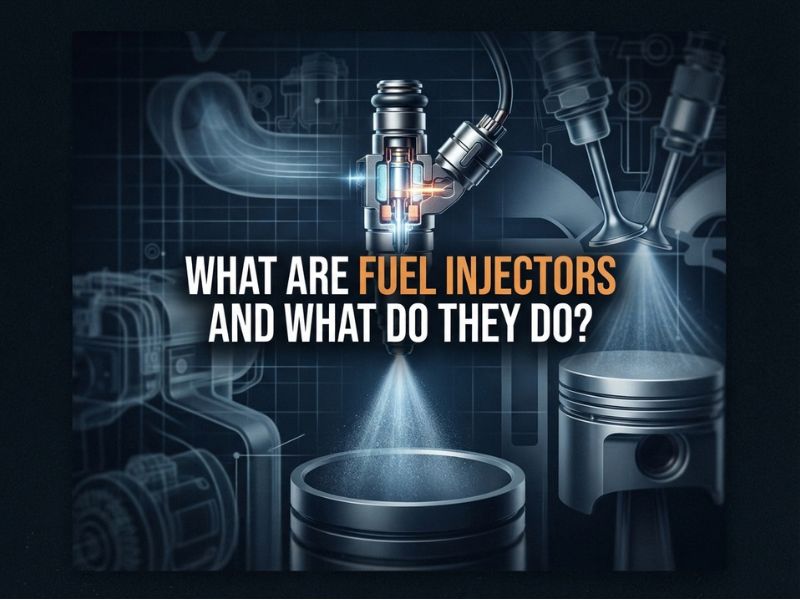
A fuel injector is a small valve that sprays fuel into the engine. The engine computer controls when it opens and how long it stays open. This lets the engine get the fuel it needs for starting, idling, cruising, and hard acceleration.
A clogged injector cannot always deliver fuel at the needed rate. Deposits can also change the spray pattern. Instead of a fine and even mist, the injector may produce a weak, uneven, or poor spray.
This explains why asking how can you tell if your fuel injectors are clogged often starts with engine behavior. One weak injector can make one cylinder run lean. Several restricted injectors can make the whole engine feel weak.
The problem can be mild at first. The car may still start and drive. Under heavier load, though, the lack of fuel can become much easier to notice.

- ✦ Restricted fuel flow
Deposits can reduce the amount of fuel that passes through the injector during each pulse.
- ✦ Poor spray pattern
An injector may spray unevenly instead of producing the pattern the engine needs.
- ✦ Lean cylinder
Too little fuel in one cylinder can lead to rough running, hesitation, and misfires.
- ✦ Uneven engine operation
If one cylinder receives less fuel than the others, the engine may shake or lose power.
Why Injector Deposits Build Up
Fuel contains additives that help keep injectors clean, but deposits can still form over time. Heat, fuel residue, contamination, and long periods of vehicle storage can contribute to deposits. Poor fuel quality or a dirty fuel system can also increase the risk.
Modern injectors have small openings. Even a small amount of buildup can affect fuel flow or spray quality. That does not mean every injector with deposits is badly clogged, but it can affect engine performance.
- ✦ Fuel contamination
Dirt or debris in the fuel can reach the injector and restrict its small openings.
- ✦ Heat soak
High engine temperatures can contribute to fuel residue and deposits around injector parts.
- ✦ Long storage
A vehicle that sits for a long time can develop fuel system deposits and stale fuel problems.
10 Signs Your Fuel Injectors May Be Clogged
The most useful answer to how can you tell if your fuel injectors are clogged is to watch for several symptoms at the same time. One symptom alone does not prove an injector is blocked. Two or more related symptoms make the fuel system worth checking.
The symptoms below can also occur with other engine faults. Use them as clues, not as a final diagnosis.

- ✦ 1. Rough idle
The engine may shake, vibrate, or feel uneven while the vehicle is stopped. This can happen when one cylinder does not get enough fuel.
- ✦ 2. Engine misfire
A restricted injector can create a lean mixture and cause a cylinder to misfire. A scan tool may show a cylinder-specific misfire code.
- ✦ 3. Poor acceleration
The engine may hesitate or feel weak when you press the gas. The issue can become more obvious when climbing a hill or joining highway traffic.
- ✦ 4. Hard starting
A restricted injector may make it harder for the engine to get the correct fuel mixture during startup.
- ✦ 5. Poor fuel economy
Fuel economy can change when an injector problem affects combustion. However, poor mileage can also come from tire pressure, driving habits, sensors, or other engine faults.
- ✦ 6. Engine hesitation
The car may stumble for a moment when you press the accelerator. This can be more noticeable from a stop or during quick acceleration.
- ✦ 7. Check engine light
A clogged injector can contribute to lean mixture or misfire codes. The light alone does not identify a clogged injector.
- ✦ 8. Reduced engine power
A badly restricted injector can limit fuel delivery and make the engine feel weak, especially under load.
- ✦ 9. Uneven engine sound
A cylinder that is not getting the right fuel supply can change the normal sound of the engine.
- ✦ 10. Failed emissions test
Poor combustion from an injector problem can increase emissions. Other fuel, ignition, and exhaust faults can cause the same result.
Which Symptoms Matter Most?
A combination of rough idle, hesitation, and a cylinder-specific misfire is more useful than poor fuel economy alone. These symptoms can point toward a fuel delivery problem when other causes have been ruled out.
Pay close attention to when the problem happens. If the engine runs well at light throttle but struggles under load, fuel delivery deserves a close look. If the problem stays on one cylinder, that can also help narrow the diagnosis.
- ✦ Notice the timing
Write down whether the problem happens during startup, idle, acceleration, cruising, or heavy engine load.
- ✦ Watch the pattern
A problem that follows one cylinder is more useful diagnostically than a symptom that affects the whole vehicle.
- ✦ Check related faults
Look for ignition, air intake, fuel pressure, and sensor problems before blaming the injector.
How Can You Tell If Your Fuel Injectors Are Clogged Without Removing Them?
If you want to know how can you tell if your fuel injectors are clogged without removing them, start with basic checks. You can listen for injector operation, scan the engine computer, inspect fuel trims, and check fuel pressure when the correct equipment is available.
These checks can provide strong clues without taking the injectors out. They do not always prove that an injector is clogged, because several engine problems can create similar readings.
A scan tool is especially useful on modern vehicles. Look at stored codes, pending codes, misfire counts, short-term fuel trim, and long-term fuel trim. Fuel trim numbers can help show whether the engine computer is adding or removing fuel, but they need to be read in context.

- ✦ Use an OBD-II scanner
Check for misfire and fuel mixture codes. A code such as P0302 points to a misfire on cylinder 2, but it does not prove that the injector is clogged.
- ✦ Check fuel trims
High positive fuel trims can indicate that the engine computer is adding fuel to correct a lean condition. Vacuum leaks and low fuel pressure can cause similar readings.
- ✦ Listen for injector operation
A mechanic can use a suitable listening tool to check whether an injector makes a consistent clicking sound. A click does not prove proper fuel flow.
- ✦ Check fuel pressure
Fuel pressure that is too low can cause poor engine performance. Always compare the reading with the vehicle maker’s specification.
- ✦ Compare cylinder behavior
A technician can compare injector performance and cylinder response to find an injector that behaves differently from the others.
Can You Hear a Clogged Injector?
You may hear a normal injector click while the engine runs, but sound alone cannot tell you if the injector flows enough fuel. An injector can click and still have a restricted nozzle, poor spray pattern, or internal fault.
For this reason, listening is best used as an early check. A flow or balance test gives much stronger evidence.
- ✦ Normal click
A regular clicking sound suggests that the injector is being actuated, but it does not confirm correct fuel delivery.
- ✦ No click
No injector sound may point to an electrical, wiring, driver, or injector problem and needs further testing.
How a Mechanic Tests for a Clogged Fuel Injector
When symptoms do not give a clear answer, a proper injector test is the next step. The goal is to see whether each injector receives the correct electrical command and delivers fuel in a similar way.
A professional may start with a scan tool and then perform electrical tests, fuel pressure tests, or an injector balance test. The exact process depends on the vehicle and engine design.
An injector balance test can be very useful because it compares the pressure drop caused by each injector. If one injector creates a much smaller pressure drop than the others, restricted flow may be the cause.
Some shops also remove the injectors and test them on dedicated equipment. This can measure flow rate and spray pattern and can help separate a dirty injector from one with an internal mechanical fault.

- ✦ Electrical test
A technician can check injector resistance and the electrical signal when the vehicle maker’s service procedure calls for it.
- ✦ Fuel pressure test
This checks whether the fuel system has the pressure needed for proper injector operation.
- ✦ Injector balance test
This compares the pressure change caused by each injector and can reveal a restricted or abnormal injector.
- ✦ Injector flow test
A bench test can measure how much fuel an injector delivers and can reveal differences between injectors.
- ✦ Spray pattern test
The spray can be inspected on suitable test equipment to identify poor atomization or an uneven pattern.
Why One Test Is Not Always Enough
Fuel injectors work as part of a larger system. A weak fuel pump, blocked fuel filter, bad wiring, low voltage, or air leak can produce symptoms that look like injector trouble.
This is why a good diagnosis compares several pieces of evidence. The strongest result comes when the symptom, scan data, and physical test all point in the same direction.
- ✦ Compare all cylinders
One injector that performs differently from the others deserves closer inspection.
- ✦ Check the full fuel system
Do not overlook the pump, filter, pressure regulator, fuel lines, and electrical supply.
- ✦ Confirm the engine condition
Compression, ignition, and air leaks can also cause a cylinder to run poorly.
Clogged Fuel Injector vs. Other Common Problems
One of the most important parts of learning how can you tell if your fuel injectors are clogged is knowing what else can cause the same symptoms. Replacing an injector without testing can waste money and leave the real problem untouched.
A rough idle, for example, can come from a bad spark plug, ignition coil, vacuum leak, dirty throttle body, low compression, or fuel problem. A scan code can narrow the search, but the code does not always name the failed part.
The same rule applies to poor acceleration. A restricted injector is one possibility, but low fuel pressure, a weak ignition system, a clogged air filter, a sensor fault, or a transmission issue can also change how the car feels.

- ✦ Bad spark plug
A worn or damaged plug can cause a misfire that feels much like an injector problem.
- ✦ Weak ignition coil
A failing coil can cause hesitation, rough running, and a cylinder-specific misfire.
- ✦ Vacuum leak
Unmetered air can create a lean condition and raise fuel trims, especially at idle.
- ✦ Low fuel pressure
A weak pump, restricted filter, or other fuel system fault can reduce fuel delivery to multiple injectors.
- ✦ Low compression
A mechanical engine problem can cause a misfire even when the injector and ignition system work correctly.
- ✦ Faulty sensor
Problems with sensors that affect engine fueling can cause poor mixture control and symptoms that resemble injector trouble.
A Simple Diagnostic Approach
Start with the easiest checks. Scan for codes, inspect the engine bay, check for obvious intake leaks, and look at maintenance items such as spark plugs. Then move toward fuel pressure and injector testing if the evidence points to fuel delivery.
This approach saves time because it prevents you from treating every misfire as a clogged injector. The goal is not just to find a part that looks suspicious. The goal is to prove which part is causing the symptom.
- ✦ Step 1
Record the exact symptoms and when they occur.
- ✦ Step 2
Scan the vehicle for current, pending, and stored fault codes.
- ✦ Step 3
Inspect ignition, intake, and fuel system basics.
- ✦ Step 4
Test fuel pressure and injector operation when needed.
- ✦ Step 5
Confirm the suspected fault before buying replacement parts.
How to Clean Clogged Fuel Injectors
If testing shows that an injector has deposits but is still mechanically sound, cleaning may help. The right cleaning method depends on the vehicle, injector design, and level of contamination.
A quality fuel system cleaner added to the tank is the simplest option. It may help with light deposits, but it cannot repair an injector with an electrical fault, damaged internal parts, or severe blockage.
Professional cleaning is more controlled. A shop can remove the injectors, clean them on dedicated equipment, and test their flow and spray pattern before and after cleaning. This gives you evidence that the cleaning actually changed injector performance.
Do not assume that more cleaner is better. Follow the product label and the vehicle maker’s guidance. Using the wrong chemical or an excessive amount can create other problems.

- ✦ Fuel tank cleaner
A suitable injector cleaner can be useful for light deposits and routine fuel system care.
- ✦ Pressurized cleaning
A professional can use specialized equipment to clean the injectors while controlling the cleaning process.
- ✦ Bench cleaning
Removed injectors can be cleaned and tested for flow and spray pattern on dedicated equipment.
- ✦ Replacement
An injector with internal damage, an electrical fault, or severe wear may need replacement instead of cleaning.
Can Fuel Injector Cleaner Fix a Clogged Injector?
It can help when deposits are the cause and the blockage is mild. It cannot fix every injector problem, so expectations should stay realistic.
If the engine has a serious misfire or the injector fails a flow test, do not keep adding cleaner and hope the problem disappears. A proper test can tell you whether cleaning is worth trying.
- ✦ May help
Light deposits and minor flow restrictions may improve after suitable cleaning.
- ✦ May not help
Electrical faults, damaged coils, broken internal parts, or severe mechanical wear require a different repair.
When Should You Replace a Clogged Fuel Injector?
Not every dirty injector needs replacement. If professional testing shows that cleaning restores proper flow and spray, cleaning may be enough. Replacement becomes more likely when the injector remains outside the required range after cleaning or has an internal or electrical fault.
It is also important to use the correct injector for the engine. Flow rate, electrical design, connector type, fuel pressure range, and spray characteristics can differ between applications.
If one injector fails badly while the others test well, a single replacement may be possible. Some engines may benefit from replacing injectors as a matched set, especially when several units show similar wear. Follow the vehicle maker’s service guidance.
After repair, the engine should be tested again. Clear fault codes only after recording them, then confirm that the original symptoms are gone and that the engine runs correctly.

- ✦ Replace after failed testing
An injector that still has poor flow or an abnormal spray pattern after proper cleaning may need replacement.
- ✦ Replace for electrical failure
An injector with an internal electrical fault may not respond correctly even when the nozzle is clean.
- ✦ Use the correct part
Choose an injector that matches the vehicle’s required specifications rather than relying only on physical fit.
- ✦ Verify the repair
Check for normal idle, acceleration, fuel trims, and misfire data after the repair.
Is It Safe to Drive With a Clogged Fuel Injector?
A mildly restricted injector may allow the vehicle to keep running, but driving with an active misfire is not a good idea. A persistent misfire can send unburned fuel into the exhaust and may damage the catalytic converter.
If the check engine light is flashing, the engine is shaking badly, or the car has a major loss of power, reduce driving and have the vehicle checked as soon as possible. A flashing warning light often means the engine is experiencing a severe misfire.
- ✦ Mild symptoms
Arrange a diagnosis soon rather than ignoring the problem for months.
- ✦ Severe misfire
Avoid unnecessary driving and have the vehicle inspected promptly.
- ✦ Flashing check engine light
Treat this as an urgent warning and follow the vehicle maker’s guidance.