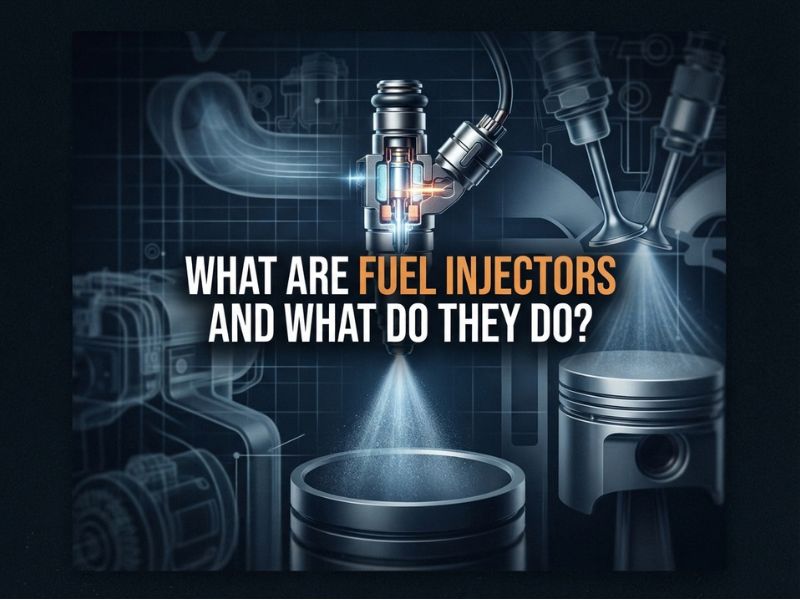
If your car has rough idle, weak acceleration, poor fuel economy, or a hard start, dirty fuel injectors may be one possible cause. The good news is that you do not always need to remove the injectors to clean them. For many mild cases, you can clean the fuel system while the injectors stay in the engine.
The key is to know what type of cleaning your car needs. A fuel additive is simple and can help with light deposits. A pressurized cleaning kit can provide a deeper service without taking the injectors out. But neither method can repair an injector with a bad coil, damaged nozzle, broken seal, or serious mechanical fault.
This guide explains can you clean fuel injectors without removal, which methods work, how to use them, what results to expect, and when you should stop trying DIY cleaning and have the injectors tested.
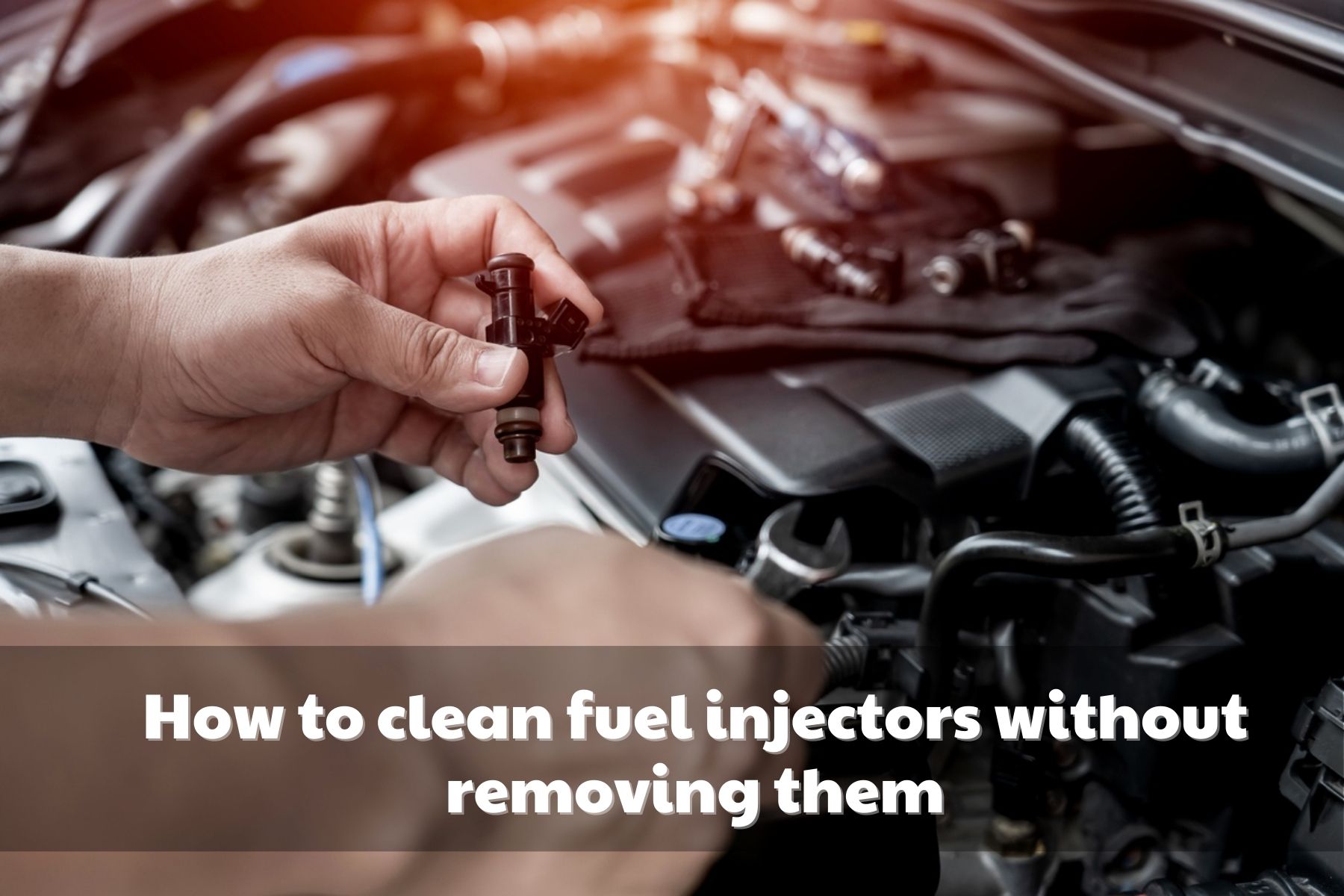
Can You Clean Fuel Injectors Without Removal?
Yes. In many gasoline vehicles, you can clean fuel injectors without removing them from the engine. The two main options are an in-tank fuel injector cleaner and a pressurized fuel system cleaning service.
An in-tank cleaner mixes with the fuel and passes through the injectors during normal driving. This is the easiest method. It may help remove light deposits that affect the injector spray pattern.
A pressurized cleaning system is more direct. It connects to the fuel rail or fuel system and runs a special cleaning fluid through the injectors while the engine runs. This method can provide stronger cleaning without taking each injector out.
However, cleaning is not the same as repair. If an injector has an electrical fault, a stuck internal valve, a damaged tip, or a serious leak, cleaning may not solve the problem.

- ✦ Light deposits
An in-tank cleaner may help when dirt or carbon has built up slowly over time.
- ✦ Moderate deposits
A pressurized cleaning service can provide a stronger cleaning while the injectors remain installed.
- ✦ Severe blockage
A badly blocked injector may need to be removed and cleaned or tested on a bench.
- ✦ Injector damage
A cleaner cannot repair a failed injector coil, damaged body, worn internal parts, or a broken seal.
Why Clean Injectors Without Removing Them?
Removing injectors takes more time and may require special tools. On some engines, access is easy. On others, the fuel rail sits under several parts that must come off first.
Cleaning in place can save time and reduce the chance of damaging an injector, fuel rail, O-ring, or connector during removal. It also makes sense when the symptoms are mild and there is no clear sign of a failed injector.
- ✦ Less labor
You can avoid removing the fuel rail and individual injectors for a basic cleaning service.
- ✦ Less disassembly
Fewer parts need to be removed, which can make the job simpler.
- ✦ Useful for maintenance
In-tank cleaner can be used as part of normal fuel system maintenance when the product and vehicle maker allow it.
How Do Fuel Injectors Get Dirty?
Fuel injectors must spray a fine mist of fuel into the engine. Over time, deposits can form around the injector tip. These deposits can affect how the fuel leaves the nozzle.
Fuel quality, heat, age, and driving conditions can all play a part. Short trips and long periods of low engine temperature may also allow more deposits to form in some engines.
A dirty injector does not always fail at once. The change can be slow. You may first notice a small drop in smoothness or fuel economy before a larger driveability problem appears.
- ✦ Fuel deposits
Small deposits can build up around the injector nozzle and change the spray pattern.
- ✦ Fuel contamination
Dirt or water in fuel can affect the fuel system and may restrict injector flow.
- ✦ Heat
High temperatures around the engine can contribute to deposits on injector parts.
- ✦ Vehicle age
Older fuel systems may have more deposits simply because the injectors have operated for many years.
Can Dirty Fuel Cause Injector Problems?
Yes. Contaminated fuel can introduce particles or water into the fuel system. A fuel filter helps protect the injectors, but it cannot correct every fuel quality problem.
If you suspect contaminated fuel, adding injector cleaner is not the first step. The fuel itself may need attention, and the filter or other fuel system parts may need inspection.
- ✦ Water in fuel
Water can cause poor engine operation and fuel system problems.
- ✦ Dirt
Fine particles can restrict fuel flow or damage sensitive fuel system parts.
- ✦ Old fuel
Fuel that has degraded can contribute to deposits and poor engine operation.
The Easiest Method: Use an In-Tank Fuel Injector Cleaner
For most drivers asking can you clean fuel injectors without removal, an in-tank fuel system cleaner is the simplest place to start. You pour the correct amount into the fuel tank, then drive normally so the cleaner passes through the fuel system.
Not all fuel additives work in the same way. Choose a product made for your fuel type and follow the label. Do not assume that using more cleaner will produce better results.
A good product may help reduce light deposits. It should not be viewed as a cure for every injector problem. If the engine has a strong misfire or another serious symptom, diagnose the cause before relying on an additive.

- ✦ Check the label
Make sure the cleaner is made for your fuel type and vehicle system.
- ✦ Use the correct amount
Follow the product instructions for fuel volume and treatment rate.
- ✦ Add it at the right time
Many products work best when added before filling the tank, but follow the exact label instructions.
- ✦ Drive normally
Normal driving lets the treated fuel move through the injectors and fuel system.
- ✦ Do not overuse it
More chemical does not mean more cleaning. The correct dose matters.
Step-by-Step In-Tank Cleaning
Start by reading the cleaner’s instructions. Check the recommended fuel type and the amount of fuel that should be in the tank. This matters because products can have different treatment rates.
Add the cleaner to the tank as directed. Then fill the tank if the instructions call for it. Drive the vehicle normally and allow the treated fuel to pass through the system.
Watch the engine over the next few drives. Look for changes in idle quality, throttle response, starting, and fuel use. If the problem stays the same, do not keep adding cleaner without finding the cause.
- ✦ Before use
Read the label and confirm that the product is suitable for your vehicle.
- ✦ During use
Drive normally unless the product maker gives different instructions.
- ✦ After use
Check whether the original symptoms improve. Continued symptoms may need proper diagnosis.
How to Clean Fuel Injectors Without Removal Using a Pressurized Kit
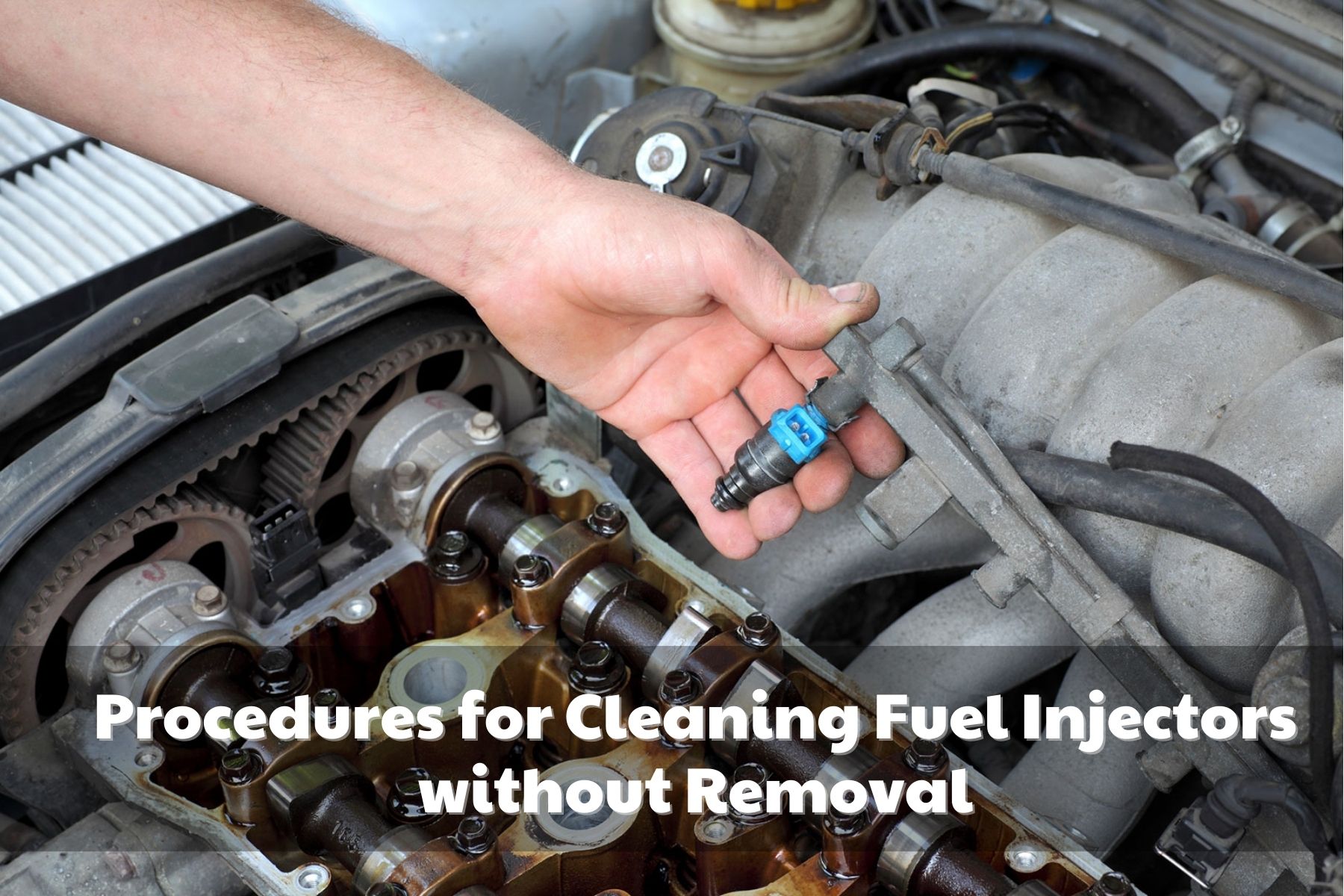
A pressurized injector cleaning kit is a stronger option than simply adding a cleaner to the tank. The kit uses a cleaning fluid under controlled pressure and sends it through the vehicle’s fuel delivery system.
This method can be useful when deposits are causing poor spray quality but the injectors still work. The exact connection point depends on the vehicle. Some systems allow a technician to connect the cleaning equipment to the fuel rail after isolating the normal fuel supply.
Because fuel is flammable and fuel pressure can be high, this method requires care. A mistake can cause a fuel leak, fire risk, or engine damage. If you do not know the correct connection and pressure for your vehicle, professional service is the safer choice.
- ✦ Use the correct kit
The equipment must match the vehicle’s fuel system and connection type.
- ✦ Check fuel pressure
Follow the vehicle and equipment instructions for safe pressure limits.
- ✦ Isolate the normal fuel supply
The cleaning procedure may require the regular fuel supply to be disabled or bypassed.
- ✦ Use approved cleaning fluid
Use a fluid designed for the cleaning equipment and fuel system.
- ✦ Inspect for leaks
Fuel leaks must be corrected before the vehicle is operated.
Why Pressurized Cleaning Can Work Better
An in-tank additive becomes diluted in the fuel. A professional pressurized service can send a concentrated cleaning solution through the injectors. This gives the cleaner a more direct role in the process.
Still, stronger cleaning does not mean every injector will recover. A mechanical or electrical fault cannot be washed away. Testing is needed when an injector does not deliver the correct amount of fuel.
- ✦ More direct cleaning
The cleaning fluid can pass through the injectors without first being diluted in a full tank of fuel.
- ✦ Useful for deposits
It may help when injector deposits are causing a poor spray pattern or reduced flow.
- ✦ Not a repair
It cannot fix a failed injector coil, broken internal part, or damaged injector body.
Can You Clean Fuel Injectors Without Removal at Home?
For basic in-tank cleaning, yes. This is one of the simpler fuel system maintenance jobs because the injector itself stays in place. You only need the correct cleaner and a way to follow the product instructions.
A pressurized cleaning kit is different. It may look simple in a video, but fuel systems vary widely between vehicles. The wrong connection, pressure, or cleaning fluid can create a serious problem.
For a home mechanic, the best approach is to match the method to the problem. Use an in-tank cleaner for mild deposit concerns. For a strong misfire, fuel leak, or suspected injector failure, test the vehicle before trying stronger cleaning.

- ✦ Good DIY choice
An in-tank cleaner is usually the easiest method for a mild deposit problem.
- ✦ More advanced DIY work
Pressurized cleaning needs the correct tools, vehicle information, and fuel system knowledge.
- ✦ Avoid guessing
Do not use a cleaning method simply because it worked on a different vehicle.
- ✦ Know when to stop
A persistent misfire or fuel leak needs diagnosis rather than repeated chemical treatments.
Safety Rules for DIY Fuel Injector Cleaning
Gasoline is highly flammable. Work in a well-ventilated area away from flames, cigarettes, heaters, sparks, and other ignition sources. Keep a suitable fire extinguisher nearby when working around fuel.
Wear eye protection and avoid skin contact with fuel or cleaning fluid. Never open or disconnect a pressurized fuel system until you have followed the vehicle maker’s pressure-release procedure.
If you smell strong fuel, see a leak, or are unsure how the fuel system works, stop the job. A professional technician can perform the service with the correct equipment.
- ✦ No ignition sources
Keep flames, sparks, cigarettes, and other heat sources away from fuel.
- ✦ Ventilation
Work in a well-ventilated space to reduce exposure to fuel vapors.
- ✦ Eye protection
Protect your eyes when handling fuel or cleaning chemicals.
- ✦ Release pressure safely
Never disconnect fuel lines without following the correct pressure-release procedure.
Signs That Your Fuel Injectors May Need Cleaning
Dirty injectors can cause several engine symptoms. But these symptoms are not proof that the injectors are dirty. Problems with spark plugs, ignition coils, vacuum leaks, fuel pressure, sensors, or air flow can feel very similar.
A good diagnosis looks at the full picture. If the engine has a check engine light, scan the stored codes and look at the related data before replacing or cleaning parts.
If several symptoms appeared slowly, deposits may be worth considering. If one cylinder suddenly starts misfiring, a failed ignition or injector component may be more likely.

- ✦ Rough idle
The engine may shake or feel uneven when it is running at idle.
- ✦ Poor acceleration
The engine may feel weak when you press the accelerator.
- ✦ Poor fuel economy
Fuel use may rise when combustion or fuel delivery is not working as it should.
- ✦ Hard starting
An engine may take longer to start when fuel delivery is not correct.
- ✦ Engine misfire
A cylinder may not burn the air-fuel mixture correctly, causing rough running or a flashing check engine light.
- ✦ Uneven engine response
Throttle response may feel inconsistent, especially under load.
Do Not Assume Every Misfire Is a Dirty Injector
A misfire can come from many sources. A worn spark plug, bad ignition coil, air leak, low compression, fuel pressure problem, or wiring fault can create similar symptoms.
This is why cleaning should not replace diagnosis. If cleaning does not help, continuing to add fuel cleaner can waste money while the real fault gets worse.
- ✦ Check ignition
Inspect spark plugs and ignition components when the engine has a misfire.
- ✦ Check fuel pressure
Low or unstable fuel pressure can cause poor fuel delivery even when injectors are clean.
- ✦ Check air leaks
Vacuum or intake leaks can create symptoms that look like fuel injector problems.
How Effective Is Cleaning Fuel Injectors Without Removal?
The result depends on why the injector is performing poorly. If light deposits restrict the injector nozzle, cleaning may improve the spray pattern and engine operation. If the injector has an internal fault, cleaning may make little or no difference.
In-tank cleaners are best viewed as a maintenance and mild-cleaning option. They are not a replacement for injector testing. A pressurized service can provide more focused cleaning, but it still cannot repair damaged hardware.
The most useful way to judge the result is to compare the original symptoms with the vehicle’s behavior after the treatment. If the engine becomes smoother and the original symptoms fade, deposits may have played a role. If there is no change, investigate other causes.

- ✦ Light deposits
Cleaning may produce a noticeable improvement when deposits are the main issue.
- ✦ Heavy deposits
A stronger cleaning method may be needed, and some injectors may still require removal.
- ✦ Electrical failure
A cleaner cannot restore a failed electrical circuit inside an injector.
- ✦ Mechanical failure
A damaged or stuck injector may need replacement or professional repair.
What a Fuel Injector Cleaner Cannot Do
A fuel system cleaner is a chemical cleaning tool, not a diagnostic tool or replacement part. It cannot repair damaged injector windings, broken connectors, worn internal parts, or a cracked injector body.
It also cannot correct low fuel pressure caused by a failing pump, a restricted filter, or another fuel system problem. Treating the injector when the real fault is elsewhere will not solve the problem.
- ✦ Cannot repair an open circuit
An injector with a failed electrical circuit needs testing and likely replacement.
- ✦ Cannot fix a fuel leak
A leaking injector or damaged seal must be repaired or replaced.
- ✦ Cannot restore worn parts
Chemical cleaning cannot rebuild worn internal injector components.
When Should You Remove the Fuel Injectors?
Sometimes the answer to can you clean fuel injectors without removal is yes, but removal is still the better diagnostic step. This is especially true when the injector has a major fault or when an in-place cleaning has not solved the problem.
A removed injector can be tested for flow, spray pattern, leakage, and electrical operation. A professional injector service can also compare injectors against each other and identify one that behaves differently.
Removal also makes sense when an injector is heavily blocked or contaminated. In such cases, bench cleaning can provide a deeper service than an ordinary fuel additive.
- ✦ Persistent misfire
If a cylinder keeps misfiring after basic checks, injector testing may be needed.
- ✦ Fuel leak
A leaking injector requires prompt inspection and repair.
- ✦ Severe blockage
A heavily restricted injector may need bench cleaning or replacement.
- ✦ Uneven injector flow
Testing can show whether one injector delivers much less or more fuel than the others.
- ✦ Electrical fault
Resistance, wiring, and injector operation should be tested when an electrical problem is suspected.
What Professional Injector Testing Can Show
Professional testing can measure how much fuel an injector delivers and whether its spray pattern looks correct. It can also reveal leakage when the injector should be closed.
This matters because two injectors can look clean but still flow different amounts of fuel. Cleaning alone does not prove that an injector is operating correctly.
- ✦ Flow rate
Shows how much fuel the injector delivers during a controlled test.
- ✦ Spray pattern
Shows whether fuel leaves the nozzle in the expected pattern.
- ✦ Leak test
Checks whether fuel passes through the injector when it should be closed.
- ✦ Electrical test
Checks the injector’s electrical operation and helps identify a failed component.
Can Fuel Injector Cleaner Damage Your Car?
A fuel injector cleaner used correctly is generally intended to work with the fuel system. The main risk comes from using the wrong product, the wrong dose, or a product that is not suitable for the vehicle.
More is not always better. Adding too much cleaner can change the concentration beyond what the manufacturer intended. Always follow the bottle instructions and any vehicle maker guidance.
Extra care is needed with older vehicles or vehicles with unusual fuel systems. If the vehicle has a known fuel system problem, diagnose that problem before adding a cleaning chemical.
- ✦ Use the correct product
Choose a cleaner that is designed for the vehicle’s fuel type and system.
- ✦ Follow the dose
Use the exact amount recommended on the product label.
- ✦ Do not mix random chemicals
Avoid combining fuel additives unless the manufacturers specifically allow it.
- ✦ Watch for fuel system symptoms
Stop and investigate if a strong fuel smell, leak, or major engine problem appears.
What About High-Mileage Vehicles?
High-mileage vehicles can have more deposits and more wear in the fuel system. A cleaner may help with deposits, but it cannot reverse normal mechanical wear.
If a high-mileage vehicle suddenly develops a serious fuel problem, do not assume that age-related deposits are the only cause. A proper inspection can prevent unnecessary parts replacement.
- ✦ Deposits
A cleaner may help remove some deposits that have formed over time.
- ✦ Wear
Worn injector parts cannot be restored by a fuel additive.
- ✦ Diagnosis
New or severe symptoms should be diagnosed instead of treated only with additives.
Fuel Injector Cleaning vs. Injector Replacement
Cleaning and replacement solve different problems. Cleaning is meant for deposits and contamination. Replacement is needed when the injector is physically or electrically damaged and cannot deliver fuel correctly.
Replacing an injector without testing it first can be expensive and may not fix the vehicle. The same is true for repeated cleaning when the injector has already failed.
A sensible approach is to start with diagnosis, then choose cleaning or replacement based on the evidence. This avoids spending money on a treatment that cannot address the actual fault.
- ✦ Choose cleaning
Cleaning may make sense when deposits are suspected and the injector still operates correctly.
- ✦ Choose testing
Testing is useful when symptoms are strong, persistent, or limited to one cylinder.
- ✦ Choose replacement
Replacement may be required when an injector has a confirmed electrical, mechanical, or leakage fault.
A Simple Decision Guide
If the car runs normally but you want routine fuel system maintenance, an appropriate in-tank cleaner may be enough. If the car has mild symptoms and no clear fault, diagnosis followed by a suitable cleaning treatment can be reasonable.
If the engine has a severe misfire, a flashing check engine light, a fuel smell, or a suspected injector leak, skip repeated DIY cleaning. Find the cause first.
- ✦ Routine maintenance
Consider an appropriate fuel system cleaner if the vehicle maker and product instructions support its use.
- ✦ Mild symptoms
Diagnose the basic causes and consider cleaning if deposits remain a reasonable possibility.
- ✦ Severe symptoms
Use proper testing rather than relying on fuel additive treatments.
How Much Does Fuel Injector Cleaning Cost?
The cost depends on the cleaning method, vehicle, location, and labor rate. An in-tank cleaner is usually the least expensive option because you are buying a small bottle of treatment rather than paying for a full service.
A professional pressurized cleaning service costs more because it includes equipment, labor, and a technician’s time. Removing and bench-cleaning injectors can cost more again because the injectors must be accessed, removed, tested, cleaned, and reinstalled.
Prices vary widely across the United States, so local shop quotes are more useful than a single national number. Ask what the service includes and whether diagnostic testing is part of the price.
- ✦ In-tank cleaner
Lowest-cost option and easiest for a basic maintenance treatment.
- ✦ Pressurized service
Higher cost because it requires special equipment and labor.
- ✦ Bench cleaning
Usually costs more because the injectors must be removed and tested outside the vehicle.
- ✦ Replacement
Most expensive option when new injectors and additional labor are required.
Should You Pay for Injector Cleaning?
It can make sense when testing or symptoms point toward deposits. It makes less sense when there is no evidence of an injector problem or when the injector has already been confirmed as mechanically or electrically defective.
Before paying for a service, ask whether the shop will check for other causes of the symptom. A good diagnostic process can prevent you from paying for injector cleaning when the real problem is elsewhere.
- ✦ Ask what is included
Find out whether the price covers cleaning only or also testing and diagnosis.
- ✦ Ask about the method
Confirm whether the shop uses an in-tank treatment, pressurized service, or bench cleaning.
- ✦ Ask about the result
A cleaning service should not be presented as a guaranteed fix for every engine problem.
How to Get Better Results From Fuel Injector Cleaning
Cleaning works best when the rest of the fuel system is in good shape. A restricted fuel filter, weak pump, contaminated fuel, intake leak, or ignition fault can still cause poor engine performance after the injectors are cleaned.
Regular maintenance also matters. Use the fuel grade recommended for your vehicle, replace service items on schedule, and address check engine lights instead of ignoring them.
Most important, match the treatment to the problem. The question can you clean fuel injectors without removal has a simple answer, but whether you should do it depends on the actual fault.
- ✦ Use quality fuel
Buy fuel from reputable stations and use the grade recommended for your vehicle.
- ✦ Maintain the fuel system
Follow the vehicle maker’s service schedule for fuel filters and related parts.
- ✦ Fix warning lights
A check engine light can point to a problem that cleaner alone will not fix.
- ✦ Avoid blind parts replacement
Test the cause before replacing injectors or other expensive fuel system parts.
- ✦ Use cleaner correctly
Follow the product label and never assume a higher dose will give better results.
A Practical Maintenance Approach
For a healthy car, injector cleaning is best treated as one part of fuel system care rather than a cure-all. If the engine runs well, there is no need to keep adding cleaner simply because the bottle suggests another treatment.
When symptoms appear, start with diagnosis. This keeps the process simple: identify the likely cause, clean the injectors if deposits are a reasonable cause, and test again if the problem remains.
- ✦ Healthy engine
Focus on normal maintenance and follow the vehicle maker’s service guidance.
- ✦ Mild driveability issue
Check basic causes before trying an appropriate injector cleaning treatment.
- ✦ Persistent problem
Move from cleaning to proper testing if the symptom does not improve.