If your car jerks when you press the gas pedal, the fuel injectors are one part worth checking. The injectors must deliver the right amount of fuel at the right time. If one injector is dirty, clogged, leaking, or failing, the engine may not burn fuel evenly.
In real-world diagnosis, jerking is not a fuel-injector-only symptom. Spark, air, fuel pressure, sensors, and the transmission can all play a role. That is why it is better to test the system before buying new injectors.
This guide explains how fuel injectors can cause jerking, what the symptoms look like, when the problem is most likely to appear, and how to check the injectors before paying for a repair.

How Can Fuel Injectors Cause Jerking?
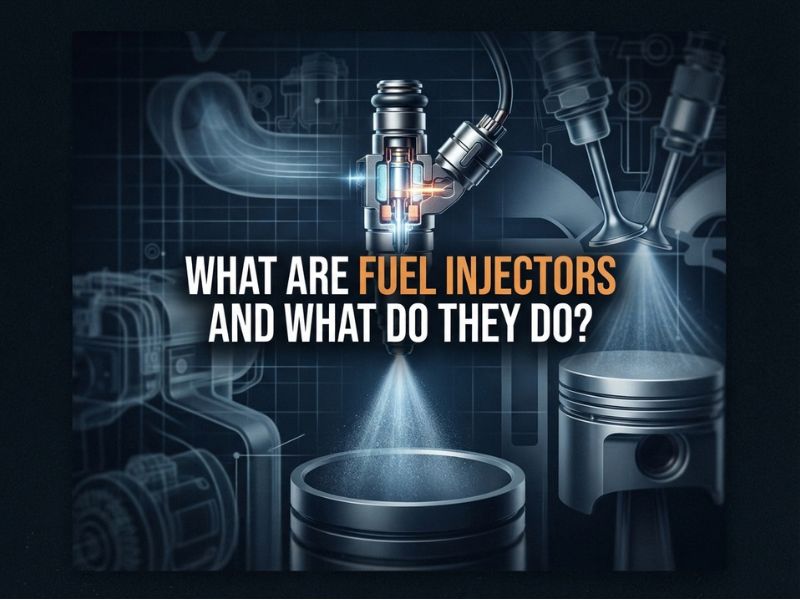
Fuel injectors spray fuel into the engine in a fine mist. The engine control unit, or ECU, controls how much fuel each injector should deliver. The engine needs a steady mix of fuel and air to run smoothly.
A dirty or faulty injector can upset this balance. It may spray too little fuel, spray too much fuel, spray unevenly, or leak fuel when it should be closed. Any of these faults can make one or more cylinders produce less power.
When cylinder power changes from one moment to the next, you may feel a jerk or hesitation. This is why the answer to the question “can fuel injectors cause jerking” is yes, but the exact cause still needs to be confirmed.

- ✦ Clogged injector
A partial blockage can reduce fuel flow. The affected cylinder may run lean and lose power during acceleration.
- ✦ Dirty injector nozzle
Deposits can change the spray pattern. The injector may still work, but the fuel may not mix with air as well.
- ✦ Leaking injector
An injector that does not close properly can add too much fuel. This may cause rough running, a rich mixture, or a misfire.
- ✦ Electrical injector fault
A damaged injector coil, wiring problem, or connector fault can stop the injector from opening as commanded.
Why Jerking Often Gets Worse During Acceleration
The engine needs more fuel when you accelerate. A weak injector may supply enough fuel at light load but fail to keep up when the engine needs more. This can make the jerk more noticeable when merging onto a highway, climbing a hill, or passing another vehicle.
A sudden loss of fuel from one cylinder can also feel like a brief cut in engine power. If the problem repeats, the check engine light may come on and the engine may store a misfire code.
- ✦ More engine load
Acceleration puts more demand on the engine, so a weak fuel supply can become easier to notice.
- ✦ Higher fuel demand
The ECU commands more fuel during heavy acceleration. A restricted injector may not deliver enough.
What Does a Bad Fuel Injector Feel Like?
A bad fuel injector can cause more than a single jerk. The symptoms depend on whether the injector is restricted, stuck open, stuck closed, or has an electrical fault. Some problems are mild at first and become more noticeable over time.
A common sign is a rough or uneven engine during acceleration. You may also notice hesitation when you press the gas, a rough idle, poor fuel economy, or a loss of power.

- ✦ Jerking or hesitation
The vehicle may surge, hesitate, or jerk when you apply the throttle.
- ✦ Rough idle
The engine may shake or run unevenly while stopped because one cylinder is not getting the right fuel supply.
- ✦ Engine misfire
A cylinder may misfire when an injector cannot provide the needed fuel. This can trigger a check engine light.
- ✦ Poor acceleration
The engine may feel weak when you accelerate, especially under heavy load.
- ✦ Poor fuel economy
A leaking or poorly controlled injector can cause the engine to use more fuel than normal.
- ✦ Hard starting
A leaking or restricted injector can make starting harder, depending on the fault.
Can One Bad Injector Cause the Whole Car to Jerk?
Yes. One injector can cause a noticeable jerk if it affects one cylinder enough to change engine power. This is more likely on an engine where one cylinder is already under heavy load.
The effect can feel stronger when the engine is working hard. A four-cylinder engine, for example, can feel a clear loss of smoothness when one cylinder is not producing normal power.
- ✦ One-cylinder misfire
A single weak injector can cause one cylinder to misfire and make the engine run unevenly.
- ✦ Multiple injector faults
If several injectors have poor flow, the engine can lose more power and run much less smoothly.
When Do Fuel Injector Problems Cause Jerking?
The timing of the jerk can give you useful clues. Fuel injector problems often become more obvious when the engine needs more fuel. This includes hard acceleration, uphill driving, towing, or highway merging.
Still, an injector can cause rough running at idle too. The pattern matters because different faults can produce similar symptoms.

Jerking When Accelerating
If your car jerks when accelerating, a restricted injector is one possible cause. The injector may not deliver enough fuel as demand rises, which can lead to hesitation or a misfire.
However, ignition faults are also common. A worn spark plug or weak ignition coil can cause almost the same feeling, so do not replace injectors based on the symptom alone.
- ✦ Most noticeable under load
The problem may appear when you press the accelerator hard or drive uphill.
- ✦ Possible misfire
A fuel shortage can make the affected cylinder misfire and cause a sudden loss of power.
Jerking at Low Speed
Low-speed jerking can come from fuel delivery problems, but it can also come from transmission behavior, throttle control, or ignition faults. If the jerk happens only during gear changes, the transmission deserves attention too.
If the engine speed changes and the vehicle jerks even when the transmission stays in the same gear, an engine or fuel problem becomes more worth checking.
- ✦ Engine-related jerk
A fuel or ignition problem may cause the engine itself to stumble.
- ✦ Transmission-related jerk
A shift-related jerk may happen even when the fuel injectors work normally.
Jerking While Driving at a Steady Speed
A vehicle that jerks at a steady speed can have an injector problem, but this symptom has many possible causes. A light misfire may appear during a specific engine load or speed range.
A scan tool can help find stored or pending misfire codes. Live data can also help a technician compare engine behavior while the problem occurs.
- ✦ Steady-load misfire
A weak injector may cause a small but repeated loss of power at a certain load.
- ✦ Other possible causes
Ignition coils, spark plugs, air leaks, sensors, and fuel pressure faults can produce similar symptoms.
Other Problems That Can Make a Car Jerk
Knowing that fuel injectors can cause jerking does not mean they are always the cause. Many engine and transmission faults can create the same sensation. Good diagnosis starts by keeping the full system in mind.
This matters because fuel injectors can be expensive to replace. Testing other likely causes first can prevent an unnecessary repair.

- ✦ Bad spark plugs
Worn or damaged spark plugs can cause misfires, hesitation, and jerking during acceleration.
- ✦ Weak ignition coil
A failing coil may produce a weak spark and cause a cylinder to misfire under load.
- ✦ Low fuel pressure
A weak fuel pump, restricted filter, or fuel supply problem can reduce fuel pressure and affect several cylinders.
- ✦ Vacuum leak
Unmetered air can upset the air-fuel mixture and cause rough running or hesitation.
- ✦ Dirty throttle body
Throttle problems can cause poor throttle response and a sudden change in engine power.
- ✦ Faulty sensors
Problems with sensors such as the mass airflow sensor or throttle position sensor can affect engine control.
- ✦ Transmission problem
A harsh or delayed gear change can feel like an engine jerk even when the engine is running correctly.
How to Tell a Fuel Problem From an Ignition Problem
It can be hard to tell the difference by feel alone. Both fuel and ignition faults can cause a misfire, loss of power, and jerking during acceleration.
A scan tool, fuel pressure test, spark inspection, and injector test can help separate the causes. The exact test depends on the vehicle and the fault code, if one is present.
- ✦ Check fault codes
A diagnostic scan may show cylinder-specific or fuel-system codes that provide useful clues.
- ✦ Check ignition parts
Inspecting spark plugs and ignition coils can rule out common misfire causes.
- ✦ Check fuel pressure
Low pressure can point to a pump, filter, regulator, or fuel supply problem instead of one injector.
How to Diagnose Fuel Injectors That May Be Causing Jerking
If you suspect an injector, start with basic checks before removing parts. A diagnostic scan can show misfire codes and fuel-trim information. These clues can help point toward a fuel delivery problem.
A technician can then test injector operation, fuel pressure, wiring, and injector balance. The goal is to prove that an injector is faulty before replacing it.
Do not assume that a check engine light code naming an injector always means the injector itself is bad. A wiring fault, connector problem, or control issue can sometimes create a similar code.

Step 1: Scan for Trouble Codes
Connect an OBD-II scan tool and check for stored and pending codes. Misfire codes such as P0300 or a cylinder-specific code can help identify where the problem occurs.
The code does not always identify the failed part. Treat it as a clue rather than a final diagnosis.
- ✦ Look for misfire codes
A cylinder-specific misfire can help narrow the search.
- ✦ Check pending codes
Some faults may be detected before the check engine light stays on.
Step 2: Inspect the Spark Plugs
Spark plugs are easy to overlook because injector problems and ignition problems can feel very similar. Check the plugs for wear, damage, and signs of abnormal combustion.
If a cylinder has a known misfire, inspecting or swapping ignition parts can help determine whether the fault follows the part.
- ✦ Check plug condition
Look for worn electrodes, damage, or signs of abnormal fuel or oil exposure.
- ✦ Compare cylinders
Differences between cylinders can provide useful clues during diagnosis.
Step 3: Test Fuel Pressure
Fuel pressure testing can show whether the fuel system has enough pressure. Low pressure may point to a pump or another fuel supply fault rather than a single injector.
The correct fuel pressure varies by vehicle, so use the manufacturer’s specification for the specific engine.
- ✦ Use the correct specification
Do not judge fuel pressure by a generic number. Different systems use different pressure ranges.
Step 4: Test Injector Operation
A technician can check injector resistance, electrical control, flow, and spray pattern with the right equipment. An injector balance test can also help find a cylinder that receives less or more fuel than expected.
These tests are more reliable than replacing injectors based only on the fact that the vehicle jerks.
- ✦ Electrical test
This can help identify an open or shorted injector coil or a wiring problem.
- ✦ Flow test
A flow test can reveal restricted or uneven fuel delivery.
- ✦ Leak test
This can help identify an injector that does not seal correctly.
Can Cleaning Fuel Injectors Stop Jerking?
Injector cleaning can help when deposits or mild restrictions are causing poor fuel flow. It will not repair every injector problem. A damaged coil, broken connector, worn internal part, or badly leaking injector usually needs a more direct repair.
For a mildly dirty injector, a proper cleaning service may restore better spray and flow. The result depends on how dirty the injector is and whether the injector has any mechanical damage.
Fuel injector cleaner added to the fuel tank may help with some deposits, but it is not a guaranteed fix for a badly restricted or failed injector. If the car continues to jerk after cleaning, further diagnosis is needed.

- ✦ Mild deposits
A suitable cleaning method may improve injector flow when deposits are the main problem.
- ✦ Severe blockage
A heavily restricted injector may need professional cleaning or replacement.
- ✦ Electrical failure
Cleaning will not fix a broken injector coil, damaged wire, or bad connector.
- ✦ Mechanical failure
An injector that leaks or has internal damage may need replacement.
Should You Use Fuel Injector Cleaner?
A quality fuel system cleaner can be reasonable as preventive maintenance when used according to the product label and vehicle requirements. It should not replace proper diagnosis when a car is already jerking badly.
If the engine has a strong misfire, a flashing check engine light, or major loss of power, focus on finding the fault rather than repeatedly adding cleaner.
- ✦ Follow the label
Use only the correct amount and make sure the product is suitable for the fuel system.
- ✦ Do not expect a cure
Cleaner cannot repair an injector with electrical or mechanical damage.
Is It Safe to Drive When Fuel Injectors Cause Jerking?
A mild hesitation does not always mean the vehicle will stop running, but continued driving with an active misfire is not a good idea. A severe misfire can affect engine performance and may damage the catalytic converter if unburned fuel reaches the exhaust.
If the check engine light is flashing, the engine is shaking badly, or the vehicle has a major loss of power, reduce driving and have the vehicle checked as soon as possible. A flashing light can indicate a serious active misfire.
For a U.S. driver, this matters most during highway merging or busy traffic. A sudden loss of power can make it harder to accelerate when you need to move with traffic.

- ✦ Flashing check engine light
Treat this as a warning of a potentially serious misfire and avoid unnecessary driving.
- ✦ Severe shaking
Strong engine shaking suggests that the problem needs prompt diagnosis.
- ✦ Major power loss
Avoid situations where a sudden loss of power could create a safety risk.
- ✦ Fuel smell
A strong fuel smell may indicate a leak or an overly rich condition and should be checked promptly.
When to Stop Driving
Do not keep driving simply to see whether the problem gets better if the engine is running very rough or the check engine light is flashing. A severe fuel or ignition fault can become more costly if ignored.
If the vehicle runs smoothly most of the time but has a mild occasional hesitation, arrange a diagnostic check soon. The right response depends on the severity and the cause.
- ✦ Stop and inspect
Stop driving if there is a strong fuel leak, severe shaking, smoke, or another clear safety concern.
- ✦ Get diagnosis soon
Do not ignore repeated jerking, even if the vehicle still starts and drives.
How Much Does It Cost to Fix a Fuel Injector Problem?
The repair cost depends on the vehicle, injector type, labor time, and the actual fault. Cleaning one or more injectors is usually different in cost from replacing an injector or repairing a fuel system problem.
Do not focus only on the injector price. Diagnosis, labor, seals, related parts, and programming or testing can affect the final bill. Some engines also make injector access much harder than others.
Before approving a repair, ask what test confirmed the injector fault. This simple question can help you understand why the repair is needed.
- ✦ Cleaning
Professional cleaning may cost less than replacing injectors when deposits are the only problem.
- ✦ Injector replacement
A failed injector may need replacement, with the total cost depending on access and labor.
- ✦ Fuel system repair
Low fuel pressure or contaminated fuel may require repairs beyond the injectors.
- ✦ Diagnostic labor
Testing helps identify the real cause and can prevent unnecessary parts replacement.
Should You Replace All Fuel Injectors?
Not always. If testing shows that one injector has failed while the others have normal flow and operation, replacing only the failed unit may be appropriate.
Some shops may recommend replacing a complete set because of mileage, access, or matched-flow concerns. Ask for the reason and compare it with the test results for your vehicle.
- ✦ One confirmed failure
A single failed injector does not automatically mean every injector must be replaced.
- ✦ Matched performance
On some engines, testing all injectors can help confirm that their flow is reasonably consistent.