Yes, a dirty fuel injector can contribute to high revs, but it is not usually the first component to blame when an engine suddenly idles at a high RPM. A restricted or poorly spraying injector can disturb the air-fuel mixture, causing rough running, unstable idle, hesitation, or misfires that may sometimes be accompanied by unusual RPM behavior.
If your engine is revving higher than normal while the vehicle is sitting at idle, however, you should also consider an intake air leak, idle air control problem, electronic throttle body issue, vacuum leak, or sensor problem. These faults can allow too much air into the engine or cause the engine control system to command a higher idle.
Understanding the difference matters because replacing or cleaning fuel injectors will not solve a high-idle problem if the real cause is uncontrolled air entering the engine.
How Can a Dirty Fuel Injector Cause High Revs?
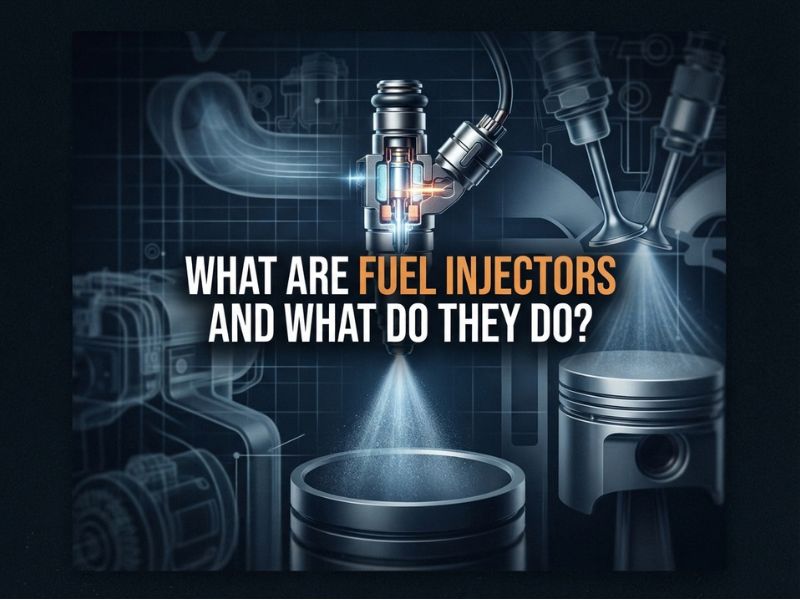
A fuel injector delivers a controlled amount of fuel into the engine. When an injector becomes contaminated with deposits, its spray pattern or fuel delivery can change.
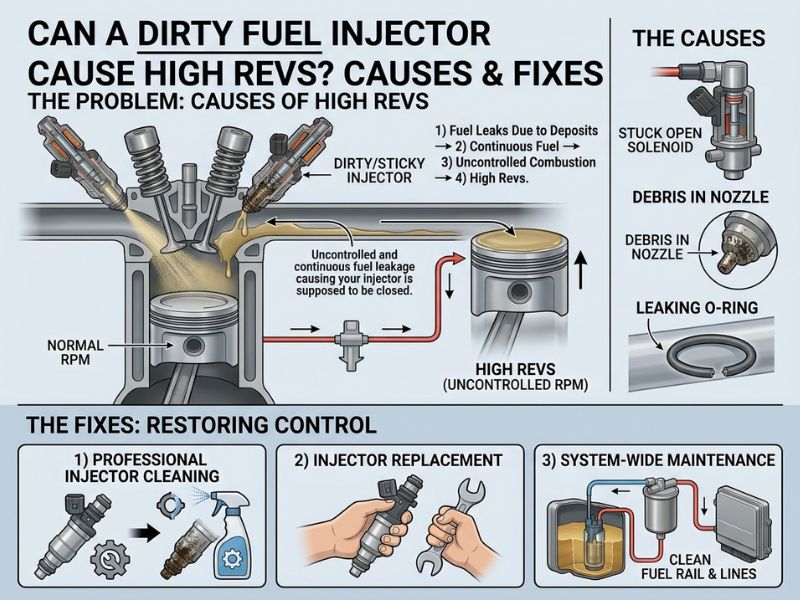
A dirty injector may become partially restricted, produce an uneven spray, or deliver less fuel than the engine control module expects. This can create a lean air-fuel mixture in one or more cylinders.
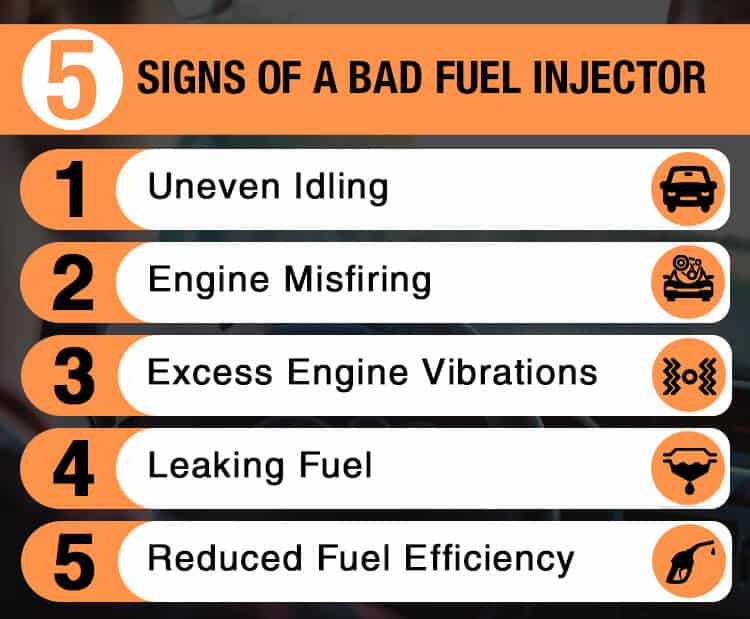
The engine may then experience:
- Rough or unstable idle
- Engine hesitation
- Misfires
- Reduced acceleration
- Poor fuel economy
- Difficult starting
- Surging or fluctuating RPM
In some situations, the engine control system can respond to an unstable mixture by adjusting fuel delivery and airflow. This can produce unusual idle behavior, including RPM fluctuations or occasional increases.
However, a dirty injector does not normally act like a throttle that simply opens and makes the engine run at a high, steady RPM. A persistent high idle is more commonly related to excess air or throttle-control problems.
What RPM Is Considered High at Idle?
The normal idle speed depends on the vehicle, engine, temperature, and operating conditions.
Many gasoline engines idle somewhere around the high hundreds of RPM once fully warmed up, but there is no single RPM value that applies to every vehicle.
A cold engine can intentionally idle faster immediately after startup. The engine control module may increase idle speed during warm-up to help the engine reach operating temperature and maintain stable combustion.
Other conditions can also temporarily raise idle speed, including:
- Cold starts
- Air conditioning operation
- Electrical loads
- Power steering load on some vehicles
- Battery charging demands
- Emissions-control strategies
- Regeneration or other manufacturer-specific operating conditions
If the engine remains at an unusually high RPM after reaching normal operating temperature, further diagnosis is appropriate.
Signs a Dirty Fuel Injector May Be Involved
High RPM by itself does not prove that the injectors are dirty. Look for additional symptoms that point toward fuel-delivery problems.
Rough Idle
A contaminated injector may not deliver fuel evenly. One cylinder can receive less fuel than expected, producing a rough or uneven idle.
You may feel vibration through the steering wheel, seat, or body of the vehicle.
Engine Misfire
A restricted injector can cause an individual cylinder to run too lean. This can result in a misfire, especially under certain operating conditions.
If the check engine light is flashing, avoid continuing to drive unnecessarily because an active misfire can potentially damage the catalytic converter.
Hesitation During Acceleration
An injector that cannot deliver enough fuel may cause hesitation when you press the accelerator.
The engine may feel weak or respond slowly, particularly when additional fuel is needed during acceleration.
Poor Fuel Economy
Fuel economy can become worse when combustion is not occurring efficiently. However, poor fuel economy has many possible causes, so it should not be used by itself to diagnose a dirty injector.
Difficult Starting
Severely restricted or malfunctioning injectors can contribute to hard starting because the engine is not receiving the expected amount of fuel.
RPM Fluctuation
A dirty injector can contribute to unstable combustion, which may cause the RPM to rise and fall. If the engine repeatedly hunts between different RPM levels, investigate the entire idle-control and air-fuel system rather than assuming the injector is responsible.
Could a Dirty Fuel Injector Cause High Idle but Run Normally?
It is possible for injector problems to coexist with unusual idle behavior, but a dirty injector is not the most typical explanation for a high idle that remains steady.
If the engine starts and immediately settles at a significantly elevated RPM, inspect the airflow and throttle-control systems before focusing exclusively on the injectors.
A high idle generally means the engine is receiving more air, more fuel, or a control command that increases engine speed.
Because gasoline engines require both air and fuel, an unmetered air leak can be especially important.
Common Causes of High Revs at Idle
If your engine is revving high while the accelerator pedal is released, several other problems deserve attention.
Vacuum or Intake Leak
A cracked vacuum hose, damaged intake boot, leaking gasket, or loose connection can allow air into the engine without being properly accounted for by the engine management system.
This is one of the important causes to investigate when diagnosing a high idle.
Look for:
- Cracked hoses
- Loose intake connections
- Damaged intake tubing
- Disconnected vacuum lines
- Leaking intake manifold gaskets
- Unusual hissing noises
Dirty or Faulty Throttle Body
The throttle body controls the amount of air entering the engine.
Carbon buildup around the throttle plate can interfere with normal airflow. An electronic throttle body can also develop electrical or mechanical problems that affect idle control.
Depending on the vehicle, cleaning procedures and relearn requirements can vary.
Idle Air Control Problem
Some older vehicles use an idle air control valve (IAC valve) to regulate airflow around the throttle plate.
If the valve sticks open or becomes contaminated, the engine may receive excessive air at idle and run at higher RPM.
Modern vehicles often use electronic throttle control instead of a separate IAC valve.
Throttle Plate Not Closing Properly
A throttle plate that is sticking, contaminated, improperly adjusted, or affected by a mechanical problem can allow more air into the engine.
This can result in elevated idle speed.
Engine Coolant Temperature Sensor Problem
The engine control module uses coolant temperature information to determine how the engine should operate during warm-up.
If the temperature signal is incorrect, the system may behave as though the engine is colder than it really is and maintain a higher idle.
Mass Air Flow Sensor Issues
A contaminated or malfunctioning MAF sensor can provide inaccurate information about incoming air.
The engine control module uses this information to calculate fuel delivery and manage engine operation. A MAF-related problem can contribute to poor idle quality and abnormal RPM behavior.
Other Sensor or Control Problems
Depending on the vehicle, problems involving the throttle position sensor, manifold absolute pressure sensor, oxygen sensors, or other engine-management components can affect idle speed.
A diagnostic scanner can be useful when the vehicle has stored trouble codes or abnormal sensor readings.
How to Tell if the Injector Is Actually the Problem
Instead of replacing the injector immediately, look for evidence that connects the injector to the symptoms.
Start with the basics.
1. Scan for Diagnostic Trouble Codes
Connect an OBD2 scanner and check for stored or pending trouble codes.
Misfire codes can provide useful information about which cylinder may be affected.
For example, a cylinder-specific misfire code can help narrow the investigation, although it does not automatically prove that the injector is dirty.
A misfire can also be caused by:
- Spark plugs
- Ignition coils
- Vacuum leaks
- Compression problems
- Fuel-pressure problems
- Wiring faults
- Injector problems
2. Check Fuel Trim Data
If your scan tool provides live data, examine short-term fuel trim (STFT) and long-term fuel trim (LTFT).
Fuel-trim information can help determine whether the engine management system is compensating for a lean or rich condition.
However, interpreting fuel trims requires understanding the vehicle’s operating conditions. High positive fuel trims do not automatically mean the injectors are dirty.
A vacuum leak, low fuel pressure, MAF problem, or exhaust leak can produce similar readings.
3. Compare Cylinder Performance
If one cylinder is consistently underperforming, the injector may deserve closer inspection.
A technician may use additional diagnostic methods such as injector balance testing, electrical testing, or cylinder contribution testing.
4. Inspect the Intake System
Because a high idle is frequently related to excess air, inspect the intake system before concluding that the fuel injectors are responsible.
Check for loose hoses, cracks, disconnected lines, and damaged intake components.
5. Evaluate the Throttle Body
Inspect the throttle body for excessive carbon deposits or mechanical problems.
Do not manually force an electronic throttle plate unless the manufacturer’s service procedure specifically allows it.
Can Cleaning Fuel Injectors Fix High Revs?
Injector cleaning can help if injector contamination is actually causing poor fuel delivery, but it is unlikely to fix a high idle caused by a vacuum leak, throttle problem, or incorrect engine-control signal.
This distinction is important.
If the engine has a dirty injector and also has a vacuum leak, cleaning the injector will not eliminate the additional air entering the engine.
Similarly, if the throttle body is sticking open, injector cleaning will not correct the underlying airflow problem.
The best approach is to diagnose the cause before spending money on parts or cleaning services.
Fuel Injector Cleaner vs Professional Injector Cleaning
There are several ways to address suspected injector deposits.
Fuel System Cleaner
An appropriate fuel-system cleaning additive can be used according to the product and vehicle manufacturer’s instructions.
It may help with certain types of deposits, but it is not a guaranteed solution for a mechanically damaged or electrically faulty injector.
On-Car Injector Cleaning
Professional equipment can sometimes clean injectors while they remain installed on the vehicle.
The exact procedure depends on the equipment and vehicle.
Off-Car Injector Testing and Cleaning
A more comprehensive service may involve removing the injectors and testing them individually.
A specialist can evaluate factors such as spray pattern, flow consistency, and electrical operation.
This can provide more useful information than simply adding cleaner to the fuel tank when an injector problem is suspected.
Can a Bad Fuel Injector Make the RPM Go Up and Down?
Yes, a faulty or restricted fuel injector can contribute to fluctuating RPM, particularly if it causes inconsistent combustion.
When one or more cylinders receive an abnormal amount of fuel, combustion can become unstable. The engine control system may respond by adjusting fuel and airflow, which can contribute to an uneven idle.
But fluctuating RPM can have many other causes.
Common possibilities include:
- Vacuum leaks
- Dirty throttle body
- MAF sensor problems
- IAC valve problems
- Ignition misfires
- Fuel-pressure problems
- Oxygen sensor issues
- EVAP system leaks
- Intake manifold leaks
The pattern of the RPM fluctuation and any diagnostic trouble codes can help narrow the possibilities.
Can a Lean Condition Cause High Revs?
A lean condition can be associated with unstable or elevated idle behavior, particularly when excess air enters the engine.
A lean mixture means there is too much air relative to the amount of fuel available for combustion.
A dirty injector can contribute to a lean condition by restricting fuel delivery. However, an intake or vacuum leak can also create a lean condition by allowing additional air into the engine.
This is why fuel-trim data and other diagnostic tests are useful.
If fuel trims are strongly positive at idle but improve significantly when engine speed increases, an intake or vacuum leak may deserve particular attention.
That pattern should still be interpreted in the context of the specific engine and its sensor data.
Common Mistakes When Diagnosing High Revs
Replacing Injectors Without Testing
A high idle does not automatically mean the injectors are dirty.
Replacing injectors without confirming the fault can waste money and leave the original problem unresolved.
Assuming Every Misfire Is an Injector Problem
A misfire can originate from fuel, ignition, air, compression, or electrical faults.
Check the complete system before condemning an injector.
Ignoring Vacuum Leaks
A small intake leak can create symptoms that look like a fuel problem.
Inspect hoses and intake connections carefully.
Cleaning the Throttle Body Incorrectly
Electronic throttle bodies can have vehicle-specific cleaning and relearning procedures.
Follow the manufacturer’s service information rather than applying a universal procedure.
Relying Only on an OBD2 Code
A trouble code identifies a system or condition that needs investigation. It does not necessarily identify the failed component.
Use the code together with live data, inspection, and appropriate testing.
Is It Safe to Drive With High Revs?
It depends on why the engine is running at high RPM.
A slightly elevated idle during a cold start can be normal. A persistent high idle caused by a mechanical or electronic fault should be investigated.
Avoid driving the vehicle if the engine is surging severely, the throttle appears stuck, the check engine light is flashing, the vehicle accelerates unexpectedly, or other serious symptoms are present.
If the engine speed is unusually high but the vehicle otherwise operates normally, arrange for diagnosis rather than assuming the problem will resolve itself.
When Should You Have the Vehicle Professionally Diagnosed?
Professional diagnosis is appropriate when the cause of the high idle is unclear or when basic inspection does not reveal the problem.
A technician may perform:
- OBD2 diagnostic scanning
- Fuel-pressure testing
- Injector electrical testing
- Injector balance testing
- Smoke testing for vacuum leaks
- Throttle-body inspection
- MAF sensor evaluation
- Fuel-trim analysis
- Compression testing when appropriate
These tests can separate an injector problem from an airflow, ignition, mechanical, or engine-management fault.
Frequently Asked Questions
Can a dirty fuel injector cause high idle?
Yes, a dirty fuel injector can contribute to unstable or abnormal idle behavior, but it is not a common direct cause of a consistently high idle. Vacuum leaks, throttle-body problems, and idle-control faults should also be investigated.
Can a clogged fuel injector cause RPM fluctuations?
Yes, a clogged or restricted injector can cause RPM fluctuations by creating uneven fuel delivery and combustion. Misfires, vacuum leaks, and ignition problems can produce similar symptoms.
Will injector cleaner lower high RPM?
Injector cleaner may help if injector deposits are causing poor fuel delivery, but it will not normally correct a high idle caused by a vacuum leak or throttle problem. Diagnose the underlying fault before relying on cleaner.
Can a bad injector cause a vacuum leak?
No, a fuel injector does not normally create a vacuum leak. A leaking intake gasket, vacuum hose, or other intake component is a more likely source of unmetered air.
Can a dirty throttle body cause high revs?
Yes, a dirty or malfunctioning throttle body can contribute to high idle RPM. Carbon deposits or a throttle-control problem can affect how much air enters the engine.
Can a bad MAF sensor cause high idle?
Yes, a faulty MAF sensor can contribute to abnormal idle behavior, including elevated or unstable RPM. Its readings should be checked alongside fuel trims and other engine-management data.
Should I replace fuel injectors if my car has high RPM at idle?
No, you should not replace fuel injectors based only on high idle RPM. Check for intake leaks, throttle problems, sensor faults, and diagnostic trouble codes before replacing expensive components.
Can low fuel pressure cause high revs?
Low fuel pressure can cause lean running, hesitation, and unstable engine operation, but it is not normally the primary explanation for a steady high idle. Fuel pressure should be tested against the vehicle manufacturer’s specification when fuel delivery is suspected.
Why does my car rev high when I first start it?
A higher idle immediately after a cold start can be normal. The engine control system may intentionally raise RPM during warm-up, but the idle should generally change as the engine reaches operating temperature.
Conclusion
A dirty fuel injector can contribute to unusual RPM behavior, especially when contamination causes restricted fuel delivery, a lean condition, rough running, or misfires. However, a consistently high idle is more often associated with problems involving airflow or idle control.
If your vehicle is revving high at idle, do not assume the injectors are the cause. Check for vacuum leaks, inspect the throttle body, scan for diagnostic trouble codes, and examine fuel-trim data when available. If those checks point toward a fuel-delivery problem, injector testing or cleaning can then be considered.
The key point is simple: can a dirty fuel injector cause high revs? Yes, it can contribute, but high RPM alone is not enough to diagnose a dirty injector. A systematic diagnosis is the better way to find the actual fault.