What Is a Jump Starter: A Simple Guide to Boosting Batteries
Figuring out what is a jump starter can seem tricky, especially if you’re new to car maintenance. It’s often tough because there are so many options and terms that sound complicated. Don’t worry, this guide makes it easy! We’ll explore exactly what a jump starter is, how it works, and how to use one safely. Get ready for a straightforward, step-by-step exploration that will have you feeling confident in no time. Let’s get started!
Defining a Jump Starter: Power in Your Hands
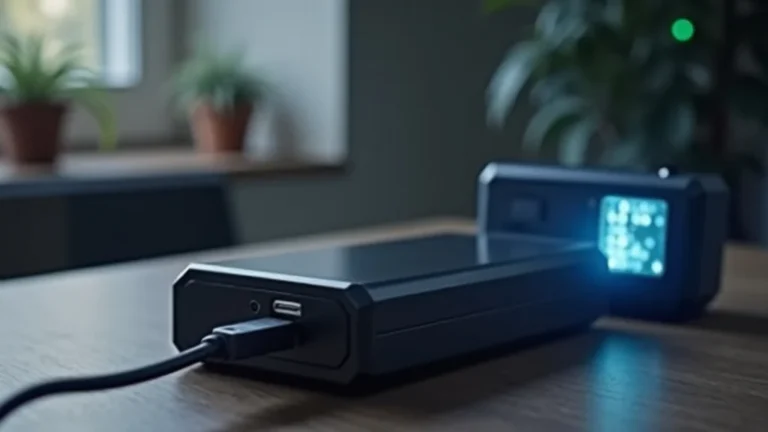
A jump starter, also known as a portable power pack or a battery booster, is a portable device used to start a vehicle with a dead or weak battery. It’s essentially a small, self-contained battery pack that can deliver a high surge of power to your car’s battery. This surge of power helps turn over the engine, allowing your car to start when it wouldn’t otherwise. Jump starters are incredibly convenient because they eliminate the need to rely on another vehicle or external power sources to jump-start your car. Instead, the device offers a self-contained power supply that you can use anytime and anywhere.
Many people find it useful to have a jump starter because they can be used for a wide range of vehicles, including cars, trucks, motorcycles, and even boats. Jump starters have become more sophisticated over the years, with many models offering additional features like USB charging ports for phones and tablets, LED flashlights, and even built-in air compressors. This increased functionality makes them more than just a tool to start your car; they become an essential part of your emergency kit.
Key Components of a Jump Starter
Jump starters are made up of several key parts that work together to provide a powerful jump. The central component is the battery itself, which is often a lithium-ion battery due to its ability to store a lot of energy in a small space and maintain charge for a longer duration. Jump starters also feature a set of jumper cables, usually with insulated clamps, to connect the jump starter to the vehicle’s battery terminals. Additional features commonly found include a power button, LED indicators that show the battery’s charge level and status of the device, and safety features like overcharge protection and reverse polarity protection to prevent damage to the car or the jump starter.
- Battery: The battery is the heart of the jump starter, storing the energy needed to jump-start your vehicle. The type of battery is key because it determines how long the device will hold a charge and how many times it can be used.
- Jumper Cables: These are the wires and clamps that connect the jump starter to your car’s battery terminals. They are typically made of copper wire for optimal conductivity and feature insulated clamps to prevent electrical shocks.
- Safety Features: Jump starters are also equipped with safety mechanisms that prevent reverse polarity (incorrectly connecting the cables) and overcharging. These features protect the jump starter and vehicle’s electrical systems from damage.
Types of Jump Starters
There are different types of jump starters available, each with its own advantages. The most common types are lithium-ion jump starters, lead-acid jump starters, and those with extra functions, like a built-in air compressor. The lithium-ion type is popular due to its compact size, light weight, and longer lifespan compared to older technologies. Lead-acid jump starters are typically heavier but often more affordable. Jump starters with air compressors are handy for topping off tires in an emergency. Each type offers a different set of benefits, so the best choice depends on your needs and budget.
- Lithium-Ion Jump Starters: These are the most common type, known for being lightweight, compact, and long-lasting. They can hold a charge for a long time and are generally easy to use.
- Lead-Acid Jump Starters: These are generally more affordable, but are also heavier and may not hold a charge as long as lithium-ion models.
- Multi-Function Jump Starters: These jump starters come with extra features like USB ports for charging devices, LED flashlights, and sometimes even an air compressor for tires.
The Function of a Jump Starter: How It Works
The primary function of a jump starter is to provide a boost of electrical power to a vehicle’s battery, enabling the engine to start. When your car battery is dead or weak, it doesn’t have enough power to turn over the engine, which prevents the car from starting. The jump starter solves this by supplying an instant burst of electricity that temporarily replaces the function of the battery. The car’s alternator then takes over and charges the battery as the engine runs.
The process is simple, but the device needs to provide a large amount of power in a short period. Jump starters are designed to deliver a high peak current, measured in “amps.” This high current is needed to overcome the resistance of the starter motor and other electrical components, effectively kick-starting the engine. The jump starter temporarily bypasses the car’s battery and provides the needed power. The car’s electrical systems, like the radio and lights, are also powered by the jump starter until the car’s alternator takes over.
Step-by-Step Operation
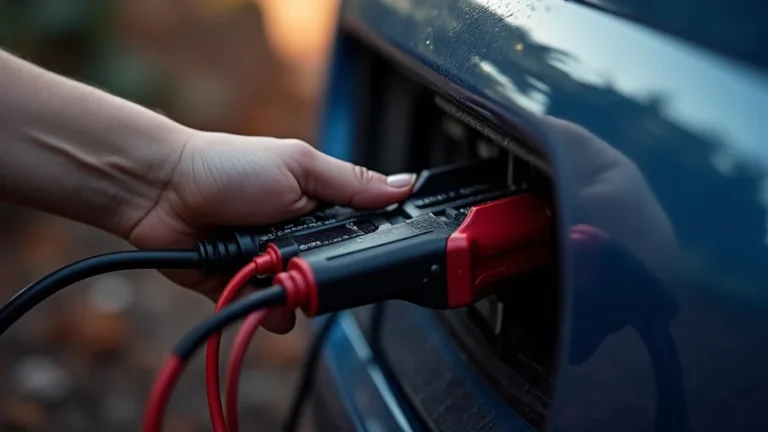
Using a jump starter is straightforward, following these steps ensures both safety and success in starting your vehicle. First, ensure the jump starter is fully charged. Next, turn off the ignition and set the parking brake. Connect the red (positive) clamp of the jump starter to the positive (+) terminal of your car battery. Attach the black (negative) clamp to a metal, grounded surface on your car, away from the battery. Turn on the jump starter if required, and then try starting your car. If it starts, disconnect the clamps in the reverse order and let your car run for at least 15-20 minutes to help the car’s battery recharge.
- Prepare the Vehicle: Make sure the car’s ignition is off and the parking brake is engaged.
- Connect the Jumper Cables: Connect the red (+) clamp to the positive terminal of the car battery and the black (-) clamp to a ground.
- Power On the Jump Starter: Turn on the jump starter if it has a power switch.
- Start the Vehicle: Try to start your car. If the engine turns over, you’re good to go.
- Disconnect the Cables: Remove the clamps in reverse order.
- Let the Car Run: Allow the car to run for a bit to charge the car’s battery.
Safety Tips for Jump Starter Usage
Safety is key when using a jump starter. Always wear eye protection to guard against battery acid, which can cause severe burns. Make sure the jump starter’s clamps are not touching each other or any other metal parts of the car while they are connected to avoid sparking. Double-check that you’ve connected the clamps to the correct terminals (positive to positive, negative to ground) to prevent damage. Read the manufacturer’s instructions for your specific jump starter to be familiar with any unique safety features or warnings. Doing this will protect you, the car, and the jump starter.
- Wear Safety Glasses: Protect your eyes from battery acid and sparks.
- Avoid Sparks: Make sure the clamps don’t touch each other or any metal part of the car while connected.
- Correct Connections: Double-check you’re connecting the clamps to the correct terminals (positive to positive, negative to ground).
- Read the Manual: Familiarize yourself with your jump starter’s safety features and warnings.
Choosing the Right Jump Starter for Your Needs
Deciding which jump starter to buy depends on your needs. The size of your engine is a key factor; larger engines require more power, measured in “cranking amps”. Consider also the features you may need, such as USB charging ports, LED flashlights, or an air compressor. Think about portability; some jump starters are heavier and bulkier than others. Read reviews to learn from the experiences of other users, and compare different models to find one that fits your needs and your budget. Selecting the correct jump starter means you will be prepared for any battery failure situation.
Another element to bear in mind is the capacity of the jump starter, measured in milliamp hours (mAh). The mAh rating tells you how many times you can use the jump starter before it needs to be recharged. The higher the mAh, the more uses you will get from a single charge. Finally, always think about the overall build quality and warranty, because a better-built jump starter with a solid warranty will last longer and give you peace of mind.
Understanding Cranking Amps
Cranking amps (CA) or cold cranking amps (CCA) are among the most important factors when choosing a jump starter. CA measures the amount of current the jump starter can deliver at 32°F (0°C), while CCA measures the current at 0°F (-18°C). Higher values indicate a jump starter can provide more power, making it better suited for larger engines and colder climates. For small cars, a jump starter with 400-600 CCA may be enough, while larger vehicles, like trucks or SUVs, might need 800-1000 CCA or more. Always ensure the jump starter you choose has a CCA rating that meets or exceeds the needs of your vehicle to guarantee its effectiveness.
- Cranking Amps (CA): The amount of current the jump starter can provide at 32°F (0°C).
- Cold Cranking Amps (CCA): The current at 0°F (-18°C).
- Engine Size: Larger engines require more CA/CCA.
- Climate: Colder climates require higher CA/CCA.
Additional Features to Consider
Apart from the basic function of jump-starting, many jump starters now offer extra features that increase their value. USB ports are common, allowing you to charge smartphones and other devices in emergencies. LED flashlights can be useful when working in the dark. Some models also come with an integrated air compressor for inflating tires. These extra features make a jump starter more than just a tool; they transform it into a convenient all-in-one solution for various needs. Choose the features that you find the most useful for your daily life and your vehicle.
- USB Charging Ports: For charging phones and other devices.
- LED Flashlight: Very useful when working in low-light conditions.
- Air Compressor: For inflating tires on the go.
- Battery Capacity Indicator: Gives you an indication on the jump starter’s charge.
Jump Starter Maintenance and Care
Caring for your jump starter helps prolong its life. Keep it stored in a cool, dry place and make sure it’s away from extreme temperatures and direct sunlight. It is important to charge your jump starter regularly, even if you haven’t used it, to maintain the battery’s health. Most jump starters will slowly discharge over time. A good rule of thumb is to recharge your jump starter every 3-6 months or as suggested by the manufacturer. Clean the clamps of corrosion or debris to ensure a good connection. Periodic maintenance means your jump starter will always be ready when you need it.
Proper storage is important to prevent damage or deterioration. Avoid leaving your jump starter in hot cars, garages or locations where the temperatures can fluctuate significantly. These conditions can degrade the battery and diminish its performance. When you notice that your jump starter isn’t holding a charge as long as it used to, or if the indicator lights show a lower charge, it might be time to replace the battery. Always follow the manufacturer’s instructions for charging, storing, and maintaining your jump starter to guarantee its effectiveness and durability.
Charging Your Jump Starter
Charging your jump starter correctly is key for optimal performance. Most come with an AC adapter or a USB charging cable. Plug the jump starter into the appropriate charger and wait until it’s fully charged before using it. During charging, keep the jump starter in a well-ventilated area. Never leave it charging unattended for long periods. Overcharging can damage the battery. Refer to the manufacturer’s manual for specific charging instructions for your device. Knowing and following those instructions is important for ensuring the device’s durability.
- Use the Correct Charger: Always use the charger supplied with your jump starter.
- Charge in a Well-Ventilated Area: This helps prevent overheating.
- Avoid Overcharging: Unplug the charger when the jump starter is fully charged.
- Check the Indicator Lights: These show the charging status.
Troubleshooting Common Issues
Even with careful maintenance, issues can arise. If your jump starter won’t charge, make sure the charger is working and is connected to a functioning power outlet. Check the connections between the charger and the jump starter. If the jump starter doesn’t start your car, double-check that the clamps are properly connected to the correct terminals. Make sure the jump starter has a sufficient charge. If the jump starter is old, the battery may be reaching the end of its life, and it might need to be replaced. If problems continue, refer to your jump starter’s manual or contact the manufacturer for support.
If the jump starter’s battery fails, it may not be capable of providing enough power to start the vehicle. You’ll notice this because the car won’t turn over, or the jump starter’s indicator lights may show a low charge. Over time, the battery can degrade and might need to be replaced. Additionally, external factors, like extreme temperatures, can impact battery performance. To troubleshoot, follow the steps outlined in the manual. You might need professional help if the troubleshooting steps do not resolve the issue. Here’s a quick look at common problems and solutions.
| Problem | Possible Solution |
|---|---|
| Jump Starter Won’t Charge | Check the power outlet, charger connection, and ensure the charger is working. |
| Car Won’t Start After Jump | Ensure clamps are connected correctly. Make sure the jump starter is sufficiently charged. |
| Jump Starter Battery Doesn’t Hold Charge | The battery might need to be replaced. |
| Clamps Don’t Make a Good Connection | Clean the clamps of corrosion and ensure a firm connection to the battery terminals. |
Frequently Asked Questions
Question: How long does it take to charge a jump starter?
Answer: The charging time varies by model, but generally takes between 1 to 12 hours.
Question: Can I use a jump starter on any type of car battery?
Answer: Most jump starters are safe for lead-acid, AGM, and gel batteries, but always check your jump starter’s specifications.
Question: How many times can a jump starter jump a car before needing a recharge?
Answer: This depends on the jump starter’s capacity, but most can jump a car multiple times on a single charge.
Question: Is it safe to leave a jump starter in a hot car?
Answer: It’s best to avoid storing a jump starter in extreme temperatures as it can reduce battery life.
Question: What should I do if my jump starter won’t start my car?
Answer: Double-check the connections, ensure the jump starter is charged, and consult the user manual for troubleshooting.
Final Thoughts
Having a jump starter is like having a reliable friend who can bail you out when your car’s battery gives up. We’ve explored exactly what is a jump starter, from its function and parts to how it works, and how to choose the right one for your needs. We’ve also learned about the importance of safety and care. The beauty of a jump starter lies in its simplicity and effectiveness. It’s a tool that everyone can use, regardless of their knowledge of cars. If you’re on the road and have a dead battery, your peace of mind is guaranteed. Now you are well-informed and equipped to face battery-related problems with confidence. Invest in a jump starter, keep it charged, and enjoy peace of mind on your travels.