Find Out What Battery Size Fits My Car For a Perfect Fit

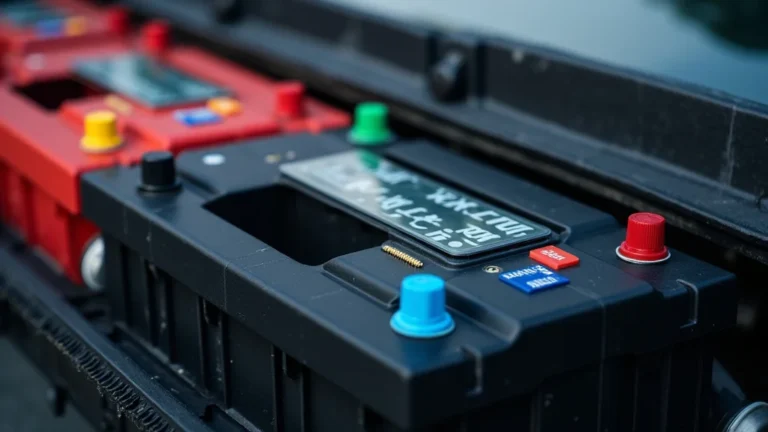
Featured image for what battery size fits my car
Image source: i.stack.imgur.com
Ensuring a perfect fit is paramount when choosing a new car battery for optimal performance and longevity. Always consult your owner’s manual first for precise specifications, including Cold Cranking Amps (CCA), reserve capacity, and physical dimensions. Matching these details precisely prevents starting issues and system damage, guaranteeing reliable power for your vehicle.
Hey there! Ever stared at a dead car battery, feeling that familiar dread, and then thought, “Ugh, now I have to figure out a new one?” We’ve all been there. It’s not just about getting your car started again; it’s about getting the right one. You might think a battery is just a battery, but trust me on this, choosing the correct battery size for your car is crucial for its longevity and performance.
Picking the wrong battery can lead to all sorts of headaches, from premature failure to electrical system issues, and even potential safety hazards. It’s not just about physical dimensions; it’s about meeting your car’s specific electrical demands. So, if you’ve ever wondered what battery size fits my car, you’re in the perfect place. We’re going to demystify the process and help you make an informed decision.
Think of your car’s battery as its heart. You wouldn’t put an incompatible heart into a body, right? Similarly, giving your car the exact battery it needs ensures everything runs smoothly. Let’s dive in and find out exactly what battery size fits your car for a perfect, worry-free fit.
Key Takeaways
- Consult Owner’s Manual: Always check your car’s owner’s manual first for specifications.
- Verify Existing Battery: Note the Group Size, CCA, and RC from your current battery.
- Use Online Fitment Tools: Input your vehicle’s year, make, model into online guides.
- Measure Battery Tray: Confirm physical dimensions to ensure the new battery fits.
- Match Key Specifications: Prioritize matching Group Size, CCA, and Reserve Capacity (RC).
- Seek Professional Advice: When in doubt, ask an auto parts store for expert assistance.
📑 Table of Contents
Why “Just Any Battery” Won’t Do: The Importance of a Perfect Fit
It’s easy to assume all car batteries are pretty much the same. You see them on the shelves, they all look like rectangular boxes, right? But that couldn’t be further from the truth. Your car is a finely tuned machine, and its electrical system is designed to work with very specific battery parameters. Going rogue with your choice can cause more problems than it solves.
Beyond Just Starting Your Car
A battery does more than just crank your engine to life. It powers all your car’s electrical components when the engine isn’t running, like your lights, radio, and power windows. Once the engine is on, the alternator takes over, but the battery still acts as a voltage stabilizer and helps handle surge demands. An incorrectly sized battery might not provide enough power for these accessories, especially in modern cars packed with electronics, leading to poor performance or even damage.
Safety First!
Beyond performance, there are safety considerations. A battery that’s too large might not fit securely in the battery tray, allowing it to shift during driving. This can cause damage to the battery, terminals, or surrounding components, potentially leading to short circuits or even acid leaks. On the flip side, a battery that’s too small might be under constant strain, shortening its lifespan and increasing the risk of overheating or early failure. Finding what battery size fits my car properly is key for safety and peace of mind.
Decoding Your Current Battery: Where to Start Your Search
The easiest first step in figuring out what battery size fits my car is to look at the battery already in it. Most of the information you need is right there on the label. But be careful – this is a starting point, not always the final answer, especially if a previous owner installed the wrong one.
The Label is Your Best Friend
Pop your hood and locate your battery. On the top or side, you’ll usually find a label with a bunch of numbers and letters. Here’s what to look for:
- Group Size: This is probably the most important physical measurement. It’s a two-digit number (e.g., 24, 35, 65) sometimes followed by a letter (e.g., 24F, 78DT). This tells you the battery’s length, width, and height.
- Cold Cranking Amps (CCA): This number indicates the battery’s ability to start your car in cold weather.
- Reserve Capacity (RC): This tells you how long your battery can power essential accessories if your alternator fails.
Jot these numbers down. They are excellent clues!
A Quick Look at Dimensions
While the group size handles most of the physical fit, it’s also a good idea to visually inspect your current battery’s dimensions. Does it fill the tray snugly? Are the terminals positioned correctly to reach your car’s cables without straining them? This visual check helps confirm the group size is likely correct for your vehicle.
Understanding Key Battery Specifications
Now that you’ve got some numbers, let’s break down what they actually mean. These specs are vital for ensuring you get a battery that meets your car’s electrical demands. This is where understanding what battery size fits my car truly becomes clear.
Group Size: The Physical Fit
Battery Group Size refers to the industry-standard dimensions (length, width, height) of the battery, along with the location and type of its terminals. For example, a Group 24 battery is a common size for many Honda, Toyota, and Nissan models. A Group 65 might fit larger Ford or Chrysler vehicles. If the group size is off, the battery simply won’t fit in the tray or the cables won’t reach the terminals properly. Some group sizes also have an “F” or “R” suffix, which indicates terminal placement (e.g., “F” for Ford-style terminals, or “R” for reversed terminals).
Cold Cranking Amps (CCA): Powering Up in the Cold
CCA is a measure of the battery’s ability to deliver a burst of energy to start your engine, especially important in cold temperatures. The higher the CCA rating, the more starting power the battery has. For instance, a small sedan might require 400-500 CCA, while a large truck or SUV in a cold climate might need 700-850 CCA or more. If you live in a region with harsh winters, opting for a battery with a CCA rating at or slightly above your car’s recommendation is a smart move. Too low CCA, and your car might struggle to start on chilly mornings.
Reserve Capacity (RC): Your Emergency Lifeline
RC measures how long a fully charged battery can continuously run essential accessories (like lights and wipers) if your alternator fails or you accidentally leave something on when the engine is off. It’s usually expressed in minutes. A higher RC means your car has a longer “buffer” before the battery completely drains, giving you more time to get to safety or restart. For example, an RC of 90 minutes means the battery can deliver 25 amps for 90 minutes before dropping below a usable voltage.
Amp-Hour (Ah): For Specific Applications
While CCA and RC are more common for starting batteries, Amp-Hour (Ah) is often used for deep-cycle batteries or in vehicles with extensive electrical demands (like those with stop-start technology, or aftermarket sound systems). Ah measures the total amount of energy stored in a battery, indicating how many amps it can deliver for how many hours. For example, a 100 Ah battery can theoretically deliver 100 amps for one hour, or 10 amps for 10 hours. Your owner’s manual will specify if Ah is a critical metric for your vehicle, particularly for AGM (Absorbed Glass Mat) or EFB (Enhanced Flooded Battery) types.
Where to Find Your Car’s Battery Requirements
Beyond looking at your old battery, there are definitive sources to find out what battery size fits my car according to the manufacturer’s specifications.
Your Owner’s Manual: The Ultimate Authority
This is your go-to resource! Your car’s owner’s manual will list the exact battery group size, minimum CCA, and often the RC or Ah ratings recommended by the manufacturer. It’s designed specifically for your vehicle model and trim level, so you can trust this information implicitly. If you can’t find your physical manual, many manufacturers offer digital versions online.
Manufacturer Websites and Online Tools
Most major car manufacturers have support sections on their websites where you can input your vehicle’s make, model, and year to find recommended parts, including battery specifications. Similarly, large auto parts retailers (like AutoZone, O’Reilly Auto Parts, Advance Auto Parts, or Pep Boys) and battery brands (like Optima, Interstate, or Exide) have “shop for parts” or “find my battery” tools on their websites. You just enter your car’s details, and it will list compatible batteries.
Reputable Auto Parts Stores
Don’t hesitate to visit your local auto parts store. The staff there often have extensive knowledge and computer systems that can quickly tell you what battery size fits my car. Just be prepared with your car’s make, model, year, and engine size. They can also often cross-reference your old battery to ensure you’re getting the right replacement.
Tips for a Smooth Battery Replacement
Once you know the specs, purchasing and installing a new battery can be straightforward. Here are a few tips to ensure everything goes smoothly.
Double-Checking Before You Buy
Before you commit to a purchase, always verify the group size, CCA, and RC against your car’s requirements or the information from your owner’s manual. Even if the online tool says it fits, a quick visual check of the battery in the store can prevent a frustrating return trip. Also, check the manufacturing date – you want the freshest battery possible for maximum lifespan.
Installation Considerations (Professional vs. DIY)
Changing a car battery can be a DIY task for many, but it’s important to be safe. Always disconnect the negative terminal first, then the positive. Reconnect in reverse order (positive first, then negative). Wear gloves and eye protection. If you’re unsure or uncomfortable, especially with modern vehicles that can have complex electrical systems (requiring battery resets or special tools), don’t hesitate to seek professional installation. Many auto parts stores offer free installation with purchase.
Don’t Forget Battery Maintenance
Once installed, a little maintenance goes a long way. Keep the battery terminals clean and free of corrosion. You can use a wire brush and a battery terminal cleaner for this. Ensure the battery hold-down is secure so the battery doesn’t move. In some climates, a battery tender can help prolong life if your car sits unused for long periods. Knowing what battery size fits my car is just the first step; maintaining it ensures its longevity.
Common Misconceptions and What to Avoid
There are a few myths floating around about car batteries that can lead you down the wrong path. Let’s clear them up.
Bigger Isn’t Always Better
Many people think that if their car requires, say, 500 CCA, buying one with 700 CCA is even better. While a slightly higher CCA won’t hurt, going significantly bigger can sometimes cause fitment issues if the physical dimensions are off. More importantly, your car’s charging system is designed to optimally charge a battery within a specific capacity range. A much larger battery might never be fully charged by your alternator, leading to a shortened lifespan. Stick as close as possible to the manufacturer’s recommendations for what battery size fits my car.
Mixing Technologies
Modern cars often come with specific battery technologies, such as AGM (Absorbed Glass Mat) or EFB (Enhanced Flooded Battery), especially those with start-stop systems. These are not interchangeable with traditional flooded lead-acid batteries. Using the wrong type can severely impact your car’s electrical system and the battery’s lifespan because the charging profiles are different. Always replace an AGM with an AGM, and an EFB with an EFB, unless explicitly advised otherwise by a professional who understands your car’s system.
Ignoring Your Car’s Electrical Demands
Your car’s electrical demands aren’t just about starting the engine. All those gadgets, sensors, and computer modules draw power. Ignoring these demands and simply picking the cheapest or most convenient battery can lead to premature battery failure, flickering lights, or even dashboard warning lights. Always consider your climate (for CCA), your car’s features (for RC/Ah), and your driving habits when making your final decision about what battery size fits my car.
Finding the right battery for your car doesn’t have to be a confusing chore. By understanding a few key specifications and knowing where to look for reliable information, you can confidently choose a battery that will serve your vehicle well for years to come. Your car will thank you with reliable starts and consistent performance. So take a moment, check your manual, and give your car the perfect power source it deserves!
Frequently Asked Questions
How do I determine the correct battery size for my car?
The most accurate way is to check your car’s owner’s manual, which specifies the exact battery group size and necessary ratings. You can also look for a label on your existing battery or use online tools provided by battery manufacturers by entering your vehicle’s make, model, and year.
What happens if I install the wrong battery size in my vehicle?
Installing the wrong battery size can lead to several problems, including improper fitment in the battery tray, which can cause vibration damage. An undersized battery might not provide enough starting power or reserve capacity, leading to premature failure, while an oversized one might not fit physically or charge correctly.
Where can I find information about my car’s recommended battery size?
Your vehicle’s owner’s manual is the primary source for finding the recommended battery group size, CCA (Cold Cranking Amps), and AH (Amp-Hour) ratings. Alternatively, auto parts store websites and their in-store systems allow you to input your car’s details to find compatible battery options.
Are all car batteries the same size and type?
No, car batteries vary significantly in size, shape, terminal configuration, and internal technology (e.g., lead-acid, AGM, EFB). Different vehicles require specific battery group sizes and power ratings to ensure proper fitment and optimal electrical performance.
What do CCA and AH ratings mean when choosing a battery size?
CCA (Cold Cranking Amps) indicates the battery’s ability to start the engine in cold temperatures, which is crucial for reliable starting. AH (Amp-Hour) represents the battery’s reserve capacity, showing how long it can deliver a specific current before discharging. Both are vital performance metrics that complement the physical size.
Can I use a larger capacity battery than what’s recommended for my car?
While it might seem beneficial, installing a significantly larger capacity battery than recommended can be problematic. It might not fit properly in the battery tray, and your car’s charging system might not be optimized to fully charge or maintain a much larger battery, potentially leading to undercharging or premature battery wear.