What Amp to Charge Car Battery Safely Effectively
Featured image for what amp to charge car battery
Image source: carbatterygeek.co.uk
Choosing the correct amperage is paramount for charging your car battery safely and effectively, preventing damage and ensuring longevity. While a slow, trickle charge (2-10 amps) is generally recommended for optimal battery health and maintenance, higher settings (10-20 amps) can offer a quicker boost. Always consult your battery and charger manuals, prioritizing manufacturer recommendations to avoid overcharging and potential hazards.
Key Takeaways
- Match Amps to Battery: Use 10% of AH capacity for optimal charging.
- Prioritize Slow Charging: Maximize battery life with lower amperage rates.
- Use Smart Chargers: Prevent overcharging and ensure safe, effective power.
- Connect Safely First: Always attach clamps before plugging in the charger.
- Monitor Battery Voltage: Disconnect when fully charged, typically 12.6-12.8V.
- Avoid Fast Charging: Reserve high amps for emergencies; it stresses batteries.
- Ventilate Charging Area: Prevent dangerous gas buildup by ensuring airflow.
📑 Table of Contents
- What Amp to Charge Car Battery Safely Effectively
- Understanding Your Car Battery’s Needs
- The “Golden Rule” for Charging Amperage
- Different Types of Car Battery Chargers and Their Amperage Output
- Safety First: Essential Tips When Charging
- Practical Examples and Choosing the Right Amp for Your Battery
- Conclusion
What Amp to Charge Car Battery Safely Effectively
We’ve all been there, right? You rush out the door, coffee in hand, ready to conquer the day, only to turn the key and be met with that soul-crushing silence. A dead car battery. It’s a rite of passage for many drivers, and while jump-starting is a quick fix, sometimes you need a proper charge to bring your trusty steed back to full health. But then the big question hits: what amp to charge car battery with?
It’s not as simple as just plugging it in. Charging a car battery correctly involves understanding a few key factors to ensure safety, extend battery life, and get the most effective charge. Using the wrong amperage can damage your battery, lead to a fire hazard, or simply not charge it at all. So, let’s dive in and demystify the world of car battery charging, so you can confidently pick the right charger and the right amp for your situation.
Understanding Your Car Battery’s Needs
Before we talk about amps, it’s crucial to understand what you’re charging. Most car batteries are 12-volt lead-acid batteries, but they come in various capacities, measured in Amp-hours (Ah). This Ah rating tells you how much energy your battery can store. For example, a 60 Ah battery can theoretically deliver 60 amps for one hour, or 1 amp for 60 hours. This capacity is the single most important factor in determining what amp to charge car battery with effectively.
Different types of lead-acid batteries also exist: traditional flooded (wet cell), Absorbent Glass Mat (AGM), and Gel Cell. While the general charging principles are similar, some smart chargers have specific settings for these types to optimize their charging cycle. Always check your battery type, usually printed on the label, and consult your charger’s manual if it offers different settings to ensure you select the appropriate amp to charge car battery.
The “Golden Rule” for Charging Amperage
When it comes to deciding what amp to charge car battery, there’s a widely accepted “golden rule”: charge at approximately 10% of the battery’s Ah rating. So, if you have a 60 Ah battery, a 6-amp charger would be ideal for a standard charge. For an 80 Ah battery, you’d look for an 8-amp setting. This rate is considered safe and effective for most lead-acid batteries, promoting a thorough charge without undue stress.
Why Slower is Often Better
Charging at a slower rate, like the 10% rule suggests, is generally better for the long-term health of your battery. A slower charge allows the battery to absorb the electricity more efficiently, reduces heat build-up, and minimizes the risk of overcharging. Think of it like drinking water: sipping it slowly is better than chugging it all at once. This slow and steady approach ensures a deep, complete charge that helps extend the battery’s overall lifespan.
When a Higher Amp Charge Might Seem Appealing (and its downsides)
You might see chargers advertising very high amperage ratings, sometimes 20 amps or even “jump start” modes of 100+ amps. While these can rapidly add some juice to a battery, or even crank an engine, they come with significant caveats. High-amp charging generates more heat, which can damage the battery’s internal plates and reduce its lifespan. It also increases the risk of gassing and potential explosion if ventilation is poor. Using a very high amp to charge car battery is usually only recommended for emergency starting, not for routine battery charging.
Different Types of Car Battery Chargers and Their Amperage Output
The market offers a range of battery chargers, each with different capabilities and amp outputs. Understanding these can help you choose the right tool for the job when deciding what amp to charge car battery.
- Trickle Chargers (1-2 Amps): These low-amp chargers are perfect for maintaining a battery over extended periods, like during winter storage for a classic car or a motorcycle. They slowly top off the battery without overcharging, preventing self-discharge. They are not designed to charge a dead battery quickly.
- Standard Chargers (4-10 Amps): This is your workhorse charger for most everyday needs. Many models offer selectable amperage settings (e.g., 2A, 6A, 10A), making them versatile for different battery sizes. This range generally aligns with the “golden rule” for safely deciding what amp to charge car battery.
- Fast Chargers / Booster Chargers (20+ Amps, up to 100s for jump assist): These are powerful units, often found in professional garages. While they can quickly put a charge into a dead battery or provide enough amps to help start a car with a very weak battery, they should be used with extreme caution for general charging due to the potential for battery damage from excessive heat.
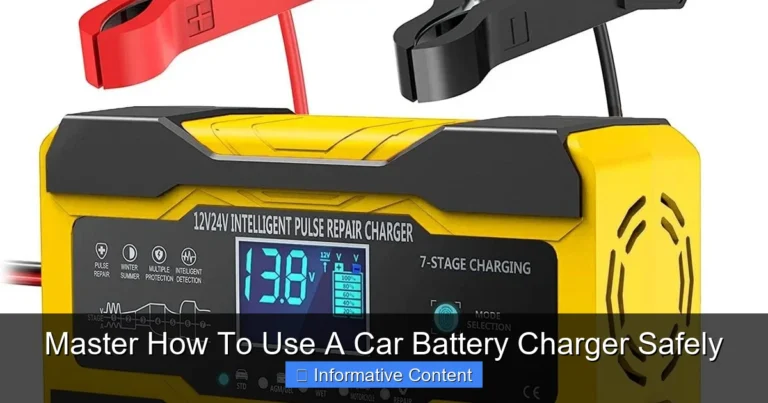
- Smart Chargers / Maintainers: These are arguably the best option for most users. Smart chargers automatically monitor the battery’s condition and adjust the charging amperage and voltage throughout the charging cycle. They prevent overcharging, often have modes for different battery types (AGM, Gel), and can even desulfate some batteries. Many will start at a higher amp to bring the battery up quickly, then switch to a lower, gentler amp for the finishing charge, and finally to a maintenance mode, optimizing the amp to charge car battery.
Safety First: Essential Tips When Charging
Charging a car battery involves electricity and potentially explosive gases (hydrogen), so safety is paramount. Never skip these steps:
- Ventilation is Key: Always charge your battery in a well-ventilated area to dissipate any hydrogen gas that may be produced.
- Wear Protection: Eye protection (safety glasses) and gloves are a must. Battery acid is corrosive.
- Proper Connection Order: Connect the positive (+) charger clamp to the positive (+) battery terminal first. Then, connect the negative (-) charger clamp to a metal part of the car’s frame, away from the battery, to act as a ground. This prevents sparks near the battery, where hydrogen gas might accumulate.
- Inspect the Battery: Before charging, check for any cracks, leaks, or swelling. Do not charge a damaged battery.
- Monitor the Process: Keep an eye on the battery during charging. If it gets excessively hot or starts to bubble vigorously, disconnect the charger immediately.
What to Avoid: Overcharging and Undercharging
Both overcharging and undercharging can harm your battery. Overcharging, especially with a non-smart charger, can lead to excessive gassing, plate corrosion, and irreversible damage. Undercharging, on the other hand, can lead to sulfation – a build-up of lead sulfate crystals on the battery plates that reduces capacity and eventually kills the battery. This is why a smart charger, which intelligently manages the amp to charge car battery, is highly recommended.
Practical Examples and Choosing the Right Amp for Your Battery
Let’s consider a few real-world scenarios to solidify your understanding:
- Scenario 1: Your daily driver’s battery is slightly drained (e.g., you left the lights on overnight).
You probably have a 50-70 Ah battery. A standard charger set to 4-7 amps would be ideal. A smart charger would also handle this perfectly, automatically sensing the charge level and applying the appropriate amp to charge car battery.
- Scenario 2: Your classic car is going into winter storage.
A trickle charger (1-2 amps) or a smart maintainer is exactly what you need. This will keep the battery topped off without overcharging, ensuring it’s ready to go in the spring.
- Scenario 3: Your battery is completely dead and needs a full charge.
Assuming no damage, a standard charger at the 10% Ah rate (e.g., 6-8 amps for a typical car battery) is the safest and most effective for a full recharge. It might take longer (several hours), but it’s best for battery health. Avoid using a high-amp “fast charge” setting for a full deep charge.
To find your battery’s Ah rating, look for it printed on the battery label itself. If not explicitly listed as “Ah,” sometimes a “RC” (Reserve Capacity) rating is given, which can be converted, or you can check your car’s owner’s manual or a quick online search for your vehicle’s make and model. This will give you the essential information needed to select the right amp to charge car battery effectively.
Common Car Battery Sizes and Recommended Charging Amperage
To give you a clearer picture, here’s a quick guide on common battery capacities and the recommended amperage for charging:
| Battery Capacity (Ah) | Recommended Slow/Maintenance Charge (Amps) | Recommended Standard Charge (Amps) |
|---|---|---|
| 30 Ah (Motorcycle/Small Car) | 1-2 | 3-4 |
| 50 Ah (Compact Car) | 2-3 | 5-6 |
| 60 Ah (Mid-Size Car) | 2-3 | 6-7 |
| 75 Ah (Large Car/SUV) | 3-4 | 7-8 |
| 100 Ah (Truck/Heavy Duty) | 4-5 | 10-12 |
*These are general recommendations. Always refer to your battery manufacturer’s guidelines and your charger’s manual.
Conclusion
Understanding what amp to charge car battery with is a simple yet crucial piece of knowledge for any car owner. By choosing the right amperage – generally around 10% of your battery’s Ah capacity – and prioritizing safety, you can ensure your battery gets a thorough, healthy charge that extends its life and keeps you on the road. Investing in a good quality smart charger that automatically manages the amp to charge car battery is often the best choice, providing peace of mind and optimal battery care. So next time you face a sluggish start, you’ll know exactly how to bring your battery back to life safely and effectively!
Frequently Asked Questions
What’s the ideal amp setting for safely charging a car battery?
The ideal amp setting for most car batteries is typically around 10-15% of the battery’s Ah (Amp-hour) rating. For example, a 60 Ah battery would benefit from a 6-9 amp charge. This rate ensures a slow, steady charge that is optimal for battery health and longevity.
Is a low amp charge better for the long-term health of my car battery?
Yes, generally, a lower amp charge (e.g., 2-4 amps) is significantly better for the long-term health of your car battery. This slower, gentler charging process reduces heat buildup and minimizes stress on the battery’s internal components, promoting a longer lifespan. While it takes more time, it’s the preferred method for maintenance or non-urgent charging.
Can I use a high amp setting to charge my car battery quickly?
While you can use a higher amp setting (e.g., 15-20 amps or more) to charge a car battery more quickly, it comes with risks. Rapid charging can generate excessive heat, which may damage the battery’s internal plates, reduce its overall lifespan, and even pose a safety hazard. High amps are best reserved for jump-starting assistance or emergencies, and only with chargers designed for such use.
How does the chosen amp rate affect the total charging time?
The chosen amp rate directly impacts the total time required to fully charge your car battery. A higher amp setting will reduce charging time, but as mentioned, carries potential risks to battery health. Conversely, a lower amp setting will extend the charging duration but is generally safer and more beneficial for the battery in the long run.
What amp should I select for a deeply discharged or completely dead car battery?
For a deeply discharged or completely dead car battery, it’s recommended to start with a very low amp setting, typically 2-4 amps, or use a “smart” charger with a reconditioning mode. A slow, controlled charge helps to safely recondition the battery without causing further stress or damage, gradually bringing it back to a usable voltage. Avoid high amps on dead batteries.
What are the risks if I choose the wrong amp to charge car battery?
Choosing the wrong amp to charge a car battery can lead to several risks, including battery damage and safety hazards. Too high an amp setting can cause overheating, plate damage, electrolyte boiling, and potentially even an explosion. Too low an amp might fail to charge a severely drained battery effectively or take an excessively long time, making the process inefficient.