Jump Starter vs Battery Charger: What’s the Real Difference?
Figuring out the jump starter vs battery charger difference can feel confusing at first. Both seem to do the same thing: help your car start when the battery’s low. But they actually work quite differently, and choosing the right tool is important. Don’t worry, though! This guide will break down the key distinctions in a simple, step-by-step way. Get ready to explore what makes each of these useful tools unique.
What Are Battery Chargers and What Do They Do?
A battery charger is a device that puts power back into your car’s battery. Think of it as a way to “refuel” your battery so it can start your car. Battery chargers connect to your car’s battery and slowly replenish the electrical charge. They are perfect when your battery is drained from lights being left on, or your car has been sitting unused for a while. They are best for restoring power over time and maintaining the battery’s health. You can find many types of battery chargers, varying in amperage, charging modes, and added safety features.
Types of Battery Chargers
There are several types of battery chargers available, each with its own advantages and uses. Choosing the right one depends on your needs and how you plan to use it. Here are a few common types.
-
Trickle Chargers: These chargers deliver a low, consistent current over a long period. They are often used to maintain a battery’s charge when a vehicle is stored for a long time. They’re great for preventing battery discharge, but they are not the best choice for a completely dead battery that needs a quick boost. They slowly and gently recharge the battery.
Trickle chargers provide a small, steady amount of current, keeping the battery topped up without overcharging it. This is beneficial for storing vehicles during the off-season. They’re usually less expensive and simpler to operate.
-
Smart Chargers: Smart chargers use sophisticated technology to assess the battery’s condition and adjust the charging rate accordingly. They prevent overcharging and can often revive batteries that have been deeply discharged. Smart chargers are designed to monitor the battery and adjust the charging process to optimize battery life and safety. This protects against overcharging, which can damage a battery.
These chargers are “smart” because they analyze the battery’s state, making changes to the charging process to deliver the right amount of power safely and effectively. They are more costly compared to trickle chargers but provide more features.
-
Fast Chargers: Also known as rapid chargers, they deliver a high current to charge a battery quickly. However, fast chargers can generate heat, which can potentially damage the battery if used incorrectly. Therefore, they are best suited for situations where time is critical. They are a good option when you need to get your car running fast.
Fast chargers supply a high current to the battery, significantly reducing the charging time. They are suitable for when you are pressed for time, but it’s important to monitor the charging process to prevent overheating. They can provide a significant charge in a relatively short period.
What Is a Jump Starter and How Does It Differ?
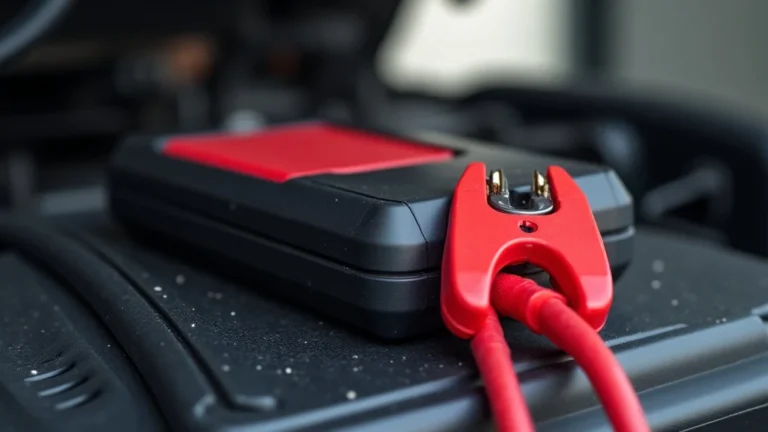
A jump starter is a portable device used to start a vehicle with a dead battery. Unlike battery chargers, which slowly restore power, a jump starter provides a burst of immediate power. It works by sending a large amount of current to the car’s starter motor, allowing the engine to turn over and start. Jump starters are designed for emergencies. They are compact and often include features such as built-in flashlights and USB charging ports.
How a Jump Starter Works
A jump starter’s operation is straightforward: connect it to your car’s battery terminals and turn it on. The device contains a battery of its own, usually a lithium-ion battery, which can provide a high burst of current. This is different from a battery charger, which draws power from an electrical outlet. Jump starters are designed to be compact and mobile, so you can easily carry them in your car.
-
Connection: The user connects the jump starter’s clamps to the car battery terminals (positive to positive, negative to negative). Proper connection is critical to prevent damage or injury.
The first step is to correctly connect the jump starter to the car battery. This involves attaching the positive (red) clamp to the positive terminal and the negative (black) clamp to the negative terminal. Make sure the clamps are making good contact, so you get all the power from the jump starter.
-
Activation: Once connected, the user turns on the jump starter. The device then releases a burst of high current.
After connecting the clamps, you activate the jump starter. This usually involves pressing a power button. Once activated, the jump starter sends a surge of power to the car’s starter motor.
-
Starting the Car: After the jump starter is activated, you try to start the car as usual.
With the jump starter providing the necessary power, you can attempt to start the car. If the engine turns over and starts, you can disconnect the jump starter.
Jump Starter Features to Consider
Modern jump starters come packed with features designed for convenience and safety. These features can significantly affect which jump starter suits your needs. Some additional features are described below.
-
Peak Amps: The peak amps rating is important. It indicates the maximum current the jump starter can deliver. A higher peak amp rating is often better, especially for starting larger engines.
Peak amps represent the maximum current the jump starter can supply to start the vehicle. Higher peak amps are beneficial for starting bigger engines, like those in trucks or SUVs. The amount you need depends on your vehicle’s engine size and the climate you live in.
-
Safety Features: Many jump starters come with protection against reverse polarity (connecting the clamps the wrong way) and overcharging, which prevent damage to your car and the jump starter itself. These safety features are useful for preventing damage to your car.
Safety features are critical. They protect both the jump starter and your car. Look for features like reverse polarity protection, which ensures the device will not work if the clamps are attached backward. Overcharge protection prevents the battery from getting damaged.
-
Additional Functions: Some jump starters offer additional functions, such as USB charging ports for phones and other devices, LED flashlights, and even air compressors. These extras add versatility.
Many modern jump starters include additional features that enhance their utility. Common extras are USB ports for charging phones, LED flashlights for roadside emergencies, and sometimes even built-in air compressors. These extra features add value.
Comparing Jump Starters and Battery Chargers
The jump starter vs battery charger difference is significant when it comes to their function, use, and the problems they solve. Understanding the distinctions will help you to select the tool that best fits your needs.
| Feature | Jump Starter | Battery Charger |
|---|---|---|
| Primary Function | To start a vehicle with a dead battery. | To recharge a car battery and maintain its charge. |
| Power Source | Internal battery. | Requires an electrical outlet. |
| Speed | Immediate power to start the vehicle. | Slower, providing a continuous charge. |
| Portability | Highly portable and compact. | Less portable; needs to be near an outlet. |
| Typical Use | Emergency situations, quick starts. | Routine battery maintenance, slow charging. |
The table provides a clear view, highlighting the significant differences between a jump starter and a battery charger. The main difference lies in their approach to resolving a dead battery: jump starters provide an instant jolt, whereas battery chargers take a more patient approach.
When to Use a Jump Starter
Jump starters are ideal for emergencies when your car won’t start. Here are some situations.
-
Vehicle Won’t Start: The car has a dead battery and won’t crank when you turn the key. The jump starter provides the immediate power needed to start the car.
If your car won’t start, the jump starter is your go-to solution. It delivers a quick burst of power to get the engine running. This immediate help can save you time and the hassle of waiting for roadside assistance.
-
Remote Locations: When you are away from home and have no access to an electrical outlet.
In situations far from home, a jump starter is invaluable. It’s perfect for off-road adventures, camping trips, or any location where you’re not near a power source. Their portability ensures you’re never stranded by a dead battery.
-
Quick Fix Needed: When you need to get your car running immediately.
If time is critical, a jump starter delivers the fastest solution. When you are late for an appointment or need to get back on the road ASAP, a jump starter will provide the power you need, fast.
When to Use a Battery Charger
Battery chargers work best in situations where time isn’t a factor. Some of these are listed below.
-
Slow Recharge Needed: When your battery needs to be fully recharged slowly and safely. Battery chargers restore the battery’s charge gradually, minimizing the chance of damage.
Battery chargers are designed to restore battery power carefully. This is important if you want to protect your car’s battery and prolong its life. Slow charging is safer for the battery’s health.
-
Battery Maintenance: Used for keeping batteries in good condition by maintaining their charge.
Use a battery charger to maintain the battery when it is not in use for long periods. This prevents it from discharging and extends its service life. Regular charging helps preserve battery capacity.
-
Preventative Care: Ideal for maintaining the charge of vehicles stored during off-seasons. This helps prevent battery sulfation.
For cars, motorcycles, or other vehicles stored for the winter, a battery charger is essential. It keeps the battery topped up, so it’s ready when you need it again, saving you from a dead battery when spring comes.
Choosing the Right Tool: Jump Starter or Battery Charger?
Deciding which tool is right for you depends on what you need. Think about your regular usage and your typical driving conditions. If you mostly drive in cities, a battery charger might be enough. If you frequently travel and require the versatility to address any circumstance, a jump starter could be better. Another choice is to have both to cover all situations.
Factors to Consider Before Buying
When you’re choosing between a jump starter and a battery charger, think about a few important things to make the right choice.
-
Frequency of Use: How often do you think you’ll need to jump-start your car or charge your battery?
If you seldom have battery problems, a battery charger will likely serve you well. If you often experience battery issues or live in a cold climate, a jump starter can provide the instant boost you need. The frequency of use influences which tool is more beneficial for you.
-
Portability Needs: Do you need a portable solution or do you have easy access to an outlet?
If you want a tool that you can carry around and use anywhere, a jump starter is best. A battery charger is an optimal choice if you have consistent access to a power source and can charge your battery indoors.
-
Battery Health: Are you looking to maintain your battery’s health or solve an immediate starting problem?
For routine maintenance and to extend your battery’s life, a battery charger is the better choice. However, if you’re dealing with a flat battery, a jump starter will provide the fast solution. Both provide different benefits.
Real-Life Scenarios
Here are some examples of what to expect when using these devices:
-
Scenario 1: You left your headlights on overnight, and your car won’t start. You use a jump starter, connect it to your battery, start your car, and then drive for 30 minutes to recharge your battery using your car’s alternator.
-
Scenario 2: Your car sits unused for weeks, and the battery is drained. You use a battery charger to gradually recharge the battery, restoring its full capacity and preventing damage.
Frequently Asked Questions
Question: Can a battery charger jump-start a car?
Answer: No, a battery charger cannot provide the immediate burst of power needed to start a car with a dead battery. Battery chargers are designed to restore power to a battery gradually.
Question: Can a jump starter charge a battery?
Answer: A jump starter is designed for quickly starting a car, not for charging a battery. It provides a burst of power, not a sustained charge.
Question: How long does it take to charge a car battery?
Answer: Charging time varies depending on the battery charger type and the battery’s condition. A slow charger may take several hours, while a fast charger can charge a battery in a couple of hours.
Question: Is it safe to leave a battery charger connected overnight?
Answer: It depends on the charger. Smart chargers are safe to leave connected overnight because they stop charging once the battery is full. Other chargers could overcharge and potentially damage the battery.
Question: How long does a jump starter last before needing to be recharged?
Answer: The number of jumps a jump starter can perform on a single charge varies by model. Most can provide several jumps before needing to be recharged. Always recharge the jump starter after use.
Final Thoughts
Understanding the jump starter vs battery charger difference is a step towards being better prepared for car troubles. Jump starters are quick fixes for emergencies, while battery chargers offer a more patient approach for battery maintenance. By knowing the functions of each, you can select the correct tool for your needs. Always check your vehicle’s manual and the instructions that come with your tools to stay safe. With the right tools, you can avoid many problems and keep your car ready to go. Consider your driving habits and your needs when deciding, and you’ll be well-prepared for any situation.