Master How to Read a Battery Tester Quickly and Accurately

Featured image for how to read a battery tester
Image source: publicdomainpictures.net
Mastering a battery tester empowers you to quickly and accurately diagnose battery health. Learn to properly connect the device, understand its diverse readings—from voltage to CCA—and interpret results like “good,” “weak,” or “replace” to avoid guesswork. This essential skill ensures reliable power for your devices and saves you significant time and hassle.
<h1>Master How to Read a Battery Tester Quickly and Accurately</h1>
<p>Picture this: You’re rushing out the door, coffee in hand, keys jingling, ready to tackle your day. You hop in your car, turn the key, and… nothing. Just a sad, pathetic click, or worse, dead silence. Your heart sinks. We’ve all been there, right? That moment of dread when you realize your car battery has decided to call it quits at the most inconvenient time possible. It’s frustrating, costly, and can throw your entire schedule into disarray.</p>
<p>What if I told you there’s a simple, powerful tool that can help you avoid this headache almost every time? Enter the <strong>battery tester</strong>. This unsung hero of automotive maintenance is your personal crystal ball for predicting battery health. Knowing how to properly read a <strong>battery tester</strong> isn’t just a skill for mechanics; it’s an essential bit of knowledge for any car owner who wants peace of mind, reliable transportation, and fewer unexpected expenses. Let’s demystify this handy device together, so you can keep your vehicle running smoothly and confidently.</p>
<h2>Why a Battery Tester is Your Car’s Best Friend</h2>
<p>Think of your car battery as the heart of your vehicle’s electrical system. Just like you’d get regular check-ups, your battery needs consistent attention to ensure it’s pumping out enough power. A <strong>battery tester</strong> makes this process incredibly easy and accessible.</p>
<h3>Preventing Unexpected Breakdowns</h3>
<p>The most obvious benefit of regularly testing your battery is avoiding those dreaded roadside breakdowns. A weak battery doesn’t just fail overnight; it usually gives subtle warnings. By using a <strong>battery tester</strong>, you can catch these early signs of decline long before they leave you stranded. Imagine the relief of knowing your battery is strong enough for that road trip or your morning commute.</p>
<h3>Saving Money on Unnecessary Replacements</h3>
<p>Sometimes, a sluggish start might make you instantly think, “New battery time!” But what if the problem is something else entirely, like a loose connection or a charging system issue? A good <strong>battery tester</strong> helps you diagnose the true problem. It confirms whether your battery is genuinely failing or if there’s another culprit at play, saving you from spending money on a battery you don’t need.</p>
<h2>Types of Battery Testers: Knowing Your Tool</h2>
<p>Before we dive into reading results, it’s helpful to understand that not all <strong>battery tester</strong> devices are created equal. Each type offers different levels of detail and simplicity.</p>
<h3>Analog Battery Testers</h3>
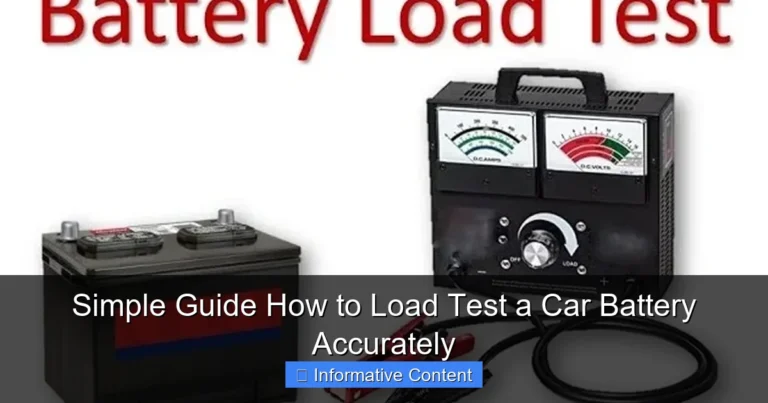
<p>These are often the most basic and affordable. They typically feature a needle gauge that points to “Good,” “Weak,” or “Bad.” They usually perform a simple voltage test and sometimes a basic load test. While straightforward, they offer less precise information compared to their digital counterparts.</p>
<h3>Digital Battery Testers</h3;
<p>These are the most common and recommended for home use. They provide clear, precise digital readouts for voltage, Cold Cranking Amps (CCA), and often a “state of health” percentage. Many also include features for testing the alternator and starter, making them a comprehensive diagnostic tool.</p>
<h3>Load Testers vs. Advanced Diagnostic Testers</h3>
<p>Traditional <em>load testers</em> apply a significant electrical load to the battery to simulate starting the engine, measuring how well the battery holds voltage under stress. <em>Advanced diagnostic testers</em> (often digital) use a sophisticated algorithm to analyze the battery’s internal resistance, providing a more accurate assessment of its overall health without needing to discharge it significantly.</p>
<h2>The Fundamentals of Battery Readings: What Do They Mean?</h2>
<p>This is where the magic happens! Your <strong>battery tester</strong> will give you a few key numbers. Understanding them is crucial.</p>
<h3>Voltage (V): The Core Indicator</h3>
<p>Voltage is the most basic reading. A fully charged 12-volt car battery should read around <strong>12.6 to 12.8 volts</strong> when the engine is off and the battery has rested for a while (no surface charge). <em>Lower voltage</em> usually indicates a discharged or weak battery.</p>
<ul>
<li><strong>12.6V – 12.8V:</strong> Fully charged</li>
<li><strong>12.4V:</strong> 75% charged</li>
<li><strong>12.2V:</strong> 50% charged</li>
<li><strong>Below 12V:</strong> Critically discharged, needs charging immediately.</li>
</ul>
<h3>Cold Cranking Amps (CCA): Power to Start</h3>
<p>CCA is arguably the most important rating for starting your car, especially in cold weather. It measures the battery’s ability to deliver a burst of current needed to crank the engine. Your battery will have a CCA rating printed on its label. When your <strong>battery tester</strong> gives you a CCA reading, compare it to this label.</p>
<ul>
<li><strong>80% or more of rated CCA:</strong> Good condition</li>
<li><strong>Below 80%:</strong> Weakening, may struggle to start in cold weather.</li>
</ul>
<h3>State of Charge (SOC)</h3>
<p>Many digital <strong>battery tester</strong> units will give you a “State of Charge” percentage. This tells you how much energy is currently stored in the battery, often derived from its voltage reading. A 100% SOC means your battery is fully charged.</p>
<h3>State of Health (SOH)</h3>
<p>This is a more advanced metric, often expressed as a percentage. It reflects the battery’s overall condition and capacity to hold a charge relative to a new battery. A low SOH (e.g., below 70-80%) indicates internal degradation, even if the voltage seems okay after a charge. This is a strong indicator that replacement is nearing.</p>
<h2>Step-by-Step: Using Your Battery Tester Correctly</h2>
<p>Using a <strong>battery tester</strong> is straightforward, but a few key steps ensure accurate readings and safety.</p>
<h3>Safety First!</h3>
<p>Always wear safety glasses and gloves. Batteries contain corrosive acid and can produce explosive gases. Ensure your engine is off and the car is in park/neutral with the parking brake engaged.</p>
<h3>Connecting the Tester</h3>
<p>Connect the red positive (+) clamp of the <strong>battery tester</strong> to the positive battery terminal. Then, connect the black negative (-) clamp to the negative battery terminal. Ensure a clean, secure connection. If there’s corrosion, clean the terminals first.</p>
<h3>Performing the Test</h3>
<p>Follow your specific <strong>battery tester’s</strong> instructions. Most digital testers will prompt you for information like the battery type (e.g., Flooded, AGM) and its CCA rating. For a resting voltage test, simply connect and read the voltage. For a load test or advanced diagnostic test, the tester will guide you through the process, which might involve a brief engine crank or just waiting for a few seconds.</p>
<h3>Understanding the Display and Interpreting Results</h3>
<p>Your <strong>battery tester</strong> will typically show voltage, CCA, and sometimes SOC/SOH. Compare these numbers to the battery’s rated specifications and the guidelines we discussed earlier. Don’t just look at one number; consider the overall picture.</p>
<h2>Decoding Your Battery Tester’s Results: Practical Examples</h2>
<p>Let’s put theory into practice with some common scenarios you might see on your <strong>battery tester</strong>.</p>
<h3>Ideal Readings: A Healthy Battery</h3>
<p>You test your battery (rated 600 CCA) after the car has been off for a few hours:</p>
<ul>
<li><strong>Voltage:</strong> 12.7V</li>
<li><strong>Measured CCA:</strong> 580 CCA</li>
<li><strong>State of Health (SOH):</strong> 95%</li>
</ul>
<p><em>Interpretation:</em> Excellent! Your battery is fully charged and in great health, delivering nearly its full rated power. You can drive with confidence.</p>
<h3>Warning Signs: Time for Attention</h3>
<p>Another test on the same 600 CCA battery yields:</p>
<ul>
<li><strong>Voltage:</strong> 12.2V</li>
<li><strong>Measured CCA:</strong> 450 CCA</li>
<li><strong>State of Health (SOH):</strong> 70%</li>
</ul>
<p><em>Interpretation:</em> Warning! The battery is only 50% charged, and its CCA and SOH are significantly lower than optimal. While it might still start your car, especially in warm weather, it’s living on borrowed time. It would be wise to fully charge the battery and then re-test. If the SOH remains low, start thinking about a replacement soon.</p>
<h3>Critical Readings: Replacement Needed</h3>
<p>On a chilly morning, you get these readings:</p>
<ul>
<li><strong>Voltage:</strong> 11.8V</li>
<li><strong>Measured CCA:</strong> 200 CCA</li>
<li><strong>State of Health (SOH):</strong> 30%</li>
</ul>
<p><em>Interpretation:</em> Danger! Your battery is severely discharged, failing on CCA, and its overall health is very poor. This battery is likely to leave you stranded at any moment. It’s time for a replacement – don’t delay!</p>
<p>Understanding these common scenarios will empower you to make informed decisions about your car’s battery health. Remember, consistency is key. Regular checks with your <strong>battery tester</strong> can save you a lot of trouble.</p>
<h2>Conclusion: Empower Yourself with Battery Knowledge</h2>
<p>There you have it! Reading a <strong>battery tester</strong> doesn’t have to be intimidating. By understanding the basic types of testers and what key metrics like voltage, CCA, SOC, and SOH mean, you’ve gained a valuable skill. This knowledge empowers you to proactively maintain your vehicle, avoid unexpected breakdowns, and save money by replacing your battery only when necessary.</p>
<p>So, next time you’re wondering about your car’s reliability, grab your <strong>battery tester</strong>. A quick, accurate check will give you the confidence you need, ensuring your journey starts smoothly every time. Stay safe on the road, and enjoy the peace of mind that comes with being an informed car owner!</p>
Key Takeaways
- Prioritize Safety: Always wear protective gear when handling batteries.
- Prepare Properly: Clean terminals and identify battery type before testing.
- Connect Accurately: Ensure correct polarity: red to positive, black to negative.
- Read Digital Precisely: Note exact voltage and cold-cranking amp (CCA) values.
- Observe Analog Steadily: Wait for the needle to stabilize before recording results.
- Interpret Clearly: Understand “Good,” “Weak,” or “Replace” indicators for diagnosis.
- Know Your Tester: Familiarize yourself with its specific functions for quick, accurate results.
Frequently Asked Questions
What do the different readings on a battery tester indicate?
A battery tester typically displays key metrics like voltage, Cold Cranking Amps (CCA), and sometimes internal resistance. Voltage shows the current charge level, while CCA measures the battery’s ability to start an engine in cold conditions, which is crucial for overall performance.
How can I tell if my car battery is good or bad based on the battery tester results?
Generally, a healthy car battery should show a voltage around 12.6V or higher and CCA readings close to or above the manufacturer’s specified rating. Significant drops in voltage or CCA, especially below 75% of the rated CCA, usually indicate a weak or failing battery that may need replacement.
What is “CCA” and why is it important when reading a battery tester?
CCA stands for Cold Cranking Amps, which is a measurement of the maximum current a fully charged battery can deliver for 30 seconds at 0°F (-18°C) while maintaining a minimum voltage. This reading is vital because it directly reflects the battery’s power to start an engine in cold weather, a common stress point for batteries.
Are all battery testers read the same way, or are there different types?
While the fundamental principles are similar, there are different types of battery testers, such as load testers and digital testers, which may present information slightly differently. Digital testers are often easier to read with direct numerical displays and clear pass/fail indicators, whereas traditional load testers might require interpreting a gauge and voltage drop.
Before reading the results, how do I properly connect a battery tester to ensure accurate readings?
To ensure accurate readings from your battery tester, always connect the positive (+) clamp to the battery’s positive terminal and the negative (-) clamp to the negative terminal. Make sure the connections are clean and secure to avoid resistance that could skew the test results.
What should I do if my battery tester shows an “Error” or “Bad Cell” message?
If your battery tester displays an “Error” or “Bad Cell” message, first ensure all connections are clean and secure, then retest the battery. If the error persists, it often indicates a severe internal issue with the battery, such as a shorted or open cell, meaning the battery is likely beyond repair and needs to be replaced.