Easy Steps How to Charge a Completely Dead Battery Safely
Featured image for how to charge a completely dead battery
Image source: gmundcars.com
Charging a completely dead car battery safely requires specific, careful steps to avoid damage and ensure personal safety. Always inspect the battery thoroughly and ensure good ventilation before connecting a smart charger designed for deeply discharged batteries. Prioritize a slow, controlled charge over an immediate jump-start to effectively and safely revive your battery.
Ever walked out to your car, ready to start your day, only to be met with that disheartening silence when you turn the key? No crank, no lights, just… nothing. That sinking feeling is all too familiar for many of us, signaling one of the most common automotive woes: a completely dead battery. It’s frustrating, inconvenient, and often leaves you wondering what to do next.
The good news is that a completely dead battery doesn’t always mean the end of the road for your car’s power source. Often, with the right approach and a little patience, you can bring it back to life. But it’s crucial to understand that tackling a dead battery requires more than just hooking up some cables; it demands a focus on safety and proper technique. Mishandling can be dangerous, not just for your vehicle, but for you too.
This guide is designed to walk you through the process, just like a friend explaining it over a cup of coffee. We’ll cover everything you need to know about how to charge a completely dead battery safely and effectively, transforming that moment of dread into a successful DIY victory. Let’s get your car powered up again!
Key Takeaways
- Prioritize Safety First: Always wear eye protection and gloves.
- Inspect Battery Carefully: Check for cracks, leaks, or swelling before charging.
- Use a Smart Charger: Essential for safe, slow recovery of deeply discharged batteries.
- Ensure Proper Connections: Connect positive to positive, negative to negative securely.
- Charge in Ventilation: Always charge batteries in a well-ventilated space.
- Monitor Charging Progress: Never leave a charging battery unattended for long.
- Patience is Key: Slow, low-amp charging revitalizes dead batteries best.
📑 Table of Contents
- Understanding Your Dead Battery: Why It Happens and What It Means
- Essential Safety First: Protecting Yourself and Your Vehicle
- The Tools You’ll Need to Bring Your Battery Back to Life
- Step-by-Step Guide: How to Charge a Completely Dead Battery Safely
- What to Do If Your Battery Won’t Hold a Charge or Starts Immediately
Understanding Your Dead Battery: Why It Happens and What It Means
Before we dive into how to charge a completely dead battery, it’s helpful to understand why your battery might have given up the ghost in the first place. Knowing the cause can sometimes help prevent it from happening again.
Why Batteries Go Flat
- Left Lights On: This is probably the most classic culprit. Forgetting to turn off headlights, interior lights, or even leaving a door ajar can drain a battery overnight.
- Parasitic Drain: Sometimes, electronic components in your car continue to draw a small amount of power even when the car is off. Over time, this “parasitic drain” can kill a battery.
- Extreme Temperatures: Both very hot and very cold weather can stress a battery, reducing its capacity and lifespan. Cold weather, in particular, makes it harder for the battery to deliver power.
- Age: Batteries don’t last forever. Most car batteries have a lifespan of 3-5 years. Over time, their internal components degrade, making them less able to hold a charge.
- Faulty Alternator: If your car’s alternator isn’t charging the battery properly while the engine runs, your battery will eventually die, even if it’s otherwise healthy.
Is Your Battery Truly Dead or Just Discharged?
A “completely dead” battery usually means it has almost no voltage left, often below 10.5 volts. You’ll likely experience absolutely no response from your car when you try to start it – no dashboard lights, no clicking sound, just silence. A “discharged” battery, on the other hand, might still offer a weak flicker of lights or a slow, struggling crank, but not enough power to fire up the engine. While both need charging, a completely dead battery can sometimes be more challenging to revive, and it’s important to approach it correctly when you learn how to charge a completely dead battery.
Essential Safety First: Protecting Yourself and Your Vehicle
Safety is not just a suggestion; it’s a critical requirement when dealing with car batteries. They contain corrosive acid and can produce explosive hydrogen gas. So, before you even think about how to charge a completely dead battery, let’s talk safety gear and procedures.
Personal Protective Equipment (PPE)
- Safety Glasses or Goggles: Battery acid can cause severe eye damage. Always wear eye protection to shield your eyes from splashes or fumes.
- Gloves: Protect your hands from acid and dirt. Chemical-resistant gloves are ideal.
- Old Clothes: Accidents happen. Wear clothing you don’t mind getting stained or damaged.
Proper Ventilation
When a battery charges, it can release hydrogen gas, which is highly flammable and explosive. Always work in a well-ventilated area, preferably outdoors. If you must work in a garage, ensure the doors are wide open and there’s a good cross-breeze. This step is non-negotiable for anyone learning how to charge a completely dead battery.
Avoiding Sparks and Short Circuits
- Remove Jewelry: Metal jewelry can conduct electricity and cause a short circuit, leading to severe burns or battery damage.
- Keep Tools Clear: Be careful not to drop metal tools across battery terminals, as this can cause a dangerous spark or short.
- Follow Connection Order: We’ll cover this in detail, but the order in which you connect and disconnect your charger is vital for safety.
The Tools You’ll Need to Bring Your Battery Back to Life
Having the right equipment makes all the difference and ensures you can tackle the task of how to charge a completely dead battery effectively and safely.
Battery Charger vs. Jumper Cables
While jumper cables are great for a quick jump-start to get your car running, they don’t *charge* a completely dead battery. They simply borrow power from another car to kick-start yours. For a thorough charge, especially for a truly dead battery, you’ll need a dedicated battery charger.
Types of Battery Chargers
- Smart/Automatic Chargers: These are highly recommended for beginners. They monitor the battery’s voltage and current, automatically adjusting the charging rate and stopping when the battery is full. Many also have a “recondition” or “desulfation” mode, which can be helpful for a completely dead battery.
- Trickle Chargers/Battery Maintainers: These deliver a very low, continuous current, ideal for maintaining a battery’s charge over long periods (like during winter storage). They are generally not powerful enough to quickly revive a completely dead battery but can be used after an initial charge to keep it topped up.
- Manual Chargers: These require more oversight. You set the amperage and need to monitor the battery’s voltage to prevent overcharging, which can damage the battery. Unless you’re very experienced, an automatic charger is a safer bet.
Other Handy Tools:
- Voltmeter or Multimeter: Essential for checking your battery’s voltage before, during, and after charging. This helps you assess its condition.
- Battery Terminal Brush: For cleaning corrosion off battery terminals.
- Baking Soda and Water Mix: For neutralizing any battery acid if corrosion is present.
- Wrench/Socket Set: To loosen battery terminals if cleaning is needed, or if you need to remove the battery from the car.
Step-by-Step Guide: How to Charge a Completely Dead Battery Safely
Now, let’s get down to the practical steps of how to charge a completely dead battery. Follow these instructions carefully.
Prepare Your Workspace and Battery
- Park Safely: Ensure your vehicle is on a flat, stable surface, the engine is off, and the parking brake is engaged.
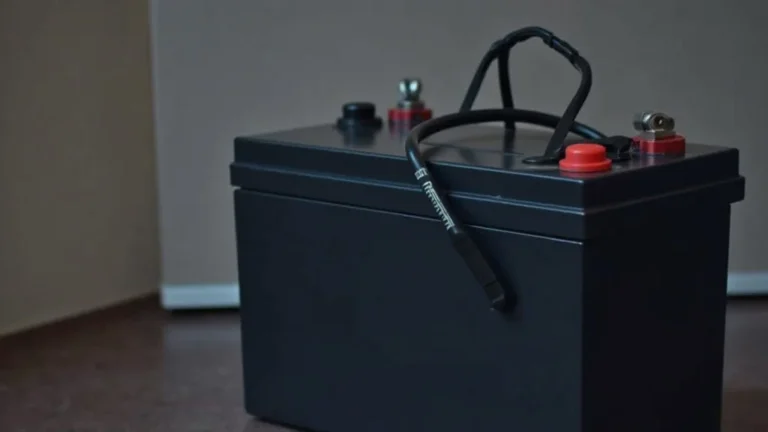
- Locate the Battery: In most cars, it’s under the hood. Some vehicles might have it in the trunk or under a rear seat.
- Clean the Terminals: If you see any white, green, or blue fluffy buildup (corrosion) on the battery terminals, gently scrub it off with a battery terminal brush and a mixture of baking soda and water (a tablespoon of baking soda in a cup of water). Rinse with plain water and dry thoroughly. Clean connections ensure proper current flow.
- Check Battery Voltage: Using your multimeter, touch the red probe to the positive (+) terminal and the black probe to the negative (-) terminal. A completely dead battery will read very low, perhaps 0-10.5 volts. If it’s below 8 volts, the battery might be too far gone to recover, especially for older batteries.
Connecting the Battery Charger
This is where proper sequence is key for safety.
- Ensure Charger is Off/Unplugged: Before making any connections to the battery, make sure your charger is turned off and unplugged from the wall outlet.
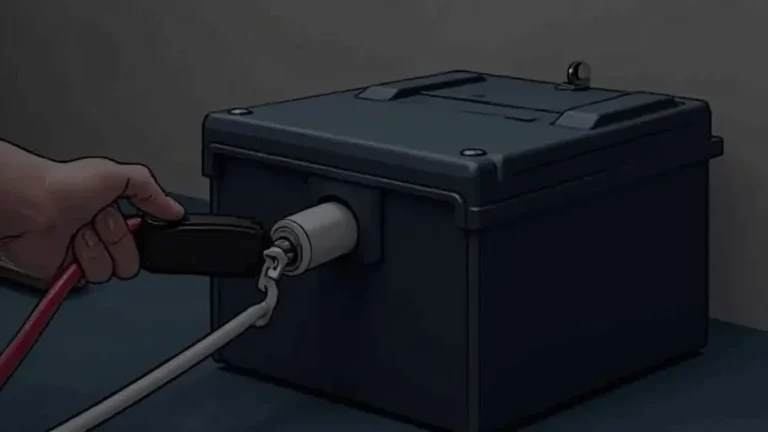
- Connect Positive First: Attach the red (positive) clamp from the charger to the positive (+) terminal of your car battery.
- Connect Negative Second: Attach the black (negative) clamp from the charger to the negative (-) terminal of your car battery. Some older recommendations suggest clamping the negative to a bare metal part of the car chassis away from the battery, to minimize spark risk near hydrogen gas. With modern smart chargers, connecting directly to the negative terminal is usually safe, but check your charger’s manual.
- Plug In and Turn On Charger: Now, and only now, plug the charger into a wall outlet and turn it on.
The Charging Process
Once connected, the charger will start doing its work. The time it takes for how to charge a completely dead battery can vary significantly:
- Smart Chargers: These are the easiest. They’ll automatically detect the battery type and charge level, then adjust the current. Many have indicator lights showing charging progress (e.g., “charging,” “charged,” “maintain”). For a completely dead battery, this can take anywhere from 4-8 hours to overnight, depending on the battery size and charger output.
- Manual Chargers: If you’re using a manual charger, select the appropriate amperage setting (e.g., 10 amps for a faster charge, 2 amps for a slower, gentler charge). You’ll need to monitor the voltage periodically with your multimeter. Stop charging once the battery reaches 12.6-12.8 volts. Be careful not to overcharge.
- Deep Discharge Recovery: Some smart chargers have a specific “deep discharge recovery” or “recondition” mode. This can be very helpful for batteries that are completely dead, as it attempts to break down sulfation (crystals that form on plates during deep discharge) that can prevent a battery from accepting a full charge.
Disconnecting the Charger
Just as the connection order is important, so is the disconnection order.
- Turn Off/Unplug Charger First: Before touching the battery, turn off your charger and unplug it from the wall outlet.
- Remove Negative Clamp: Detach the black (negative) clamp from the battery’s negative terminal (or chassis).
- Remove Positive Clamp: Detach the red (positive) clamp from the battery’s positive terminal.
What to Do If Your Battery Won’t Hold a Charge or Starts Immediately
After successfully learning how to charge a completely dead battery, it’s time to see if your efforts paid off.
Testing the Battery After Charging
- Recheck Voltage: With the charger disconnected, use your multimeter to check the battery’s voltage again. A fully charged, healthy 12-volt battery should read between 12.6 and 12.8 volts.
- Attempt to Start the Car: If the voltage looks good, try to start your car. If it fires up, fantastic! Let the car run for at least 20-30 minutes, or take it for a drive. This allows your alternator to top up the battery and ensures everything is working as it should.
- Monitor for Recurrence: If the battery dies again within a few days or weeks, it indicates a deeper problem – either the battery itself is failing, your alternator isn’t charging it, or there’s a parasitic drain.
When to Consider Battery Replacement
Sometimes, even with the best charging efforts, a battery is simply beyond saving. Here are signs it might be time for a new one:
- Won’t Hold a Charge: If the voltage quickly drops after charging, or your car struggles to start again soon after, the battery isn’t retaining power.
- Won’t Charge Above a Certain Voltage: If your charger indicates it’s done, but the battery voltage never reaches the healthy 12.6V-12.8V range, it’s likely defective.
- Physical Damage: Swelling or bulging of the battery case, leaks, or excessive corrosion can indicate internal damage and mean it’s time for replacement.
- Old Age: If your battery is 5 years old or more, it’s likely nearing the end of its life, and a replacement is a wise investment to avoid future breakdowns.
Most auto parts stores offer free battery testing, which can provide a definitive answer on your battery’s health.
There you have it! Reviving a completely dead battery might seem daunting at first, but by following these easy steps and prioritizing safety, you can confidently tackle this common car problem. Knowing how to charge a completely dead battery not only saves you time and money but also gives you a real sense of accomplishment.
Remember, regular battery maintenance – like checking terminals, ensuring lights are off, and getting your battery tested periodically – can help prevent these situations from happening. So, keep these tips in mind, stay safe, and happy driving!
Frequently Asked Questions
Is it possible to charge a completely dead car battery?
Yes, in many cases, a completely dead car battery can be recharged, especially if it’s a lead-acid battery and hasn’t been dead for too long. However, if the battery is very old or has been deeply discharged for an extended period, it might be permanently damaged and unable to hold a charge effectively.
What equipment do I need to charge a completely dead battery safely?
You’ll primarily need a good quality, smart battery charger designed for your battery type (e.g., lead-acid, AGM). Safety gear like gloves and eye protection is also highly recommended, along with a well-ventilated area for the charging process.
How long does it typically take to charge a completely dead battery?
The charging time for a completely dead battery varies greatly depending on the battery’s capacity, its state of discharge, and the amperage of your charger. It can range from several hours to overnight (8-24 hours) for a full charge using a standard charger.
Can I jump-start a completely dead battery instead of using a charger?
While you can attempt to jump-start a completely dead battery, it’s generally not recommended as the primary or long-term solution. Jump-starting provides a quick boost but doesn’t fully recharge the battery, and it can put strain on the donor vehicle’s electrical system. A dedicated battery charger is the safest and most effective way to fully rejuvenate a completely dead battery.
Are there any safety precautions I should take when charging a completely dead battery?
Yes, safety is paramount. Charging a completely dead battery can produce hydrogen gas, which is highly flammable, so ensure good ventilation. Always wear safety glasses and gloves, and connect the charger correctly to avoid sparks or short circuits.
What if my completely dead battery won’t hold a charge after following the steps?
If your completely dead battery fails to accept or hold a charge after a proper charging cycle, it likely indicates permanent damage or an internal fault. In such cases, the battery has probably reached the end of its lifespan and will need to be replaced. You might want to have it tested by a professional to confirm its condition.