Should you can I use a bigger battery in my car pros and cons
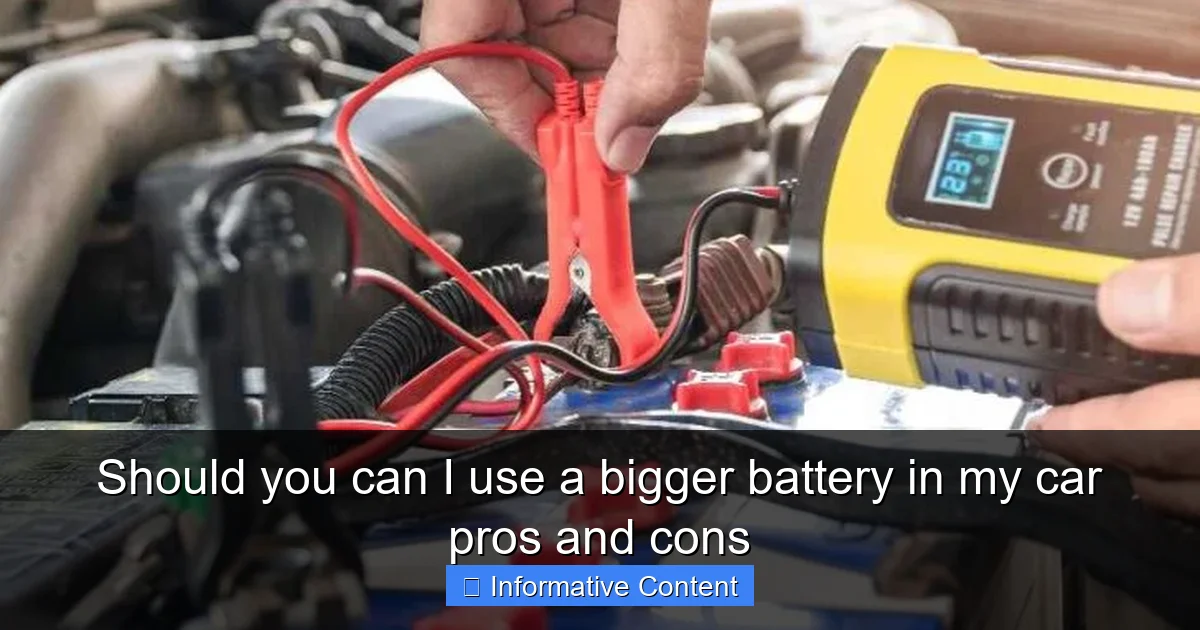
Featured image for can i use a bigger battery in my car
Image source: trucksauthority.com
While often feasible, upgrading to a bigger car battery isn’t always a simple enhancement and requires careful thought. Ensuring physical fit and compatibility with your vehicle’s charging system are critical; an improperly sized battery can cause installation headaches or even potentially overwork your alternator. Assess whether the benefits of increased reserve capacity outweigh potential drawbacks like cost and unnecessary complexity for your specific needs.
You know that moment. You turn the key, and instead of that familiar rumble, you get a sad, strained click. Your car battery has given up the ghost. As you contemplate a replacement, a thought might pop into your head: “Hey, can I use a bigger battery in my car? Wouldn’t that be better?” It’s a question many car owners ponder, especially if they’ve had battery troubles or added accessories.
The idea of a bigger, more powerful battery sounds appealing, right? More power, fewer worries. But like many things in the automotive world, it’s not quite as simple as “bigger is always better.” There are some definite advantages to consider, but also potential pitfalls that could lead to headaches down the road. Let’s dive into the pros and cons of upgrading your car’s battery to something larger than what came from the factory.
This isn’t about promoting any specific brand or type; it’s about understanding the mechanics and making an informed decision that’s right for your vehicle and your driving needs. So, settle in, and let’s explore whether asking “can I use a bigger battery in my car” is a smart move for you.
Key Takeaways
- Measure Battery Tray: Ensure physical fit before purchasing.
- Match CCA Rating: Prioritize Cold Cranking Amps for reliable starts.
- Assess Alternator Capacity: Confirm your alternator can charge it fully.
- Avoid Extreme Upsizing: Excessively larger batteries can strain systems.
- Consider Accessory Load: High-drain electronics might benefit from more Ah.
- Consult Car Manual: Adhere to manufacturer’s battery specifications.
- Invest in Quality: A premium standard battery often outperforms a cheap larger one.
📑 Table of Contents
Understanding Your Car’s Current Battery Needs
Before we talk about going bigger, it’s crucial to understand what your car needs right now. Every vehicle is designed with a specific electrical system in mind, and that includes the battery. The manufacturer chose a battery size and type for a reason, based on the engine’s starting requirements, the number of electrical accessories, and the overall load.
What Do Those Numbers Mean? (CCA, AH, Voltage)
- CCA (Cold Cranking Amps): This is arguably the most important number for starting your car, especially in colder climates. It tells you how much current the battery can deliver at 0°F (-18°C) for 30 seconds while maintaining a voltage of at least 7.2 volts. A higher CCA means more starting power in the cold.
- AH (Ampere-Hours) or RC (Reserve Capacity): Ah indicates how long a battery can deliver a certain current (usually 25 amps) before its voltage drops too low. RC is similar, measuring how many minutes a battery can deliver 25 amps at 80°F (27°C) before dropping below 10.5 volts. These numbers indicate how long your accessories can run with the engine off, or how much “reserve” power you have if your charging system fails.
- Voltage: Almost all standard car batteries are 12-volt. While the voltage itself usually doesn’t change, the capacity to deliver that voltage under load does.
Your car’s owner’s manual or the label on your existing battery will list these specifications. They are your baseline for deciding if can I use a bigger battery in my car is even an option.
Why Your Car Needs a Specific Battery
Car manufacturers engineer vehicles with a balanced electrical system. The alternator is designed to charge a battery of a certain capacity, and the wiring harnesses are specified to handle the expected current flow. Deviating too far from these specifications can sometimes throw that balance off.
The Allure of a Bigger Battery: Potential Pros
So, you’re asking, “can I use a bigger battery in my car and gain some advantages?” There are indeed some situations where a slight upgrade might seem beneficial. Let’s explore the upsides.
Increased Starting Power (CCA)
If you live in a notoriously cold climate, a battery with higher CCA ratings can be a real lifesaver. It provides that extra surge of power needed to crank a stiff engine on a frigid morning. For instance, if your car originally came with a 500 CCA battery and you upgrade to a 650 CCA one, you’ll likely experience more confident starts in extreme cold.
Better Reserve Capacity (RC / AH)
A battery with higher Ah or RC means it can power your electrical accessories for a longer period with the engine off. This is fantastic if you frequently use devices like portable refrigerators for camping, charge your phone repeatedly, or listen to the radio while tailgating. It gives you a longer buffer before needing a jump start.
Supporting More Accessories
Have you added an aftermarket stereo system with powerful amplifiers, extra lighting, a winch for off-roading, or other heavy-draw electrical components? A larger battery, specifically one with a higher Ah rating, can provide the sustained power needed to run these accessories more effectively without straining your primary battery or constantly depleting it.
The Hidden Downsides: Potential Cons and Risks
While the idea of more power is tempting, there are several reasons why just grabbing the biggest battery you can find might not be the best answer to “can I use a bigger battery in my car?”
Physical Fitment Issues
This is often the most immediate and obvious problem. Battery trays are designed for specific dimensions. A battery that is too long, too wide, or too tall simply won’t fit securely. You might find yourself unable to close the hood, or the battery might not be properly secured, creating a safety hazard in the event of an accident.
Overcharging and Electrical Strain
Your car’s alternator is designed to charge a battery of a specific capacity. While alternators are somewhat adaptable, continuously trying to charge a significantly larger battery can put additional strain on it. It might work harder and longer, leading to premature wear and failure. In rare cases, if the battery is too mismatched, it could potentially lead to issues with your car’s charging system or even slightly overcharge the battery itself, shortening its lifespan.
Weight and Fuel Economy
Bigger batteries mean more lead, and more lead means more weight. While a few extra pounds might not seem like much, it contributes to the overall weight of the vehicle. This can, albeit slightly, impact your car’s fuel economy. For performance enthusiasts, it also adds unnecessary weight.
Cost Implications
Larger batteries with higher CCA and Ah ratings generally cost more. If the performance benefits aren’t truly needed for your driving style or accessories, you could be spending extra money for capabilities you’ll never fully utilize, and potentially facing the cons listed above.
When Might a Bigger Battery Actually Make Sense?
Despite the potential downsides, there are specific scenarios where asking “can I use a bigger battery in my car?” leads to a genuinely beneficial upgrade.
Aftermarket Accessories Galore
If your vehicle is heavily customized with power-hungry aftermarket electronics – think high-wattage sound systems, elaborate lighting, or multiple monitors – a battery with a higher Ah rating is almost a necessity. It helps manage the increased electrical load and prevents your charging system from being constantly overworked.
Extreme Cold Climates
As mentioned, if you live where winter temperatures regularly plummet below freezing, a battery with a slightly higher CCA rating than stock can offer invaluable peace of mind. It ensures more reliable starts when your engine oil is thick and your starter motor needs extra grunt.
Specific Vehicle Modifications (e.g., winches, dual battery setups)
Off-road vehicles with powerful winches or those running essential equipment for extended periods often benefit from more robust battery solutions. In many cases, this involves a dual-battery setup rather than just one significantly larger battery, but even then, the primary battery might be upgraded. For example, some trucks are designed to accommodate slightly larger group sizes in their battery tray, allowing for a modest upgrade without fitment issues.
Choosing the Right Battery Size: Practical Tips
So, you’ve weighed the pros and cons and decided you want to see if can I use a bigger battery in my car. Here’s how to approach it smartly:
Consult Your Owner’s Manual
This is your first and most reliable source of information. It will specify the recommended battery group size, CCA, and Ah/RC ratings. Stick as close to these recommendations as possible.
Measure Your Battery Tray
Before buying anything, physically measure the dimensions of your battery tray (length, width, height). Compare these measurements with the specifications of the “bigger” battery you’re considering. Even a fraction of an inch can make a difference.
Consider Your Driving Habits
Do you do mostly short trips? Your alternator might not have enough time to fully charge a significantly larger battery, potentially shortening its life. Do you frequently park in extreme cold? Then a higher CCA is more important than a huge Ah rating if you don’t use many accessories with the engine off.
Look for Similar Specs, Not Just Size
Sometimes, you can find a battery of the same physical size (group size) that simply offers slightly higher CCA or Ah ratings due to better internal technology. This is often the safest and most effective “upgrade” because it avoids fitment and charging system compatibility issues.
Battery Comparison Table: Original vs. Upgrade Considerations
Here’s a simplified look at how battery choices might compare:
| Feature | Original Battery (e.g., 500 CCA, 50 Ah) | Slightly Larger (e.g., 650 CCA, 60 Ah) | Significantly Larger (e.g., 900 CCA, 90 Ah) |
|---|---|---|---|
| CCA (Cold Start) | Adequate for stock needs | Improved cold starting | Excellent cold starting |
| Ah (Reserve) | Standard reserve power | More accessory run-time | Much more accessory run-time |
| Physical Fit | Guaranteed fit | Likely fits if within group size limits | High risk of fitment issues |
| Alternator Strain | None | Minimal additional strain | Potential increased strain/wear |
| Cost | Standard price | Moderately higher | Significantly higher |
| Weight | Standard | Slightly heavier | Noticeably heavier |
Conclusion
The question, “can I use a bigger battery in my car?” doesn’t have a one-size-fits-all answer. While the appeal of more power is undeniable, the best approach is usually to stick to the manufacturer’s recommendations or opt for a battery of the same physical size (group size) with slightly improved CCA and Ah ratings. This gives you the benefits of newer technology without risking compatibility problems.
Always prioritize proper fitment and compatibility with your car’s charging system. A battery that doesn’t fit securely is a safety hazard, and one that strains your alternator could lead to more costly repairs down the road. So, before you decide to go big, do your homework, measure your battery tray, and understand your actual power needs. Your car (and your wallet) will thank you for making an informed decision.
Frequently Asked Questions
Can I install a bigger battery than the one originally in my car?
Yes, in many cases, you can install a battery with higher Cold Cranking Amps (CCA) or Amp-hours (Ah) than your original equipment. However, it’s crucial to ensure it physically fits in the battery tray and is compatible with your car’s charging system to avoid potential issues.
What are the potential benefits of using a bigger battery in my car?
A larger battery can offer improved cold-starting performance, especially in harsh climates, and potentially provide more reserve power for accessories. It might also have a longer lifespan due to less stress if it’s not constantly being drained to its limits.
Are there any disadvantages or risks to installing a larger battery?
Absolutely. A bigger battery might not physically fit in your battery tray, and forced installation can be unsafe. Additionally, if the battery is significantly larger than what your alternator is designed to charge, it could lead to chronic undercharging or put extra strain on your alternator.
How do I know if a larger battery will fit in my car?
You’ll need to check the physical dimensions (length, width, height) and the battery group size of your existing battery. Compare these specifications to the dimensions of the larger battery you’re considering to ensure it fits securely in the battery tray without interfering with the hood or other components.
Will a bigger battery damage my car’s electrical system or alternator?
Generally, a slightly larger battery with higher CCA will not damage your electrical system if it’s within reasonable limits. However, if the battery’s Amp-hour (Ah) capacity is significantly higher, your alternator might struggle to fully charge it, potentially leading to premature wear on the alternator or the battery itself.
What should I consider when choosing to use a bigger battery for my car?
Prioritize matching the battery group size to ensure proper fitment, then look for a slightly higher CCA rating for improved starting power, especially in cold weather. Ensure the battery terminals are in the correct position for your car’s cables and consider its Amp-hour (Ah) rating in relation to your car’s typical electrical load.