What Size Jump Starter Do I Need for My Car?
Figuring out what size jump starter do i need can feel tricky, especially if you’re new to car maintenance. It’s a common question, and it’s easy to get confused by all the numbers and specs. But don’t worry! This guide will break down everything in a simple way. We’ll explore the main factors that affect your choice and show you how to pick the right one for your vehicle. Get ready to become a jump-starting expert!
Understanding Jump Starters and Their Importance
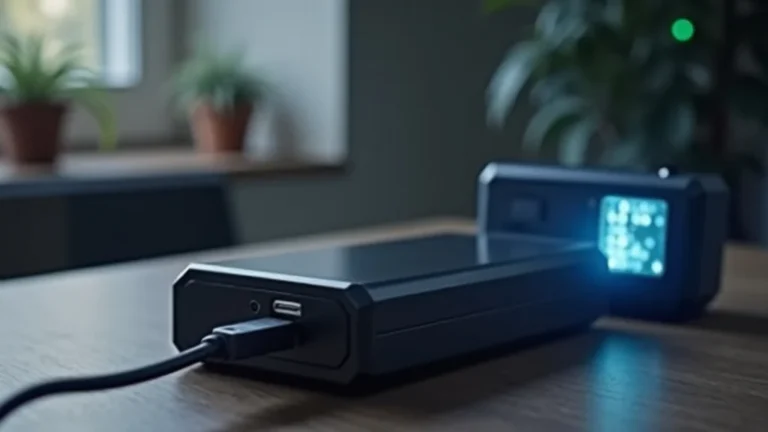
A jump starter, also known as a portable jump starter or battery booster, is a small, usually battery-powered device designed to jump-start a vehicle with a dead battery. It works by providing an extra burst of power to the car’s electrical system, allowing the engine to start. They’re a handy tool to have, because they can rescue you when your car won’t start, providing a quick solution. Unlike jumper cables, jump starters don’t require another vehicle, making them a more convenient option. Jump starters come in various sizes and with different features, and choosing the right one can make all the difference when you’re stranded. These devices have become increasingly popular, with many people choosing to keep one in their car for emergencies.
What Makes a Jump Starter Useful?
Jump starters provide significant convenience and peace of mind. They eliminate the need to flag down another driver for a jump, which can be difficult in certain situations. They also protect your vehicle’s sensitive electronics from potential damage during a jump. The best ones are compact and easy to store, so you can always have one ready. Furthermore, they often include additional features like USB ports for charging devices, built-in flashlights, and even air compressors, making them useful for a range of situations beyond just starting your car.
- Convenience: A jump starter allows you to get your car started quickly without needing help from another vehicle.
- Safety: Jump starters are generally safer than traditional jumper cables because they have built-in safety features that protect your car’s electronics from damage.
- Portability: Jump starters are compact and easy to carry, allowing you to have a power source whenever you need it.
- Additional Features: Many jump starters come with extra features like USB charging ports, flashlights, and air compressors.
This is a major benefit, as it gives you independence, especially if you are in a remote location. You can avoid the wait and potential hassle of finding someone to assist you.
Many jump starters have reverse polarity protection, which prevents you from accidentally connecting the clamps incorrectly, which could cause significant damage to your car’s electrical system. They also usually include surge protection.
The compact design makes them easy to store in your car’s trunk, glove compartment, or under a seat. This accessibility makes it easy to handle unexpected battery issues whenever they arise.
These extras add value, making the device useful for charging phones and other devices, providing light in dark situations, and inflating tires. This makes the jump starter a versatile tool to keep in your car.
Key Components of a Jump Starter
Jump starters comprise several key components that work together to provide the necessary power. Knowing these elements can help you understand how they function and make an informed choice. Jump starters usually have a built-in battery, typically lithium-ion, that stores energy. They also include a set of jumper cables to connect to the car’s battery terminals. Moreover, most have safety features such as reverse polarity protection and surge protection. Understanding these pieces will empower you to pick a jump starter that meets your vehicle’s needs.
- Battery: The main power source, usually a lithium-ion battery.
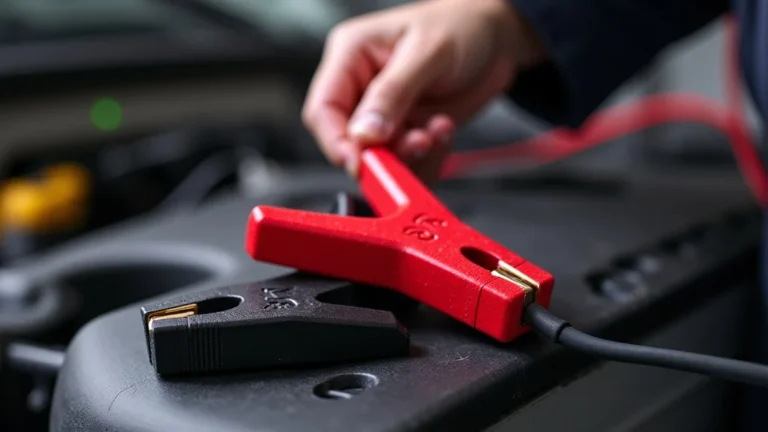
- Jumper Cables: Heavy-duty cables with clamps to connect the jump starter to your car’s battery.
- Safety Features: This includes reverse polarity protection, overcharge protection, and short-circuit protection.
- Charging Port: Used to recharge the jump starter’s internal battery.
The battery is where all the energy is stored. The capacity is measured in milliamp hours (mAh) or amp-hours (Ah). This indicates how much power the jump starter can supply before needing to be recharged. Higher capacity means more starting attempts and more time between recharges.
These cables must be durable to handle the high current flow during jump-starting. The clamps should be strong and well-insulated to ensure a secure connection to the battery terminals, as poor connections lead to reduced effectiveness and safety hazards.
Reverse polarity protection prevents damage from incorrectly connecting the clamps. Overcharge protection prevents the battery from being damaged by excessive charging. Short-circuit protection protects the device from damage if there is a short circuit in the car’s electrical system.
This is usually a USB port or a specific charging port that comes with the device. This allows you to replenish the battery of the jump starter from a wall outlet, a car charger, or other power sources.
Determining the Right Jump Starter Size
Choosing the right jump starter size primarily involves matching the jump starter’s peak amps to your vehicle’s needs. Peak amps is the measure of the maximum amount of current the jump starter can deliver at once. You also need to consider your car’s engine size and type (gas or diesel), as diesel engines often require more power. Furthermore, consider your vehicle’s typical usage, as cold weather can also impact the required jump starter size, since cold temperatures often reduce battery performance. By focusing on these elements, you can select a jump starter that reliably starts your vehicle and fits your needs.
Understanding Peak Amps
Peak amps represent the maximum current the jump starter can deliver in a short burst to start your engine. This is the most critical spec to consider when choosing a jump starter. The general guideline is that you should select a jump starter with peak amps equal to or higher than what your vehicle needs. A higher peak amp rating indicates the device is more capable of starting larger engines or starting a car in cold conditions. This is the rating that you’ll see emphasized on the product packaging, so make sure you understand it.
- What It Means: Peak amps refer to the maximum current the jump starter can provide in a burst to start your car’s engine.
- Why It Matters: The peak amp rating should be equal to or greater than what your vehicle’s engine needs.
- How to Find It: Check your vehicle’s owner’s manual or look at the battery’s specifications.
- Engine Size and Type: Larger engines and diesel engines require more power, so they will need a higher peak amp rating.
It’s the measure of how much power the jump starter can deliver instantly to overcome the resistance of a dead battery and start the engine.
If the jump starter’s peak amps are too low, it may not be able to start the engine, especially in cold weather or with larger engines. Therefore, you should always check your car’s requirements.
The manual will indicate the required cold cranking amps (CCA). Usually, a jump starter with a peak amp rating two to three times the CCA is sufficient. If this information is unavailable, check online resources.
Gasoline engines generally require fewer amps than diesel engines. Bigger engines also require more power to turn over. Always factor in your engine’s requirements when picking your jump starter.
Matching Jump Starter Size to Engine Type
The size of your vehicle’s engine is a significant factor. Larger engines, especially diesel engines, need more power to start than smaller gasoline engines. Diesels, in particular, have higher compression ratios and require more current to initiate the combustion process. It’s crucial to select a jump starter with a high enough peak amp rating to handle the engine’s requirements. Reviewing your car’s manual is crucial, since it should offer guidance. Ensure that your jump starter can provide sufficient power to get your engine running. This protects you from being stranded.
- Gasoline Engines: Typically require fewer amps.
- Diesel Engines: Diesel engines need more amps to start.
- Engine Size Matters: Larger engines require more power, regardless of fuel type.
- Recommended Ratings: For gasoline engines, a jump starter with 400-800 peak amps is usually enough, while diesel engines may require 800-1500+ peak amps.
Generally, a jump starter with a lower peak amp rating is suitable for gasoline engines. However, the exact amount depends on the engine size.
Diesel engines have higher compression ratios than gasoline engines and need more power to get going. Make sure you select a jump starter with a high peak amp rating.
The bigger the engine, the more current it requires to turn over. Always check both the engine type and its size before choosing a jump starter.
These ranges offer a safe starting point. However, always refer to your vehicle’s specifications and choose a jump starter that exceeds those needs for peace of mind.
Cold Cranking Amps (CCA) and Their Importance
CCA (Cold Cranking Amps) is the measurement of how many amps the battery can supply at 0 degrees Fahrenheit for 30 seconds. This is critical because cold weather can significantly reduce a battery’s performance and starting ability. The jump starter you pick should have a peak amp rating that is higher than your battery’s CCA. Cold weather places a higher demand on the battery and the jump starter, so a device with more capacity offers a more reliable jump start. Paying attention to CCA helps make sure that the jump starter you pick is effective in all seasons.
- Definition: Cold Cranking Amps (CCA) is a measurement of the battery’s capacity to start an engine at 0°F (-17.8°C).
- Why It Matters: Cold weather reduces a battery’s starting power.
- Finding the CCA: Your car’s battery and your owner’s manual will show you the required CCA.
- Jump Starter Choice: The jump starter’s peak amp rating should be higher than your battery’s CCA.
It indicates how well a battery performs in cold weather, where its performance diminishes.
When the temperature drops, the chemical reactions inside the battery slow down, reducing the available current. The higher the CCA rating, the better the battery performs in cold weather.
The CCA rating is usually printed on the battery itself or available in the vehicle’s owner’s manual. This figure tells you the minimum CCA needed for your car.
Choosing a jump starter with a higher peak amp rating ensures that it can provide enough power to start your vehicle even in cold conditions.
Features to Look For in a Jump Starter
Beyond the peak amp rating, other features can increase the usability and usefulness of your jump starter. Consider models with built-in safety features like reverse polarity protection, which prevents damage if you connect the clamps incorrectly. Also, look for additional features such as USB ports for charging phones and LED flashlights for roadside assistance. The more features, the more useful the jump starter will be. These will add to its versatility. By considering these elements, you can find a jump starter that meets your safety and convenience needs.
Safety Features
The safety features in a jump starter protect both you and your car. Reverse polarity protection is essential; this prevents the jump starter from being damaged if the clamps are connected to the battery incorrectly. Overcharge protection prevents the jump starter’s internal battery from being damaged by overcharging. Short-circuit protection protects the device and the vehicle’s electrical system from damage if there is a short circuit. These features make jump starters secure and minimize any potential for harm. Choose a jump starter with these features for safety and peace of mind.
- Reverse Polarity Protection: Prevents damage if the clamps are connected incorrectly.
- Overcharge Protection: Protects the jump starter’s internal battery from damage.
- Short-Circuit Protection: Prevents damage if there’s a short circuit in the vehicle’s electrical system.
- Spark-Proof Design: Minimizes the risk of sparks.
This protection is critical because connecting the clamps in reverse can cause significant damage to the jump starter and your car’s electrical system.
This feature prevents the battery from becoming damaged due to prolonged charging. It is a must-have for safe operation and extends the battery’s life.
If there is a short circuit, this protection prevents the jump starter from being damaged. It adds an extra layer of protection.
A spark-proof design reduces the potential for sparks when connecting the clamps, making the jump starter safer to use.
Additional Features and Convenience
While the primary function of a jump starter is to start your car, extra features can make it more versatile. Many include USB ports for charging your phone or other devices. An LED flashlight can be very useful for roadside situations, providing light when you need it. Some jump starters also include a digital display that shows the battery’s charge level and other information. These extras enhance the utility of the device. These extra features make a jump starter more than just a battery booster, increasing its value.
- USB Charging Ports: Allows you to charge phones, tablets, and other devices.
- LED Flashlight: Provides light in dark situations, particularly useful when working on your car at night.
- Digital Display: Shows the battery’s charge level, voltage, and other important information.
- Built-in Air Compressor: Some models include an air compressor, for inflating tires.
This is extremely useful in emergencies when you need to contact someone or have essential devices charged. The ability to charge devices adds practicality.
The flashlight illuminates the engine compartment and battery terminals, making it easier and safer to connect the jump starter cables.
This feature makes it easier to monitor the device’s status and ensure it’s ready for use.
This extra capability can be useful for tire inflation, making the jump starter a more versatile tool.
Battery Life and Recharge Time
Battery life and recharge time directly impact the practicality of a jump starter. A jump starter with a high capacity battery can start your car multiple times before needing to be recharged. The recharge time is a key factor, since you need the jump starter ready when you need it. Look for a model with a battery that has a good balance of capacity and recharge time. It’s important to know how much time it takes to fully recharge the jump starter. This helps you be ready in case of emergencies.
- Battery Capacity: Measured in milliamp hours (mAh) or amp-hours (Ah).
- Number of Jumps per Charge: The number of times the jump starter can start a car on a single charge.
- Recharge Time: The time it takes to fully recharge the jump starter.
- Charging Methods: How the jump starter can be recharged, e.g., via USB or a wall outlet.
Higher capacity means more starting attempts and more time between recharges. A jump starter with a greater capacity offers more reliability, especially in situations where you might need to jump-start your vehicle more than once.
This varies by the device and the engine size. Some units can give multiple jump starts on a single charge.
Recharge times vary. Some units can take several hours to fully recharge. Choose a jump starter with a reasonable recharge time so it’s ready for the next use.
Make sure it includes a simple, efficient charging method. This can improve the usefulness of the jump starter.
Practical Examples and Scenarios
Understanding real-world scenarios makes it easier to pick the right jump starter. Imagine that you are heading off to work in the winter and your car won’t start. A jump starter can save the day. Likewise, if your battery runs down after leaving your lights on overnight, a jump starter can get you moving again. Think through these real-life scenarios to see the usefulness of these devices. This can influence the type of jump starter you pick.
- Scenario 1: Cold Start Failure: Imagine it’s a frigid morning, and your car won’t start.
- Scenario 2: Dead Battery After Lights Left On: You accidentally leave your headlights on overnight, and now your battery is dead.
- Scenario 3: Remote Location: You’re far from help when your car’s battery fails.
Your battery might be weakened by the cold. A jump starter with a high peak amp rating and sufficient CCA can provide the extra power needed to start the engine, getting you to work on time. A built-in LED flashlight also helps.
With a jump starter, you can quickly revive your car. The portability of the jump starter means you don’t need to wait for another vehicle.
In this situation, a jump starter is invaluable. It removes the dependence on help from others, providing a self-sufficient solution. This can give you peace of mind during your drives.
Real-life examples can illustrate the effect of jump starters. In one case, a driver stranded on a rural highway in the winter used a jump starter to get their car running, avoiding hours of waiting for assistance. Another driver, after accidentally leaving their headlights on, was able to start their vehicle quickly with a jump starter, avoiding being late for an important meeting. These examples show how a jump starter offers both convenience and a sense of security.
Making Your Final Selection
Choosing the best jump starter involves careful consideration of several factors. Review your vehicle’s engine size and the need for starting power, especially in cold weather. Understand the significance of peak amps and CCA. Don’t ignore extra features, like USB ports or flashlights, that can boost usefulness. It is also important to look at the safety features, and battery life. Considering these aspects will help you find a jump starter that reliably starts your vehicle and matches your individual needs. By following these steps, you can pick a jump starter that suits your specific requirements and offers you peace of mind on the road.
| Feature | Consideration | Impact |
|---|---|---|
| Peak Amps | Match to your engine’s needs. | Ensures your jump starter can start your car. |
| CCA | Match to your car battery. | Starts reliably in cold weather. |
| Engine Type | Gasoline vs. Diesel | Diesel engines need higher peak amps. |
| Safety Features | Reverse Polarity, Overcharge, Short-Circuit | Protects you and your vehicle. |
| Extra Features | USB, Flashlight, Air Compressor | Enhances usefulness and convenience. |
Frequently Asked Questions
Question: How do I know if my battery is dead?
Answer: If your engine doesn’t start and you hear a clicking sound, or if the lights are dim or don’t come on, your battery is likely dead.
Question: How long does a jump starter last?
Answer: This depends on the battery size and usage. Most can last for years with proper care and maintenance.
Question: Can I use a jump starter on a motorcycle?
Answer: Yes, but make sure the jump starter has a low enough peak amp rating to avoid damaging the motorcycle’s battery.
Question: How often should I recharge my jump starter?
Answer: Recharge your jump starter after each use and every few months, even if you haven’t used it, to keep it ready.
Question: Is it safe to leave a jump starter in my car?
Answer: Yes, provided you store it in a cool, dry place and keep it away from direct sunlight and extreme temperatures.
Final Thoughts
When you’re trying to figure out what size jump starter do i need, remember to put your car’s needs first. Consider your car’s engine type and the peak amps required. Don’t overlook the importance of CCA, especially in colder climates. Also, think about the safety features and additional functions that can make your jump starter more useful. By keeping these elements in mind, you will make a knowledgeable decision and choose a device that keeps you moving. Once you have a jump starter, make sure you know how to use it. Now you are ready to tackle battery issues with confidence. Drive safe, and be prepared!