Battery Charger Versus Jump Starter What You Need to Know
Choosing between a battery charger vs jump starter can be tricky. Lots of people get confused about which to use when their car battery fails. It’s common to wonder what each device does and which is best for your situation. Don’t worry, we’re here to help! This guide will break down everything you need to know in a clear, step-by-step way. We’ll explore how these tools work and when to use them. Let’s get started!
What a Battery Charger Is and How It Works
A battery charger is a device that slowly and safely restores power to a depleted car battery. Think of it like giving your battery a steady drink of electricity. It takes time, but it’s gentle. This gentle approach is good for the life of the battery. Modern chargers often have smart features. These features include automatically stopping charging when the battery is full. They also have settings for different battery types. Battery chargers are a great tool to keep your battery in good shape, ensuring you can start your car whenever you need to.
The Inner Workings of Battery Chargers
Battery chargers work by converting AC (alternating current) electricity from your wall outlet into DC (direct current) electricity. This DC electricity is then fed into your car battery. The charger regulates the current and voltage to avoid damaging the battery. This process is called charging, and it’s essential for keeping your battery healthy. The charging speed varies depending on the charger’s power. Slower charging rates are generally better for battery life. You might notice lights or an LCD screen on a charger that will help monitor the charging process.
- AC to DC Conversion: Chargers have a transformer that changes the AC power from your wall outlet into DC power. This is the type of electricity your car battery needs to store and use. Without this conversion, the charging process will not work, as car batteries cannot directly use AC power.
- Voltage Regulation: The charger controls the voltage, which is the electrical “pressure” pushing the current into the battery. Overcharging can damage the battery, so the charger must regulate the voltage to prevent this.
- Current Control: Chargers also regulate the current, which is the flow of electrical charge. Different battery types need different current levels for safe charging. Many modern chargers automatically adjust the current.
- Charging Stages: Many advanced chargers use multiple stages of charging. They start with a bulk charge to quickly get the battery to a certain level, then switch to an absorption stage for full capacity, and finally, a float stage to maintain it.
Types of Battery Chargers
There are different types of battery chargers available, and each has its own strengths. The choice of charger depends on your needs. Some chargers are basic and simple to use, while others come with more advanced features. For instance, you could be looking for one that does more than just charge a car battery. The best one depends on the vehicles you own and how often you need to charge your battery.
- Trickle Chargers: These chargers deliver a low current over a long period. They are good for maintaining a battery. They are excellent for batteries that aren’t used regularly. They prevent the battery from discharging slowly.
- Standard Chargers: These provide a moderate charging rate. They are a good all-around choice for most cars and can restore batteries in a few hours. They are ideal for quick charging.
- Fast Chargers: Fast chargers deliver a high current. They can charge a battery quickly. They are good in emergencies, but they can put more stress on the battery. Therefore, they are better for occasional use.
- Smart Chargers: These are the most advanced type. They have sensors and computer controls. They adjust the charging process automatically. They can also diagnose battery problems. They are generally the best type to buy.
The Jump Starter: A Quick Boost
A jump starter, also known as a jump box or portable jump starter, is a portable device that provides a temporary boost to your car battery. It is designed to get your car started quickly when the battery is dead. Unlike a battery charger, which slowly replenishes the battery, a jump starter provides a burst of power. This is enough to start the engine. Jump starters are very helpful in emergencies. They don’t require an external power source. They are compact and easy to carry, making them a great option for people on the go.
How a Jump Starter Functions
A jump starter stores electrical energy in a battery or capacitors. When you connect it to your car’s battery, it delivers a high current. This high current is what provides the power needed to start the engine. Jump starters work by bypassing your car’s dead battery. They send electricity straight to the starter motor. They will provide enough power to turn the engine. Jump starters are designed for repeated use. You can recharge them after use and store them for the next time you need them.
- Internal Battery: Jump starters contain a rechargeable battery, often lithium-ion or lead-acid. This battery stores the energy needed to jump-start your car. The battery capacity determines how many times it can be used before needing a recharge.
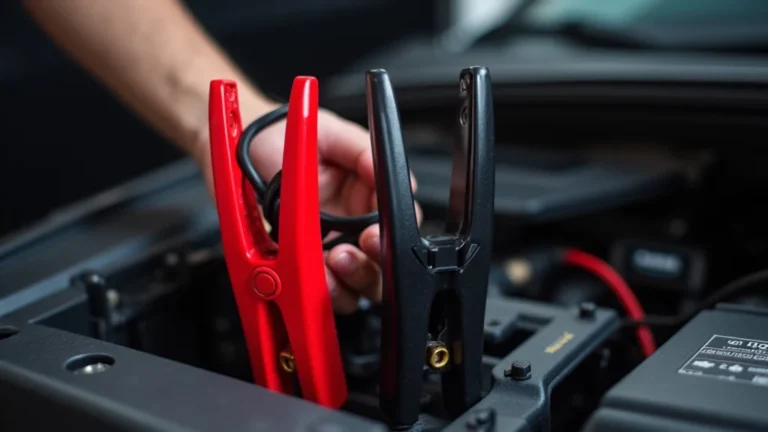
- Output Cables: Jump starters have heavy-duty cables with clamps. These clamps connect to the terminals of your car battery. These cables are designed to handle the high current that is delivered during a jump start.
- Safety Features: Modern jump starters include safety features such as reverse polarity protection. This feature prevents damage to the jump starter and your car if the clamps are connected incorrectly.
- Start Mechanism: When you activate the jump starter, it releases stored energy to the car’s electrical system, specifically the starter motor, which then cranks the engine.
Types of Jump Starters
Jump starters are available in different designs and with various features. The best one for you will depend on the vehicles you own and your usage needs. Some jump starters are small and lightweight, good for everyday use. Others are larger and have extra features, like USB ports for charging devices. Knowing the types of jump starters can help you make a better choice.
- Lithium-Ion Jump Starters: These are popular because they are lightweight and compact. They hold a charge for a long time. They are easy to carry and use.
- Lead-Acid Jump Starters: These are more affordable. They are bulkier and heavier than lithium-ion models. They usually offer higher power outputs. They are a good choice for larger vehicles.
- Jump Starters with Air Compressors: Some models come with built-in air compressors. This is helpful for inflating tires. They combine two essential tools in one device.
- Jump Starters with USB Ports: Many modern jump starters have USB ports. These can charge your phones and other devices. They are very convenient, especially on the road.
Battery Charger vs Jump Starter: Which to Choose?
Deciding between a battery charger vs jump starter depends on your needs. A charger is best for regular battery maintenance. It’s a slow and safe way to restore power. A jump starter is ideal for emergencies. It gets you going quickly. Understanding the main differences between them can help you make a good decision about which to buy. Consider how often you’ll need the device and your car’s battery condition.
| Feature | Battery Charger | Jump Starter |
|---|---|---|
| Purpose | Restore and maintain battery health | Provide a quick burst of power to start an engine |
| Speed | Slow (several hours) | Fast (immediate) |
| Portability | Requires a power outlet | Portable, self-contained power source |
| Battery Health | Improves battery life | Doesn’t directly improve battery health |
Situations to Use a Battery Charger
A battery charger is perfect for various situations, not just when your car won’t start. It can be a very helpful tool, especially if you want to keep your car battery in good shape. Consider these scenarios to help you know when a charger is useful.
- Regular Maintenance: If you don’t drive your car often. A battery charger can prevent the battery from running down. This is great for cars kept in a garage.
- Battery Aging: When your battery is getting old, a charger can help maintain its performance. It can help extend the life of your battery.
- Cold Weather: Cold weather can make batteries less efficient. A charger can give your battery a boost to help it start.
- After a Dead Battery: If your battery has completely drained, a charger can help restore it. This might take several hours, but it will bring your battery back to life.
Scenarios for a Jump Starter
A jump starter is great for certain situations when you need to start your car immediately. They’re designed for emergencies. They’re super helpful when you are stuck. Learn when to use this useful tool.
- Dead Battery: If your car won’t start because the battery is dead. A jump starter provides the immediate power needed to get the engine going.
- Emergency Situations: In a roadside emergency, when you need to get your car started quickly to reach a safe place or get help.
- Outdoors or Remote Locations: If you are in a location without access to a power outlet. A jump starter provides a portable source of power.
- Quick Starts: If you need a quick start and don’t have time to wait for a charger to work. This makes a jump starter very useful.
- Scenario 1: The Weekend Driver: Imagine you only drive your car on weekends. You park it in the garage all week. You might notice that after a while, the car struggles to start. A trickle charger is a perfect solution. It connects to the battery and keeps it topped off. The next time you want to drive it, you will have no issues.
- Scenario 2: The Emergency Stop: You are driving to an important meeting. Your car suddenly won’t start. You are in a rush and need to get going right away. A jump starter solves the problem in minutes. You attach it, start your car, and drive off.
Safety Precautions and Best Practices
Both battery chargers and jump starters can be very useful. However, it is essential to follow safety measures when using these devices. Battery safety is essential to prevent injury or damage to your vehicle. Always take the necessary precautions.
Safety Tips for Battery Chargers
When using a battery charger, remember safety is first. The following points will help you use it safely and effectively. Always follow the manufacturer’s instructions. A little precaution goes a long way.
- Proper Ventilation: Charge batteries in a well-ventilated area. This is because batteries release gases while charging. Good ventilation prevents these gases from building up.
- Eye Protection: Wear safety glasses when working with batteries. Batteries contain sulfuric acid, which can damage your eyes.
- Avoid Sparks and Flames: Keep the charger away from sparks, flames, or other sources of ignition. This helps prevent the risk of a battery explosion.
- Correct Connections: Connect the charger clamps to the correct terminals on the battery. Usually, red goes to positive (+) and black to negative (-). Double-check to ensure you have the correct connection.
Safety Tips for Jump Starters
Jump starters also need to be used carefully. These precautions help you use the jump starter safely. Keep these in mind to prevent injury or damage. It’s smart to know these tips for safe use.
- Correct Polarity: Always connect the jump starter clamps to the correct terminals. Red to positive (+) and black to negative (-). Incorrect connections can cause sparks and damage.
- Spark Prevention: Attach the positive (+) clamp first, and then the negative (-) clamp. Make the final connection on a metal part of the car’s frame away from the battery.
- Protect Your Eyes: Wear safety glasses when jump-starting a car. This protects your eyes.
- Ventilation: Perform jump starts in a well-ventilated area. Hydrogen gas can be produced by a charging battery, and this can be dangerous.
Frequently Asked Questions
Question: Can I use a battery charger on any type of car battery?
Answer: Not always. You need to check your charger’s settings to ensure it supports your battery type (e.g., lead-acid, AGM, gel). Using the wrong charger or settings can damage the battery.
Question: How long does it take to charge a car battery with a charger?
Answer: It depends on the charger and the battery. A trickle charger can take up to 24 hours or longer. Standard chargers may take a few hours. Fast chargers can charge faster but may be harder on the battery.
Question: How long can a jump starter hold a charge?
Answer: This can differ based on the model. However, most modern jump starters can hold a charge for several months. Always recharge the jump starter before a trip or if you know you won’t be using the car for a while.
Question: Can a jump starter damage my car?
Answer: If used correctly, a jump starter should not damage your car. However, incorrect connections (e.g., reverse polarity) can cause problems. It is important to follow the directions when you are connecting the jump starter.
Question: Should I disconnect the battery cables before charging?
Answer: It is often not necessary to disconnect the battery cables when using a battery charger. However, some car manufacturers may recommend it. Always consult your car’s manual. Doing so will help to ensure the proper use of the charger.
Final Thoughts
Choosing between a battery charger vs jump starter really depends on your needs. A battery charger is great for routine battery care. It slowly restores the power and helps keep your battery in good shape for a long time. A jump starter is made for emergencies when your car won’t start. It gives your battery a quick boost to get you going. If you drive often and want to maintain your battery, a charger is a smart choice. If you want a quick fix for a dead battery, a jump starter is the better option. By knowing the differences and how to use each tool safely, you’ll be ready for any battery-related situation. Now you can confidently handle any car battery issues that might come your way!