Car Battery Charger Problems and Troubleshooting Guide
Having a car battery charger won’t charge can be frustrating, especially if you’re not a car expert. It’s a common issue that often confuses beginners, but don’t worry! This can happen for many reasons, but we’ll explore some straightforward solutions. This article will break down the steps to check what’s going on and provide easy fixes. Let’s get started exploring the most likely causes and solutions.
Possible Issues When the Car Battery Charger Fails
When you plug in your car battery charger and nothing happens, it’s annoying, but it’s usually not a disaster. Several things can be causing the problem, from simple connection issues to more complex internal faults. We’re going to examine these common scenarios. You’ll learn how to rule out the basic causes first before exploring more advanced troubleshooting steps. This will make it easier to diagnose the problem and get your car battery charging properly.
Power Source Problems and Connections
Sometimes, the simplest things cause problems. Before you assume the worst, check the obvious: Is the charger plugged in? Make sure the power outlet is working. It’s easy to overlook these basics, but they are often the root cause. You can try plugging another device into the outlet to see if it works. Also, inspect the charger’s power cord for any damage. Check the connections at both ends – the charger and the outlet.
- Check the Outlet: Use a different outlet to confirm it’s working. Sometimes, a tripped circuit breaker or a faulty outlet stops the charger from getting power.
- Inspect the Cord: Look for damage. Frayed or broken cords can prevent the charger from working and pose a safety risk. Replace a damaged cord immediately.
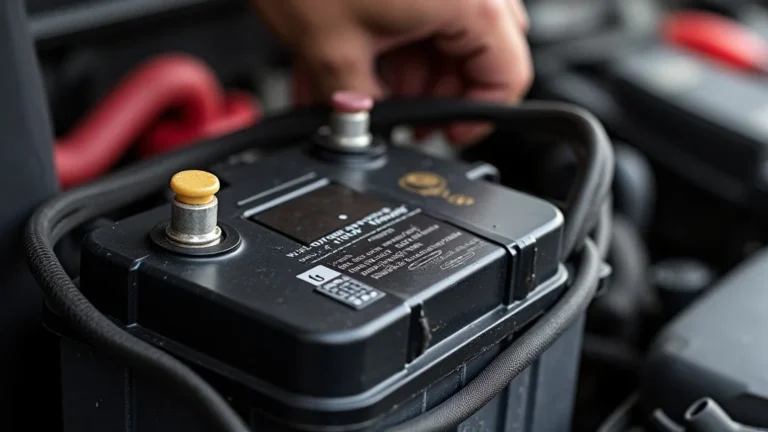
- Examine the Connection to the Battery: Make sure the clamps are securely connected to the battery terminals. Loose connections can prevent the charger from delivering power. Also, check for corrosion on the battery terminals, as this can impede the electrical flow.
- Try a Different Charger: If possible, use another charger to see if it works. This helps determine if the issue is with the charger or the battery itself.
Checking the outlet is essential, as a faulty one can prevent the charger from working correctly. Additionally, inspecting the cord ensures there are no physical damages that could disrupt power flow. A simple visual inspection can often save time and effort. Ensuring the charger clamps are properly attached to the battery terminals is another easy fix. If you can, borrowing another charger is a great way to isolate whether the issue is with your charger or the battery itself.
Battery Terminal Corrosion
Corrosion on the battery terminals acts as a barrier to electricity, preventing the charger from delivering a charge. This corrosion is usually a white or bluish substance that can build up over time. It happens due to battery acid leaking and reacting with the metal terminals. Cleaning the terminals can often resolve this problem, and it’s a simple, cost-effective solution. This process is necessary to restore proper electrical conductivity. Without proper electrical flow, the car battery charger won’t charge.
- Identify Corrosion: Look for a white or bluish substance on the battery terminals. This is a clear indicator of corrosion.
- Gather Supplies: You’ll need baking soda, water, a wire brush, gloves, and safety glasses.
- Prepare the Solution: Mix a paste of baking soda and water.
- Apply the Solution: Put the paste on the corroded terminals. Let it sit for a few minutes to react with the corrosion.
- Scrub the Terminals: Use the wire brush to remove the corrosion. Rinse with water and dry the terminals thoroughly.
- Reattach the Charger: Once the terminals are clean, reconnect the charger. See if it starts charging the battery.
Corrosion not only prevents the charger from working but also degrades the battery’s performance over time. Wearing gloves and safety glasses is a must when dealing with battery acid. The baking soda neutralizes the acid, making it safer to handle. By scrubbing off the corrosion, you’re restoring the terminals’ ability to conduct electricity. A good cleaning can often solve the problem when the car battery charger won’t charge, and extend the life of your battery.
Faulty Charger Issues
Even though we hope the car battery charger is functional, it could be faulty. Chargers, like any electronic device, can fail. These failures could be due to internal components breaking down or external factors like power surges. It is important to know how to identify these issues. The diagnostic approach involves checking the charger’s functionality. This will give you a clearer picture of whether the charger itself is the problem. Using an alternate charger is a great way to test the functionality of your battery. If a different charger does work, then the issue is with your charger.
- Check the Charger’s Indicators: Many chargers have lights or displays that indicate their status. Check these to see if they show an error or any other unusual behavior.
- Examine for Physical Damage: Look for any visible damage to the charger, such as cracks, burns, or loose parts. These can indicate internal issues.
- Test with Another Battery: If possible, try the charger on a different car battery. If it still doesn’t work, the charger might be the issue.
- Consult the Manual: Refer to the charger’s manual for troubleshooting steps. Some chargers have specific error codes or diagnostic tools.
A damaged charger can be a safety hazard, so it’s essential to identify and address any problems. Checking the indicators helps you quickly understand the charger’s status. If you suspect the charger is faulty, testing with another battery can confirm this. If you are not comfortable testing the charger, then it is important to take it to a professional. The professional can check the charger and make necessary repairs or replacements.
Battery Diagnostics and Testing
Sometimes, the issue isn’t the charger but the battery itself. A car battery can fail for several reasons. It can be old, damaged, or simply drained too low to accept a charge. Testing the battery is crucial to pinpointing the real issue. You can do this with a multimeter or, in some cases, with the charger itself. Understanding the battery’s condition helps you decide whether to replace the battery or try to revive it. If your car battery charger won’t charge, it is very important to test the battery.
Using a Multimeter
A multimeter is a handy tool for testing a car battery. It measures voltage, which indicates the battery’s charge level. It’s a great tool to determine if your battery is holding a charge. It is also an effective way to test if your battery is at its peak performance. Following the correct procedure will ensure accurate results. A multimeter will help you confirm that the battery is receiving power. This way, you know the charger is working.
- Set Up the Multimeter: Turn on the multimeter and set it to measure DC voltage (usually 20V or higher).
- Connect the Probes: Put the red probe on the positive (+) terminal of the battery and the black probe on the negative (-) terminal.
- Read the Voltage: Check the multimeter reading. A fully charged battery should read around 12.6 volts or higher. A reading below 12 volts indicates a discharged battery. If the reading is significantly lower, the battery may be severely depleted or damaged.
- Load Test (Advanced): Some multimeters have a load test function. This simulates the battery’s performance under load, like when starting the car.
A multimeter can confirm the battery’s voltage, revealing whether it’s fully charged or needs a boost. Using a multimeter is simple, but make sure to connect the probes correctly. A low voltage reading indicates a discharged battery. A battery might not accept a charge if the voltage is extremely low. Also, if the battery voltage is very low, the charger might not recognize it and fail to start charging.
Battery Health and Age
The health and age of your battery affect its ability to hold a charge. Car batteries don’t last forever, and over time, their performance declines. The average lifespan of a car battery is around three to five years, but this can vary. Factors like driving habits, climate, and maintenance can speed up this process. If your battery is old or damaged, it might not accept a charge, even with a working charger. Regular checks and knowing the age of your battery are important for battery maintenance. This knowledge can also help in diagnosing why the car battery charger won’t charge.
- Check the Battery’s Age: Find the manufacturing date stamped on the battery. This helps determine if it’s nearing the end of its lifespan.
- Look for Physical Damage: Inspect the battery for cracks, bulges, or leaks. These are signs of battery failure.
- Test the Battery’s Capacity: A battery capacity test measures how much energy the battery can store. This helps determine its overall health.
- Consider Battery Maintenance: Regularly cleaning the terminals and keeping the battery fully charged can extend its life.
Knowing the manufacturing date helps you track your battery’s age. Physical damage indicates that a battery needs to be replaced. A battery capacity test provides insights into its health. If a battery is old, it might have internal damage. These factors can prevent the battery from charging. Taking care of your car battery can help it last longer, reducing the chances of charging problems.
Deeply Discharged Batteries
A deeply discharged battery poses challenges for charging. A battery is deeply discharged when it’s drained to a very low voltage. Standard chargers might not recognize such a low voltage and fail to initiate the charging process. If your car has sat idle for a long time, the battery may discharge completely. Addressing these cases usually requires special measures, like using a charger with a boost function. This can help to wake up the battery and get it charging again. Understanding the reason why a car battery charger won’t charge due to a deeply discharged battery is important.
- Identify Deep Discharge: Use a multimeter to check the battery’s voltage. A reading below 10 volts indicates a deeply discharged battery.
- Use a Charger with a Boost Function: Some chargers have a boost or repair mode specifically designed for deeply discharged batteries. This mode sends a small current to help revive the battery.
- Try a Different Charger: If the current charger does not work, try a different charger that can handle deeply discharged batteries.
- Consider a Professional: If the battery is severely discharged or damaged, consider getting professional help. A technician can test and potentially recondition the battery.
A deeply discharged battery often requires a charger with a boost function to wake up. These chargers send a small current to the battery. Trying a different charger is another good troubleshooting step. If your battery is severely discharged, it may not be able to be recharged, so it is important to seek help from a professional.
Advanced Troubleshooting Techniques
When the car battery charger won’t charge, the simple fixes might not always work. You might need to explore more advanced techniques. These involve more detailed diagnostics and, in some cases, the use of specialized equipment. Some of these techniques require you to be a bit more familiar with car electrical systems. Exploring these techniques can help you identify more complex issues. Remember to always prioritize safety when dealing with car batteries.
Battery Sulfation
Battery sulfation is a common issue that causes a car battery charger won’t charge. Sulfation happens when sulfate crystals form on the battery plates. It happens when a battery is left in a discharged state for an extended period. These crystals create a barrier that prevents the battery from accepting a charge. You can sometimes reverse sulfation with specialized chargers or techniques. Knowing about sulfation helps in understanding why a battery might not charge and what steps to take.
- Understand the Cause: Sulfation occurs when the battery isn’t fully charged or is stored in a discharged state.
- Use a Desulfation Charger: These chargers are designed to break down the sulfate crystals. They apply a high-frequency pulse to the battery plates.
- Check for Internal Damage: Sulfation can also damage the battery. Use a battery tester to check the health of the battery.
- Consider Battery Replacement: If the sulfation is severe, it may be too late to revive the battery. In such cases, replacing the battery is the best option.
A desulfation charger is a helpful tool in dealing with sulfation. Use a battery tester to make sure that the damage from sulfation is not too severe. If the sulfation is extensive, the battery may be beyond repair. Regular maintenance and proper charging can help prevent sulfation. This will prolong the life of your battery and prevent charging problems.
Checking Fuses and Relays
Fuses and relays protect your car’s electrical system, including the charging circuit. A blown fuse or a faulty relay can interrupt the charging process, and the car battery charger won’t charge. Knowing how to locate and check these components can help diagnose charging issues. The location of these components varies depending on the car model. Consult your car’s manual to find them. Checking these items will confirm they are working properly.
- Locate the Fuses: Consult your car’s manual to find the fuse box location.
- Identify the Charging Circuit Fuse: Look for the fuse that protects the charging circuit. The manual should tell you which one it is.
- Check the Fuse: Examine the fuse for a broken wire. Use a multimeter to check the continuity of the fuse.
- Check the Relays: Locate the charging relay. You can test it using a multimeter or by swapping it with a known good relay.
A blown fuse can stop the flow of electricity to the battery. To locate the fuse, use your car’s manual. A multimeter will help you check the continuity of the fuse. Swapping the relay with a working one is an easy way to see if it is faulty. Taking these actions can identify the fuse or relay is the reason why the car battery charger won’t charge.
Testing the Alternator
Although you’re focusing on the car battery charger, the alternator’s health impacts the charging system. The alternator recharges the battery while the car is running. A faulty alternator will fail to charge the battery. If your battery is often dead and the charger isn’t working, your alternator could be the culprit. Knowing how to test the alternator ensures your car’s electrical system is working properly. The car battery charger won’t charge if the alternator fails.
- Check the Belt: Make sure the alternator belt is in good condition and properly tensioned.
- Start the Engine: Start your car and measure the voltage across the battery terminals with a multimeter.
- Normal Voltage: The voltage should be around 13.5 to 14.5 volts with the engine running.
- Test with Load: Turn on the headlights and other electrical accessories. The voltage should remain relatively steady. If the voltage drops significantly, the alternator might be failing.
The alternator belt drives the alternator, so checking this is an important first step. With the engine running, a healthy alternator should produce voltage between 13.5 and 14.5 volts. Turning on electrical accessories adds a load. A significant voltage drop with the load on can indicate an alternator issue. If the alternator is faulty, the battery won’t charge, even with a working charger.
| Issue | Possible Cause | Troubleshooting Steps |
|---|---|---|
| Charger Doesn’t Turn On | Outlet issue, cord problem | Check outlet, inspect cord, use a different outlet. |
| Corrosion | Battery terminal corrosion | Clean terminals with baking soda solution. |
| Charger Faulty | Internal charger failure | Check indicator lights, test on different battery. |
| Discharged Battery | Battery too low | Use a boost mode, try a different charger. |
| Sulfation | Crystal buildup | Use a desulfation charger or battery replacement. |
| Fuses and Relays | Blown fuse or faulty relay | Check fuses in the charging circuit. |
| Alternator | Faulty alternator | Check the alternator belt and output voltage. |
Frequently Asked Questions
Question: Why won’t my car battery charger turn on?
Answer: Check the power source, inspect the charger cord, and ensure it’s properly connected to the battery terminals. A faulty outlet or a damaged cord can prevent the charger from turning on.
Question: How do I clean battery terminals?
Answer: Mix baking soda with water to make a paste. Apply this paste to the terminals, let it react for a few minutes, then scrub off the corrosion with a wire brush. Rinse and dry thoroughly.
Question: What does it mean if my charger’s light is blinking?
Answer: Blinking lights indicate a specific issue with the charging process. Consult your charger’s manual to understand the meaning of the blinking pattern. It could signify a connection problem, a faulty battery, or a charging error.
Question: Can I charge a completely dead battery?
Answer: Yes, but it depends on the charger and the condition of the battery. A deeply discharged battery might require a charger with a boost function or a desulfation mode. Always check the battery’s voltage with a multimeter.
Question: When should I replace my car battery?
Answer: Replace your car battery if it’s over three to five years old, shows signs of damage (bulging, leaks), or consistently fails to start your car. Also, if a battery capacity test shows significantly reduced performance.
Final Thoughts
When the car battery charger won’t charge, it can be due to many reasons, from simple power issues to more complex battery problems. You can explore a variety of steps, from checking connections and cleaning terminals to using a multimeter and testing the alternator. By systematically working through these steps, you can often identify and fix the issue. Keep in mind that understanding the cause helps you choose the right solution. If you’re unsure or the problem seems too complex, it’s a great idea to seek help from a professional. Take action and explore each step, and you’ll get your battery charged again.