Car Battery Voltage Too Low Diagnosing and Fixing the Issue
Having a car battery voltage too low is a common problem, especially for new drivers or anyone unfamiliar with car maintenance. It can be frustrating when your car won’t start, and you might not know where to start looking for answers. Don’t worry, though; this happens to lots of people. We’re going to break down why this happens and give you a simple, step-by-step guide to figure out what’s going on and what you can do. Let’s explore everything you need to know about your car’s battery and how to deal with issues!
What Causes a Car Battery Voltage to Drop?
The car battery acts as the heart of your vehicle’s electrical system, providing the power needed to start the engine and operate various components. A drop in battery voltage can result from many different things. Many components rely on the battery, including headlights, the radio, and the car’s computer. The battery stores energy in the form of chemical reactions. These reactions create a flow of electrons, which is measured in volts, the voltage. When there aren’t enough volts, those systems won’t run, and you will not be able to get your car started. Battery issues can stem from simple problems, such as leaving lights on, or they can be related to more complex, internal issues with the battery or the car’s charging system.
Parasitic Drain and Its Impact
A parasitic drain is a sneaky thief of battery power. It happens when something in your car continues to draw electricity even when the engine is off. This can be caused by various factors, from a faulty interior light that stays on to a malfunctioning module that won’t shut down. The consequence is that the car battery voltage too low starts to decrease because the car’s components are slowly but surely using up the stored energy.
- Faulty Lights: A common culprit is interior lights, glove compartment lights, or trunk lights that don’t switch off when the doors or trunk are closed. These lights can drain the battery overnight.
- Aftermarket Accessories: Installing aftermarket accessories, like a new stereo system, can sometimes create a parasitic drain. If these accessories are wired incorrectly or have a fault, they might continue to draw power.
- Electrical Component Issues: Other components can also cause problems. A malfunctioning door lock actuator, the car’s computer, or even the anti-theft system can draw power unnecessarily.
- Testing for Parasitic Drain: You can test for parasitic drain using a multimeter. First, turn off all accessories, and ensure the doors are closed. Disconnect the negative battery cable. Set the multimeter to measure DC current (amps). Connect the multimeter between the negative battery terminal and the disconnected cable. If the reading is higher than normal (typically more than 50 milliamps or 0.05 amps), then a drain is present.
Imagine your car’s battery as a bucket of water. Normal usage is like pouring water out of the bucket. A parasitic drain is like a tiny hole in the bucket, constantly leaking water, until the bucket is empty. Over time, that tiny leak can completely drain the battery, leading to a no-start situation.
Battery Age and Its Consequences
Like everything else, car batteries don’t last forever. As they get older, the chemical reactions inside the battery become less efficient. This means the battery can’t hold as much charge as it used to, making it more vulnerable to dropping voltage. The materials inside the battery start to break down and corrode. This reduces the battery’s ability to store and deliver the necessary electrical power. In many instances, batteries are only good for around 3 to 5 years.
- Reduced Capacity: Older batteries have a lower capacity than new ones. They can’t store as much energy, so they discharge faster.
- Internal Resistance: Internal resistance increases with age. This means the battery struggles to deliver the needed current to start the engine, especially in cold weather.
- Sulfation: Sulfation occurs when lead sulfate crystals build up on the battery plates. This hinders the battery’s ability to receive and deliver a charge.
- Testing Battery Age: You can check the manufacturing date of the battery. There is usually a sticker or stamp that shows the month and year of manufacture.
A simple analogy is to think of a battery as a muscle. A new, healthy muscle is strong and can lift heavy weights. An older muscle is weaker and can’t lift as much. With time, the car battery loses its ability to store and deliver energy efficiently.
Cold Weather’s Impact on Battery Performance
Cold weather can be especially hard on car batteries. The chemical reactions that produce electricity slow down significantly in cold temperatures. This means the battery’s performance drops, and it can’t deliver as much power as it does in warmer weather. This can lead to a car battery voltage too low condition and make it hard, or impossible, to start your car. The battery’s internal resistance also increases in the cold, making it even more challenging to start the engine. Cold temperatures thicken the engine oil, which means the engine requires more power to crank over.
- Reduced Chemical Reaction: The chemical reactions inside a battery slow down in cold weather, which limits the battery’s ability to produce electricity.
- Increased Internal Resistance: Internal resistance goes up, making it harder for the battery to deliver the current required to start the car.
- Engine Oil: Cold weather thickens engine oil, increasing the power needed to start the engine.
- Battery Capacity: Battery capacity decreases in cold conditions. This means the battery can’t store as much energy and discharges faster.
Consider the battery a runner in a race. In warm weather, the runner moves quickly and efficiently. In cold weather, the runner is slower, stiff, and has more difficulty finishing the race. That’s the impact of cold weather on your car battery.
Checking Car Battery Voltage Too Low: Diagnostics and Tools
Diagnosing a low battery voltage requires using basic tools and following a systematic approach. Knowing how to test your battery helps you discover the issue and whether it’s the battery itself or another system. These diagnostic steps help you understand the problem before attempting a fix.
Using a Multimeter for Battery Testing
A multimeter is your best friend when investigating electrical issues in a car. It’s a versatile tool that can measure voltage, current (amps), and resistance. The multimeter helps you confirm a car battery voltage too low. It will give you the precise information you need to move forward.
- Setting Up: Set the multimeter to measure DC voltage (VDC), and select a range that’s appropriate for a car battery (typically 20 volts).
- Connecting: Connect the red probe (positive) to the positive (+) terminal of the battery and the black probe (negative) to the negative (-) terminal.
- Reading the Voltage: Read the multimeter display. A fully charged battery should show around 12.6 volts or higher. A reading below 12.4 volts indicates that the battery may need charging. Anything below 12 volts usually indicates a severely discharged battery.
- Load Test: You can perform a load test with a multimeter. Have someone start the car while you check the voltage. If the voltage drops below 9.6 volts during cranking, the battery is likely weak or has internal issues.
A multimeter is like a doctor’s stethoscope. It gives you the information needed to evaluate the health of your car’s electrical system. It helps you accurately identify if there’s an issue with the voltage.
Checking Battery Terminals and Connections
Before you jump into more complex testing, examine the battery terminals and connections. Corrosion and loose connections are common causes of starting problems. Corrosion acts as an insulator, preventing the flow of electricity, and loose connections increase resistance and reduce voltage. Taking a close look here is a simple step, but it is often the solution.
- Visual Inspection: Look at the battery terminals for corrosion (a white or green buildup). Also, look for any signs of damage or cracks. Check the battery cables for fraying or damage.
- Cleaning Terminals: Use a wire brush or a battery terminal cleaner to remove corrosion. Apply a mixture of baking soda and water to neutralize acid. Make sure to rinse the terminals with clean water after cleaning.
- Tightening Connections: Ensure the terminals are secure and firmly attached to the battery posts. Use a wrench to tighten the connections. They shouldn’t be loose.
- Using a Terminal Protector: After cleaning and tightening the connections, apply a battery terminal protector. This helps prevent future corrosion and ensures a good connection.
Battery terminals are like the pipes that carry water. If the pipes are blocked or leaking, the water (electricity) won’t flow properly. Likewise, dirty or loose terminals will stop the flow of electricity to your car’s starter motor. This prevents your car from starting.
Solutions for Car Battery Voltage Issues
If you have identified a car battery voltage too low, there are several actions you can take to resolve the issue. Your first step should be to determine the root cause, and then choose the suitable solution based on your findings. These solutions range from simple charging to more involved repairs, and it’s essential to approach each step carefully to avoid damaging your car’s electrical system.
Charging Your Battery
If the battery is simply discharged, charging is often the first step. You can charge your car battery using a battery charger. Using this method is better for your battery than simply jumping it.
- Choosing the Right Charger: Pick a charger that is appropriate for your car’s battery type (lead-acid, AGM, etc.). Many chargers have different settings for different battery types.
- Connecting the Charger: Connect the charger to the battery terminals, following the charger’s instructions. Connect the positive (+) cable from the charger to the positive (+) terminal of the battery, and then connect the negative (-) cable from the charger to the negative (-) terminal.
- Setting the Charge Rate: Choose the appropriate charge rate. A slower charge rate is better for battery health.
- Monitoring: Watch the charger and battery voltage. Many chargers have indicators to show the charging status. Once the battery is fully charged, disconnect the charger.
Charging your battery is like refilling the tank of a car. Just as a car needs fuel to run, a car battery needs a charge to provide power. It’s the most straightforward fix for a low voltage problem.
Jumping Your Car Battery
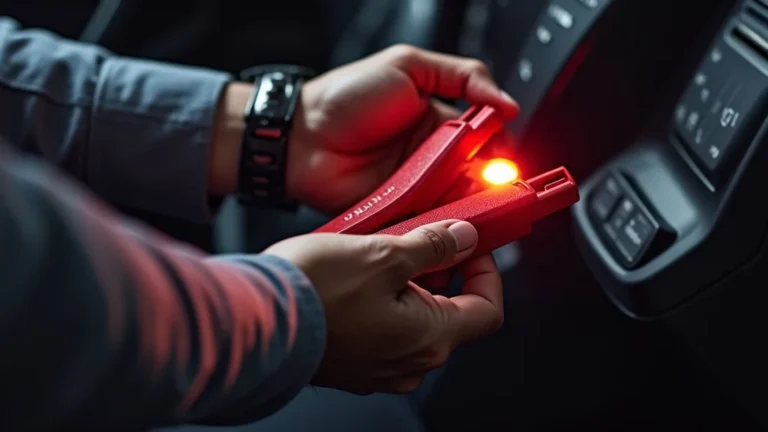
When you need to get your car running immediately, jumping the battery is a good choice. You can use jumper cables and another vehicle to provide the necessary power. Following the steps below will let you safely and successfully jump-start your car and get you back on the road.
- Gather Materials: You’ll need jumper cables and a car with a working battery.
- Position the Vehicles: Park the working car close to your car, facing the same direction. Make sure the cars are not touching.
- Connect the Cables:
- Connect the red (+) clamp to the positive (+) terminal of the dead battery.
- Connect the other red (+) clamp to the positive (+) terminal of the working battery.
- Connect the black (-) clamp to the negative (-) terminal of the working battery.
- Connect the other black (-) clamp to a grounded metal surface on your car’s frame, away from the battery.
- Start the Working Car: Start the working car and let it run for a few minutes.
- Start Your Car: Try starting your car. If it starts, let it run for about 15-30 minutes to recharge the battery.
- Disconnect the Cables: Remove the cables in the reverse order you connected them, and always start with the black cables first.
Jumping your car is like getting a temporary boost to help you get started. However, you’ll still need to recharge or replace the battery if the problem persists.
Battery Replacement and Maintenance
If the battery is old or has internal issues, it’s time to replace it. A new battery will give you peace of mind and prevent the issue from reoccurring. In addition to replacement, maintenance can help extend the life of your battery and prevent low-voltage issues.
- Selecting a New Battery: Choose a battery with the correct specifications for your car (size, cold cranking amps, etc.). Check your owner’s manual for guidance.
- Battery Installation: Remove the old battery (disconnect the negative terminal first) and install the new one. Ensure the terminals are clean and connected properly.
- Routine Checks: Have your battery and charging system tested regularly (every year or two) to ensure they are working correctly.
- Preventative Measures: Avoid leaving lights on or accessories running when the engine is off. Always secure your car, so the interior lights won’t stay on.
Battery replacement is like getting a new heart for your car. Regular maintenance is like making sure the rest of your body stays healthy. Both are vital for the vehicle to run smoothly.
Frequently Asked Questions
Question: Why does my car battery drain overnight?
Answer: Overnight battery drain is often caused by a parasitic draw, where something in the car continues to use power even when it’s off. This can be due to faulty lights, aftermarket accessories, or electrical component issues.
Question: How do I know if my car battery is bad?
Answer: If your car battery is bad, you might have trouble starting your car, the headlights might be dim, or you could see corrosion on the terminals. A multimeter can measure the battery’s voltage to confirm if it’s too low.
Question: How long should a car battery last?
Answer: A car battery typically lasts between 3 to 5 years, but this can vary depending on usage, climate, and maintenance practices. The lifespan might be shorter in extreme temperatures.
Question: Can I jump-start my car if the battery is completely dead?
Answer: Yes, you can usually jump-start your car, even if the battery is completely dead, but you might need to leave the other car running for a longer period to provide sufficient charge. A deeply discharged battery may not hold the charge for long.
Question: What should I do if my car battery keeps dying?
Answer: If your car battery keeps dying, there’s likely an underlying problem, such as a parasitic drain, a charging system issue (like a faulty alternator), or an old battery. Have a mechanic diagnose and resolve the issue.
Final Thoughts
Having a car battery voltage too low can be a frustrating situation, but hopefully, you’re now more equipped to handle it. You’ve explored the main causes, from parasitic drain to battery age and cold weather’s impact. You’ve also seen how to diagnose the problem using simple tools like a multimeter and learned about solutions, including charging, jumping your car, and potentially replacing your battery. Regularly checking your battery’s health and the charging system can help prevent many problems. Remembering these key points will go a long way in keeping your car running smoothly and preventing unexpected breakdowns.