Your Car Is Dead what happens if battery has low CCA explained
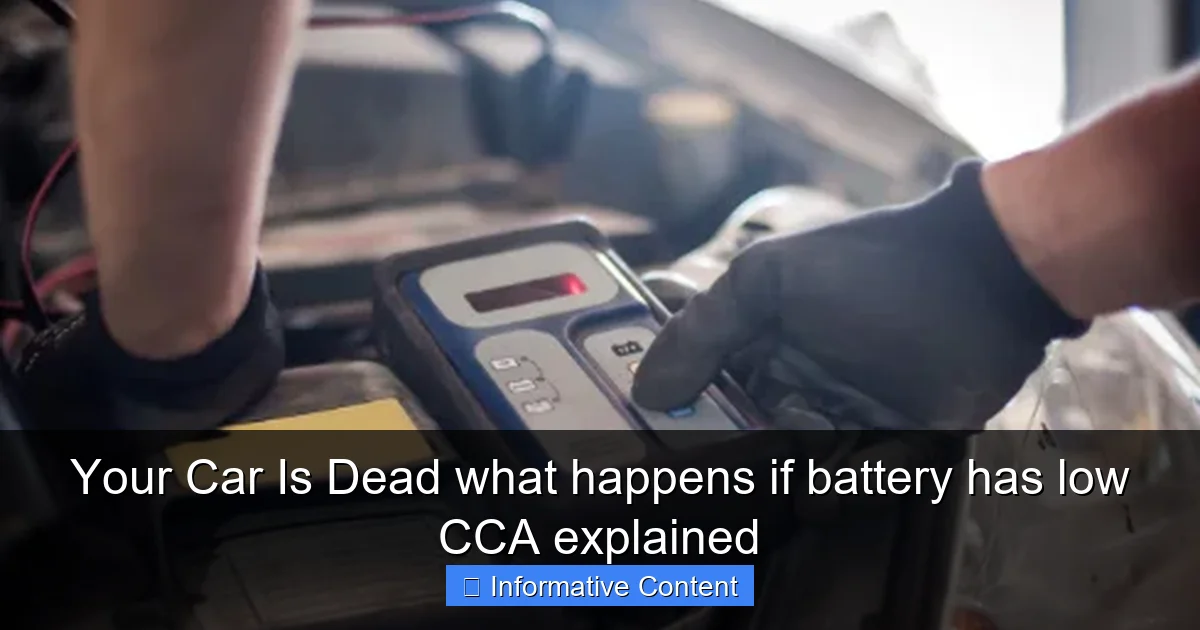
Featured image for what happens if battery has low cca
Image source: warninglights.net
If your car battery has low Cold Cranking Amps (CCA), it primarily means it lacks the robust power needed to reliably start your engine, especially in cold weather. This critical deficiency leads to slow, struggling cranks or no ignition at all, ultimately leaving your vehicle dead in its tracks. Essentially, low CCA signals a failing battery that requires prompt replacement to ensure dependable operation and avoid unexpected breakdowns.
Ever woken up on a chilly morning, keys in hand, ready to start your day, only to be greeted by a disheartening click-click-click instead of your car’s familiar rumble? It’s a feeling of instant dread, isn’t it? One moment you’re planning your commute, the next you’re stranded, wondering what went wrong. More often than not, the culprit is your car battery, and specifically, its dwindling ability to deliver what’s called Cold Cranking Amps (CCA).
You might have heard the term “CCA” thrown around when talking about car batteries, but what does it really mean for you and your vehicle? Think of CCA as your battery’s muscle, its raw power to kickstart your engine, especially when the weather isn’t cooperating. When your battery’s CCA is low, it’s like trying to lift a heavy weight with tired arms – you just don’t have the strength. This isn’t just an inconvenience; it can leave you stuck at the worst possible times.
Understanding what happens when a battery has low CCA isn’t just for mechanics; it’s crucial knowledge for every car owner. It empowers you to spot problems early, prevent breakdowns, and make informed decisions about battery maintenance and replacement. So, let’s pull back the hood and get to the bottom of this vital car component and why its CCA rating is so critical to your car’s very ability to start.
Key Takeaways
- Low CCA hinders cold starts. Your car will struggle in winter.
- Test battery CCA regularly. Prevent unexpected no-starts.
- Old batteries lose CCA. Proactively check older car batteries.
- Replace weak batteries. Avoid being stranded by low CCA.
- Understand CCA ratings. Match your battery to your climate.
- Recognize slow cranking. It signals failing battery CCA.
- CCA directly impacts starting. Especially in adverse weather.
📑 Table of Contents
What Exactly is CCA and Why Does It Matter So Much?
Let’s demystify CCA. CCA stands for Cold Cranking Amps. It’s a rating that measures a battery’s ability to start an engine in cold temperatures. Specifically, it tells you the maximum number of amperes a fully charged battery can deliver for 30 seconds at 0°F (-18°C) while maintaining a voltage of at least 7.2 volts. That’s a mouthful, right?
In simpler terms, CCA is the burst of power your battery needs to give your engine to get it turning over and running. Imagine trying to push-start a heavy car on a flat surface; it takes a lot of initial effort. Your car’s starter motor needs a similar, but electrical, jolt of energy to overcome the engine’s internal resistance and get it spinning. A high CCA rating means your battery has a strong, reliable punch, ready for that critical moment.
The Science Behind the Start
When you turn your ignition key, a massive electrical current flows from your battery to the starter motor. This motor then physically turns the engine’s crankshaft. This initial rotation gets the engine’s pistons moving, drawing in air and fuel, which then ignite to start the engine’s internal combustion cycle. It’s a quick, powerful event, and the battery provides that initial surge. Without enough CCA, this vital process simply can’t happen.
Why Temperature is the Enemy
Why “cold” cranking amps? Because cold weather makes everything harder for your car battery. As temperatures drop, the chemical reactions inside the battery slow down, reducing its ability to produce power. Think of it like trying to run through thick mud versus on dry ground – everything takes more effort. At the same time, cold also thickens your engine oil, making it much harder for the starter motor to turn the engine over. So, your battery needs to work harder just when it’s least capable. This is why a battery with sufficient CCA is paramount, especially in colder climates.
The Silent Killer: How CCA Drops Over Time
Unfortunately, batteries don’t last forever. Even the best ones will eventually lose their ability to deliver their rated CCA. This decline is often gradual, making it a “silent killer” of your car’s starting reliability. You might not notice it until it’s too late.
Aging Gracefully (or Not)
The primary reason for declining CCA is simply age. Over time, a process called sulfation occurs. Lead sulfate crystals build up on the battery’s lead plates. These crystals reduce the surface area available for the chemical reactions that generate electricity. This buildup effectively chokes the battery, reducing its capacity and, critically, its CCA output. Every charge and discharge cycle contributes to this process, slowly degrading the battery’s performance.
Habits That Hurt Your Battery
- Extreme Temperatures: While cold makes CCA problems evident, sustained high temperatures actually accelerate battery degradation. Heat speeds up the internal chemical reactions, leading to faster corrosion and sulfation.
- Deep Discharges: Letting your battery completely drain, or “die,” repeatedly is very harmful. Each deep discharge significantly reduces its overall lifespan and ability to hold a charge and deliver high CCA.
- Short Trips: If you only drive short distances, your alternator might not have enough time to fully recharge the battery after starting the car. Over time, this leads to a chronically undercharged battery, encouraging sulfation.
- Vibration: Excessive vibration can damage the internal components of a battery, loosening connections and breaking down the lead plates.
The Unmistakable Symptoms of Low CCA
When your battery’s CCA starts to dwindle, your car will often give you clear warning signs. Learning to recognize these symptoms can save you from being stranded.
The Tell-Tale Signs of a Weak Battery
- Slow Cranking: This is the most common and obvious sign. When you turn the key, the engine turns over slowly, sluggishly, or with a groaning sound. It sounds like it’s struggling to get going. This is your battery working overtime but lacking the muscle (CCA) to do its job quickly.
- Dim Headlights or Interior Lights: Before you even try to start the car, turn on your headlights. If they appear dim, or if they significantly dim when you try to crank the engine, it’s a strong indicator of low battery voltage and insufficient CCA.
- Multiple Attempts to Start: You might find yourself turning the key several times, hearing that slow crank, before the engine finally catches. This is a clear sign that your battery is on its last legs.
- Warning Lights: Sometimes, a “battery” or “check engine” light might illuminate on your dashboard, signaling a charging system issue that could stem from a weak battery.
Why It’s Worse in the Cold
As we mentioned, cold temperatures amplify all these problems. A battery that barely starts your car on a warm summer day will almost certainly fail you when the mercury drops. The reduced chemical activity in the battery combined with thicker engine oil creates a perfect storm where low CCA becomes a complete starting failure.
Testing Your Battery’s CCA: Don’t Guess, Know!
You don’t have to wait for your car to die to find out if your battery has low CCA. There are ways to proactively test its health and prevent an unexpected breakdown.
Basic Home Checks
While you can’t get an exact CCA reading at home without specialized equipment, you can do some basic checks:
- Voltmeter Test: A fully charged car battery should read around 12.6 to 12.8 volts when the engine is off. If it’s consistently lower (e.g., 12.0-12.2V), it’s undercharged or losing capacity. However, voltage alone doesn’t tell you the CCA capacity – a battery can show good voltage but still lack the amps to start.
- Load Test (informal): Turn on your headlights for a minute or two with the engine off. Then try to start the car. If it struggles more than usual, it suggests the battery’s ability to deliver current under load (its CCA) is weak.
The Professional’s Touch
The most accurate way to check your battery’s CCA is with a dedicated battery tester or a load tester at an auto parts store or mechanic’s shop. These tools apply a controlled load to the battery and measure its voltage drop and actual CCA output, comparing it to the battery’s rated CCA. Many auto parts stores offer this service for free. This test provides a definitive answer on your battery’s actual cranking power.
When to Test
- Before Winter: If you live in a cold climate, test your battery before winter hits.
- After 3-4 Years: Most car batteries last 3-5 years. Regular testing after the third year is a good habit.
- At the First Sign of Trouble: As soon as you notice slow cranking or dim lights, get it tested.
What Happens If You Ignore Low CCA? The Domino Effect
Ignoring the warning signs of low CCA can lead to more than just a missed appointment. It can create a chain reaction of problems for your vehicle and your wallet.
Beyond a Simple No-Start
- Overworked Starter Motor: If your battery consistently struggles to provide enough CCA, your starter motor has to work much harder and for longer periods to get the engine turning. This extra strain can lead to premature wear and tear on the starter, potentially requiring an expensive replacement.
- Strained Alternator: When a battery has low CCA, it’s often also chronically undercharged. This forces your alternator (which recharges the battery while you drive) to work harder and longer to try and bring the battery back to a full charge. This constant overworking can shorten the life of your alternator, another costly repair.
- Damage to Electrical Components: An unstable electrical supply from a weak battery can sometimes impact other sensitive electronic components in your car, leading to erratic behavior or even damage to modules.
Safety and Convenience Issues
The most immediate consequence, of course, is being stranded. This could happen in a deserted area, late at night, or when you’re rushing to an important event. It’s not just an inconvenience; it can be a safety concern. Furthermore, repeatedly jump-starting a dead battery can put stress on both your car’s electrical system and the vehicle providing the jump.
Keeping Your Battery Healthy: Tips to Maximize CCA Life
While no battery lasts forever, you can significantly extend its life and maintain its CCA with a few simple practices.
Proactive Maintenance Habits
- Regular Driving: Make sure you drive your car for at least 20-30 minutes a few times a week. This allows the alternator enough time to fully recharge the battery and prevent sulfation from building up.
- Clean Terminals: Periodically check your battery terminals for corrosion (a fuzzy, often bluish-white substance). Corrosion impedes electrical flow, effectively reducing the available CCA. Clean them with a wire brush and a battery terminal cleaner solution (or a baking soda paste).
- Secure Battery: Ensure your battery is securely mounted in its tray. Excessive vibration can damage the internal components and shorten its lifespan.
- Insulate in Extremes: In areas with extreme hot or cold temperatures, consider a battery blanket or insulating cover. This helps regulate the battery’s temperature, protecting it from the harsh elements.
Smart Charging Practices
- Use a Battery Maintainer: If you store your car for extended periods (weeks or months), invest in a “trickle charger” or “battery maintainer.” These devices keep your battery topped off without overcharging, preventing deep discharges and maintaining CCA.
- Avoid Deep Discharges: Try not to let your battery die completely. If you accidentally leave lights on, recharge it as soon as possible with a proper charger, not just by driving a short distance.
- Proactive Replacement: Don’t wait until your battery dies. After 3-5 years, even if it seems okay, consider having it professionally tested or proactively replacing it, especially before a major road trip or the onset of winter.
Typical CCA Ratings for Common Vehicles
To give you a rough idea, here are some typical CCA ratings you might see:
| Vehicle Type | Typical CCA Range | Notes |
|---|---|---|
| Small Economy Cars (e.g., Honda Civic, Toyota Corolla) | 350 – 500 CCA | Smaller engines require less cranking power. |
| Mid-Size Sedans (e.g., Toyota Camry, Ford Fusion) | 500 – 650 CCA | Standard requirements for average engines. |
| SUVs & Light Trucks (e.g., Ford F-150, Jeep Grand Cherokee) | 650 – 850 CCA | Larger engines, more accessories, heavier vehicles. |
| Diesel Trucks & Heavy-Duty Vehicles | 850 – 1200+ CCA | Diesel engines require significantly more power to crank, especially in cold. Often use two batteries. |
Note: These are general ranges. Always check your vehicle’s owner’s manual or current battery for the recommended CCA.
Conclusion
The humble car battery, with its seemingly complex CCA rating, plays a starring role in your vehicle’s reliability. A battery with low CCA isn’t just an inconvenience; it’s a ticking time bomb waiting to leave you stranded. From sluggish starts and dim lights to potential damage to your starter and alternator, the consequences of ignoring a weak battery are far-reaching.
But here’s the good news: you now have the knowledge to take control. By understanding what CCA is, recognizing the signs of its decline, proactively testing your battery, and adopting smart maintenance habits, you can significantly prolong its life and ensure your car starts reliably, every single time. Don’t let your car be “dead” because of a preventable CCA issue. Stay informed, stay proactive, and keep your wheels turning smoothly!
Frequently Asked Questions
Why won’t my car start even if the lights and radio work?
Your car might not start despite working accessories because the battery lacks sufficient Cold Cranking Amps (CCA). While there’s enough power for lights and the radio, it can’t deliver the high burst of current needed to turn over the engine, especially in colder conditions.
What exactly is CCA, and why is a low CCA rating a problem?
CCA stands for Cold Cranking Amps, which measures a battery’s ability to provide a burst of power for 30 seconds at 0°F (-18°C) while maintaining a minimum voltage. A low CCA rating means the battery can’t supply the intense, instantaneous electrical surge required to crank your engine, making it difficult or impossible to start your car.
What are the common symptoms of a car battery with low CCA?
The primary symptom of a car battery with low CCA is difficulty starting your engine, often resulting in slow cranking or just a rapid clicking sound from the starter. Other signs might include dimming headlights during cranking or a complete failure to start, particularly when temperatures drop.
Can I still jump-start a car with a battery that has low CCA?
Yes, you can often jump-start a car with a low CCA battery to get it running temporarily. However, this is usually a short-term solution, as the underlying problem of insufficient cranking power means the battery will likely continue to struggle and typically needs replacement soon.
Does cold weather specifically make a low CCA battery worse?
Absolutely. Cold weather significantly increases the demand on your car battery while simultaneously reducing its chemical efficiency. A battery already suffering from low CCA will find it even harder to provide the necessary power to start an engine in freezing temperatures, often leading to complete failure.
How often should I check my battery’s CCA, and what causes it to become low?
It’s a good practice to have your battery’s CCA checked annually, especially as it ages past three years. Low CCA is typically caused by normal wear and tear, internal plate corrosion, sulfation from prolonged discharge, or simply reaching the end of the battery’s lifespan, all of which reduce its ability to deliver peak current.