Should I Disconnect Car Battery For Long Storage
Featured image for should i disconnect battery for long storage
Image source: motortrend.com
Yes, for long-term storage, disconnecting your car battery is generally advisable to prevent discharge and prolong its lifespan. Modern vehicles, however, still draw minor power for onboard systems, so a smart trickle charger or battery tender offers the best solution, maintaining charge while preserving electronics. Without one, be prepared to reset your car’s settings upon reconnection.
Hey there, fellow car enthusiast, or just someone who needs to store their ride for a bit! We’ve all been there, right? Whether you’re heading off on an extended vacation, putting away a classic car for the winter, or finally tackling that project vehicle in the garage, a common question inevitably pops up: should I disconnect car battery for long storage?
It’s a seemingly simple question, but the answer isn’t always a straightforward “yes” or “no.” Modern vehicles are complex beasts, and what might have been standard practice for your grandad’s car could cause headaches for your newer model. The truth is, how you manage your car’s power source during dormancy can significantly impact its health and your wallet in the long run. Let’s dive into this crucial topic, exploring the pros, cons, and best practices for managing your car battery for long storage.
We’re going to explore why your battery might drain, what happens if you disconnect it, and some fantastic alternatives to consider. My goal is to equip you with all the knowledge you need to make an informed decision and keep your vehicle happy, even when it’s not on the road. So, grab a coffee, and let’s figure out the best approach together!
Key Takeaways
- Evaluate Storage Duration: Disconnect for months; use maintainer for weeks.
- Disconnect for Long-Term: Prevents parasitic drain and deep discharge.
- Use a Battery Maintainer: Ideal for short to medium storage; no disconnection needed.
- Consider Modern Vehicle Electronics: Disconnecting may require system resets.
- Follow Safe Disconnection Steps: Remove negative terminal first, then positive.
- Charge Battery Fully First: Essential for healthy, long-term storage.
- Alternatively Remove Battery: Store in a cool, dry place for best results.
📑 Table of Contents
- Why Your Car Battery Hates Long Storage: Understanding Self-Discharge
- The Case FOR Disconnecting Your Car Battery
- The Case AGAINST Disconnecting Your Car Battery (and Potential Downsides)
- Better Alternatives to Just Disconnecting: The Battery Maintainer
- Step-by-Step: How to Safely Disconnect and Reconnect Your Car Battery
- Making the Right Call: When to Disconnect vs. When to Maintain
Why Your Car Battery Hates Long Storage: Understanding Self-Discharge
Imagine leaving your phone turned off in a drawer for a few months. When you pick it up, it’s probably dead, right? Car batteries behave similarly, but with a few extra complexities. Understanding these factors is key to knowing if you should disconnect car battery for long storage.
The Silent Drain: What is Self-Discharge?
Even when a car battery isn’t connected to anything, it slowly loses its charge. This phenomenon is called self-discharge. It’s a natural chemical process within the battery cells. Factors like temperature (hotter temperatures accelerate self-discharge) and the battery’s age influence how quickly this happens. An older battery, for instance, will generally self-discharge faster than a brand new one. It’s an unavoidable reality that every lead-acid battery faces.
Parasitic Drains: The Modern Car’s Hidden Appetite
Beyond natural self-discharge, modern cars have a myriad of electronic systems that draw a small, continuous amount of power, even when the ignition is off. These are known as parasitic drains. Think about your car’s computer (ECU), alarm system, keyless entry receiver, radio presets, clock, and even USB charging ports. These components constantly need a tiny trickle of power to retain memory and remain operational. While individually small, over weeks or months, these parasitic draws can completely deplete a healthy battery. This is a primary reason many consider if they should disconnect car battery for long storage, especially if the vehicle isn’t going to be started at all.
The Case FOR Disconnecting Your Car Battery
There are definitely compelling reasons to consider disconnecting your car battery for long storage. It’s a traditional method that has proven effective for many vehicles over the years.
Preventing Deep Discharge and Battery Damage
A battery that completely drains (deep discharge) can suffer irreversible damage. Each time a lead-acid battery goes through a deep discharge cycle, its overall capacity and lifespan are reduced. By disconnecting it, you eliminate both self-discharge (to a degree, though it still happens) and parasitic drains, significantly reducing the risk of the battery being completely depleted. For a classic car sitting for a year, this could be the difference between a functional battery and a trip to the auto parts store.
Eliminating Parasitic Drains
This is arguably the strongest argument for disconnecting. If you have an older vehicle, a project car with unknown electrical quirks, or simply want to ensure absolutely no power is being drawn, pulling the plug is the most definitive solution. You sever the electrical connection, meaning nothing in the car can draw power from the battery. This is particularly useful if you don’t have access to an electrical outlet for a battery maintainer, or if you’re storing the car in a location where a maintainer isn’t practical.
Safety First: Reducing Fire Risk
While rare, an electrical short in a stored vehicle can pose a fire hazard. By disconnecting the battery, you essentially remove the power source for any potential short circuits, significantly mitigating this risk. This offers peace of mind, especially if you’re storing the car in a residential garage or a shared storage facility.
The Case AGAINST Disconnecting Your Car Battery (and Potential Downsides)
While disconnecting has its merits, it’s not always the best solution, especially for newer, more technologically advanced vehicles. This is where the decision on should I disconnect car battery for long storage becomes more nuanced.
Modern Car Electronics and “Amnesia”
Modern cars rely heavily on their onboard computers and electronic modules. When you disconnect the battery, these systems lose their continuous power supply, leading to what some affectionately call “amnesia.” This means the vehicle’s computer may lose learned settings for engine performance, transmission shift points, radio presets, clock settings, and even power window one-touch functions. It’s like your car suddenly forgot how to be itself.
Relearning Procedures and ECU Resets
Upon reconnection, your car’s computer might need to “relearn” various parameters. This can sometimes result in rough idling, inconsistent shifting, or even diagnostic trouble codes (DTCs) until the car drives for a while and readjusts. Some vehicles might require specific relearning procedures, which could involve driving cycles or even a visit to a mechanic with specialized diagnostic tools. For example, some high-end vehicles require specific recalibration for stability control or steering angle sensors after a power interruption.
Convenience and Security Features
Many modern cars come with features like remote keyless entry, alarm systems, and memory seats that rely on continuous power. Disconnecting the battery means losing these conveniences. You might have to manually unlock doors, reset alarm systems, and reprogram comfort settings, which can be an annoying chore, especially if you’re only storing the car for a few months and want to use it periodically.
Better Alternatives to Just Disconnecting: The Battery Maintainer
For most modern vehicles and many older ones, there’s a superior solution that offers the best of both worlds: a battery maintainer. If you’re wondering “should I disconnect car battery for long storage,” and you have access to power, this is often the answer.
What is a Battery Maintainer (Trickle Charger)?
A battery maintainer, often mistakenly called a trickle charger, is a smart device designed to keep your car battery at its optimal charge level without overcharging it. Unlike old-school trickle chargers that continuously push current, maintainers use advanced circuitry to monitor the battery’s voltage and only charge when necessary. They typically switch between charging, floating (maintaining a constant voltage), and monitoring modes.
The “Smart” Solution for Modern Vehicles
Using a battery maintainer allows your car’s electronic systems to retain their memory and settings while ensuring the battery remains fully charged. This eliminates the “amnesia” problem and the need for relearning procedures. It’s a truly “set it and forget it” solution for keeping your car battery for long storage in prime condition, ready to go when you are.
How to Choose the Right Maintainer
- Amperage: For long-term storage, a low-amperage maintainer (typically 1-3 amps) is ideal. High-amperage chargers are for quickly recharging a dead battery, not for maintenance.
- Smart Features: Look for maintainers that boast features like multi-stage charging, automatic voltage detection, and spark-proof technology.
- Weather Resistance: If you’re storing your car outdoors or in a non-climate-controlled environment, ensure the maintainer is rated for such conditions.
- Brands: Reputable brands like CTEK, Battery Tender, and Noco Genius are popular for their reliability and advanced features.
Step-by-Step: How to Safely Disconnect and Reconnect Your Car Battery
If you’ve decided that you should disconnect car battery for long storage, or you’re connecting a maintainer, doing it safely is paramount. This process applies whether you’re fully disconnecting or just connecting a maintainer to the battery terminals.
Tools You’ll Need
- Wrench (usually 10mm or 13mm, or a battery terminal wrench)
- Safety glasses
- Gloves
- Battery terminal brush (optional, for cleaning)
- Battery terminal protector spray (optional)
Disconnecting Process (Negative First!)
- Safety First: Put on your safety glasses and gloves. Ensure your car’s ignition is off and keys are out of the ignition.
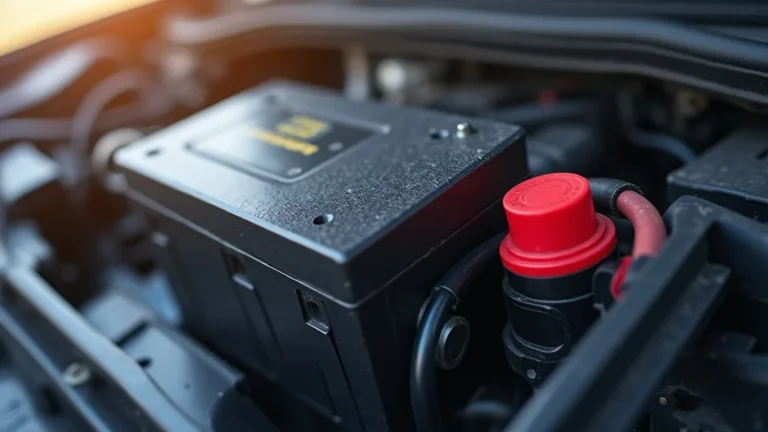
- Locate Terminals: Identify the negative terminal (usually marked with a “-” symbol and often has a black cable) and the positive terminal (marked with a “+” symbol and usually has a red cable).
- Remove Negative Cable: Loosen the nut on the negative terminal clamp with your wrench. Twist and pull the negative cable off the battery post. Ensure it doesn’t accidentally touch the battery post or any metal part of the car’s body.
- Remove Positive Cable: Now, loosen the nut on the positive terminal clamp and remove the positive cable.
Pro Tip: Wrap the disconnected terminal ends in electrical tape or place them in a plastic bag to prevent accidental contact with anything conductive.
Storage Tips for the Disconnected Battery
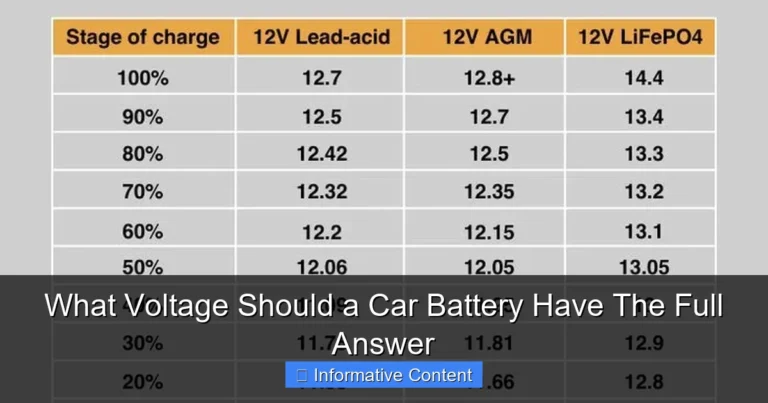
If you’re completely removing the battery, store it in a cool, dry place off the ground. A wooden palette or heavy rubber mat is ideal. Even when disconnected, a battery will still self-discharge, so check its voltage every few months and top it off with a smart charger if it drops below 12.4V.
Reconnecting Process (Positive First!)
- Clean Terminals: If there’s any corrosion, clean the battery posts and cable clamps with a wire brush.
- Connect Positive Cable: Attach the red (positive) cable to the positive terminal and tighten the nut securely.
- Connect Negative Cable: Attach the black (negative) cable to the negative terminal and tighten the nut securely.
- Check Connections: Give both cables a gentle tug to ensure they are firmly attached and won’t vibrate loose.
Important Note: Connecting the negative cable last minimizes the risk of sparks if your wrench accidentally touches a grounded part of the car while you’re working on the positive terminal.
Making the Right Call: When to Disconnect vs. When to Maintain
The decision on whether you should disconnect car battery for long storage truly depends on a few key factors. Let’s break it down:
Short-Term Storage (Less than 1 month)
For most modern cars, a month or less without starting is usually fine. Your battery should handle this period, especially if it’s relatively new and healthy. However, if your battery is older or you know your car has significant parasitic drains, a battery maintainer is always a safer bet. Disconnecting is generally unnecessary unless you have specific reasons (like working on the electrical system).
Medium-Term Storage (1-3 months)
This is where a battery maintainer really shines. It’s the ideal solution for most vehicles. It prevents deep discharge, keeps electronics happy, and ensures your car is ready to go. If a maintainer isn’t an option (e.g., no power outlet), then disconnecting the battery becomes a much more sensible choice to prevent damage. Remember to periodically check the disconnected battery’s charge.
Long-Term Storage (3+ months)
For extended periods, a battery maintainer is almost always the preferred method for modern cars, assuming you have power access. It’s the least disruptive to your vehicle’s electronics and ensures maximum battery longevity. If a maintainer is absolutely not an option, then fully disconnecting the battery and storing it properly (and periodically recharging it) is the next best course of action. This applies especially to classic cars where complex electronics are less of a concern.
Considerations:
- Age of Your Car: Older cars (pre-1990s) with fewer electronics are better candidates for simple disconnection. Newer cars benefit greatly from a maintainer.
- Access to Power: This is a big one. No power, no maintainer.
- Battery Age: An older battery is more susceptible to discharge and damage, making proactive maintenance (disconnecting or maintaining) even more critical.
So, should I disconnect car battery for long storage? The answer, as you’ve seen, isn’t one-size-fits-all. It really boils down to your specific situation.
For most people with modern cars and access to an electrical outlet, investing in a good quality battery maintainer is the simplest and most effective way to ensure your vehicle starts reliably whenever you need it. It protects your battery, preserves your car’s electronic memory, and saves you potential headaches down the line.
If a maintainer isn’t feasible, then safely disconnecting the battery is a perfectly valid alternative, especially for older vehicles or truly long-term storage where minor electronic resets aren’t a concern. Whichever path you choose, remember that proactive battery care is always better than dealing with a dead battery and potential damage. Happy storing!
Frequently Asked Questions
Why should I disconnect my car battery for long storage?
Disconnecting your car battery prevents parasitic drain, which is the small but constant draw of power from your vehicle’s electronics even when it’s turned off. This ensures your battery retains its charge, preventing it from going completely flat and extending its overall lifespan during extended periods of inactivity.
How long is considered “long storage” that would require disconnecting the battery?
Generally, “long storage” refers to any period exceeding a few weeks to a month. If you plan to store your vehicle for more than 3-4 weeks, especially in colder climates, it’s highly recommended to disconnect the battery to prevent complete discharge.
What are the potential consequences if I don’t disconnect the battery during long storage?
If you don’t disconnect the battery, the constant parasitic draws will gradually drain its charge over time. This will almost certainly result in a completely dead battery that won’t start your car, and prolonged deep discharge can also permanently reduce the battery’s capacity and lifespan.
Is there a safe way to disconnect my car battery, or should I get professional help?
You can safely disconnect your car battery yourself by following a specific procedure: always disconnect the negative (black) terminal first, then the positive (red) terminal. When reconnecting, attach the positive terminal first, then the negative, ensuring you wear protective gloves and eyewear.
Are there any alternatives to disconnecting the battery for long-term car storage?
Yes, a battery tender or trickle charger is an excellent alternative for long-term car storage. These devices connect to your battery and provide a slow, consistent charge to maintain its voltage and prevent drainage, eliminating the need to physically disconnect it.
Will disconnecting my car battery affect my vehicle’s electronics or settings?
Yes, disconnecting the battery will typically reset certain electronic settings in your vehicle. This often includes radio presets, the clock, and potentially some learned engine parameters, which your car will relearn after a short drive once reconnected.