Stop the drain how to find what is draining car battery
Featured image for how to find what is draining car battery
Image source: cdn.autoguru.com.au
Stop frustrating car battery drains by systematically identifying parasitic draws. Begin by ensuring your battery and terminals are healthy, then utilize a multimeter to measure current flow when the car is off. By methodically pulling fuses while monitoring the draw, you can pinpoint the specific circuit or component responsible for silently killing your battery, allowing you to fix the culprit and prevent future dead batteries.
Stop the drain how to find what is draining car battery
Picture this: It’s a beautiful morning, you’re ready to start your day, coffee in hand, keys jingling. You hop into your car, turn the key, and… nothing. Just a sad click, or perhaps complete silence. Your car battery is dead again. You know that sinking feeling, right? It’s frustrating, inconvenient, and often leaves you wondering: “What on earth is draining car battery?”
You’re not alone. This is a common automotive headache, often caused by something called a “parasitic drain.” Simply put, it means some electrical component in your car is drawing power even when the car is completely switched off. It’s like a tiny, invisible thief slowly siphoning energy from your battery while you sleep, leaving it completely depleted by morning. But don’t worry, finding the culprit is often a puzzle you can solve yourself, and I’m here to guide you through it.
Let’s roll up our sleeves and become car detectives. We’ll walk through the process step-by-step, just like a friend explaining how to tackle a problem. We’ll uncover the mystery of what is draining car battery and get you back on the road with confidence. No more unexpected dead batteries!
Key Takeaways
- Confirm Battery Health: Verify terminal connections and test the battery itself.
- Perform Parasitic Draw Test: Use a multimeter to measure vehicle’s resting current draw.
- Systematically Pull Fuses: Isolate the draining circuit by removing fuses one-by-one.
- Inspect for Aftermarket Accessories: Identify non-factory devices that might be drawing power.
- Listen for Running Components: Pinpoint active relays, fans, or lights when the car is off.
- Check for Stuck Relays: A faulty relay can keep a circuit energized, causing a drain.
- Verify Charging System: Ensure the alternator correctly charges the battery to rule it out.
📑 Table of Contents
The Frustration of a Dead Battery and What a Drain Means
Ever Woken Up to a Silent Car?
We’ve all been there. One day your car starts perfectly, the next it’s as lifeless as a brick. It makes you feel helpless, especially when you have important places to be. The first thought might be, “Is my battery old?” or “Is my alternator bad?” While those are valid questions, a surprisingly common cause for recurring dead batteries is a parasitic drain – something continuously draining car battery even when the engine is off.
Your car battery is designed to provide a burst of power to start the engine and then get recharged by the alternator while you drive. When everything is working correctly, it should hold that charge for extended periods when the car isn’t running. A healthy battery should not be completely drained overnight unless something is actively pulling power from it.
Understanding “Parasitic Drain”
So, what exactly is a “parasitic drain”? Imagine leaving a light on in your house. It slowly uses electricity, even if you’re not actively using the room. A parasitic drain in your car is similar. It refers to any electrical component that continues to draw current from the battery when the vehicle is turned off, the ignition is off, and the doors are closed. Every car has some normal, acceptable parasitic draw – things like your clock, radio memory, or alarm system typically draw a tiny amount of power. This is usually very small, often less than 50 milliamperes (mA), and won’t cause your battery to go flat quickly.
However, an excessive parasitic drain, anything significantly above that normal range, indicates a problem. This could be a faulty module, a sticky switch, or even a short circuit. Finding what is draining car battery when this happens can save you a lot of grief and money.
Gathering Your Tools for the Hunt
Before we dive into the nitty-gritty of testing, let’s make sure you have the right gear. Think of it as preparing for a friendly expedition!
Essential Equipment for Diagnosis
- Digital Multimeter: This is your best friend for this job. You’ll need one that can measure amperage (Amps or mA). Most basic multimeters will have a 10A or 20A setting, which is perfect.
- Basic Wrench Set: Specifically, a 10mm or 13mm wrench (depending on your car) to disconnect the battery terminals.
- Safety Glasses and Gloves: Always protect your eyes and hands when working with batteries.
- Pen and Paper: For jotting down readings and which fuses you’ve pulled. It’s easy to forget!
- Car Manual: Your car’s owner’s manual or a repair manual will have diagrams of your fuse boxes, which will be incredibly helpful.
Safety First, Always!
Working with car batteries and electrical systems requires a little caution. We want to find the drain, not create new problems or get hurt. So, remember:
- Always work in a well-ventilated area.
- Make sure your car is off, keys are out of the ignition, and accessories are off.
- Wear your safety glasses and gloves.
- Be careful not to short-circuit the battery terminals (touching the positive and negative terminals with a metal tool at the same time).
- When disconnecting the battery, always disconnect the negative (black) terminal first. When reconnecting, connect the positive (red) terminal first, then the negative. This prevents accidental shorts.
The Initial Checks – Simple Things First
Sometimes, the solution to what is draining car battery is surprisingly simple. Let’s eliminate the obvious culprits before we get into complex testing.
Is it Really a Drain, or Just a Bad Battery?
First things first: is your battery actually healthy? An old, weak battery might just be unable to hold a charge, making it seem like you have a drain. Most auto parts stores can perform a free battery load test, which is a great way to check its overall health. They can also test your alternator to ensure it’s properly charging the battery while the car is running. If both are fine, then an excessive parasitic drain is the likely cause of your battery woes.
Obvious Culprits to Look For
Before you even grab your multimeter, do a quick visual inspection:
- Interior Lights: Are your dome light, glove box light, or trunk light staying on when the doors are closed? Sometimes a faulty switch or latch can trick the car into thinking a door is ajar. Press the door switches manually to see if they click properly.
- Headlights/Tail Lights: Are your auto headlights stuck on? Are parking lights or fog lights accidentally left on?
- Aftermarket Accessories: Did you recently install a new stereo, dash cam, alarm system, or USB charger? Sometimes these can be wired incorrectly or have internal faults that cause a constant draw. Try disconnecting them temporarily to see if the drain stops.
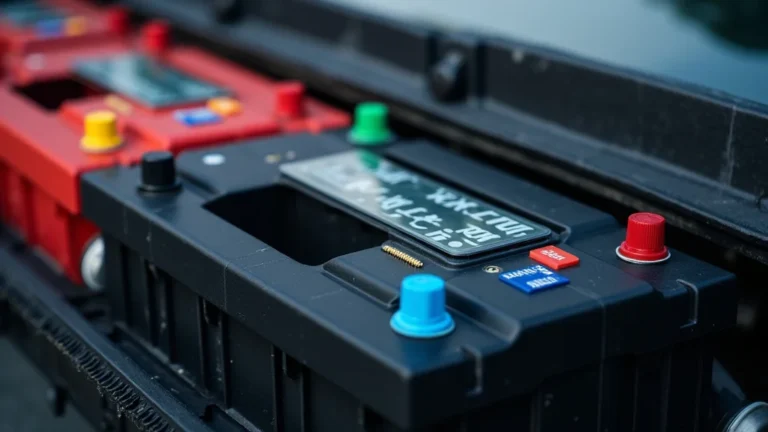
- Corroded Battery Terminals: Corroded terminals can prevent a good charge and lead to poor battery performance, mimicking a drain. Clean them thoroughly with a battery terminal brush and baking soda paste.
- Dashboard Lights/Gauges: Are any dashboard lights or gauges staying on after you turn the car off and remove the key? This indicates a module that isn’t shutting down properly.
Performing a Parasitic Draw Test (The Multimeter Method)
This is where your multimeter becomes your best friend. This method will tell you exactly how much power your car is drawing when it’s supposed to be asleep, helping you find what is draining car battery.
Setting Up Your Multimeter
Grab your multimeter and set it to measure amperage. You’ll usually see an ‘A’ for Amps, and often ‘mA’ for milliamperes. Start with the highest amperage setting, typically 10A or 20A, to avoid blowing the multimeter’s fuse if the drain is very high. Make sure the red lead is plugged into the ‘A’ or ‘mA’ jack (usually labeled 10A or 20A Fused) and the black lead into the ‘COM’ (common) jack.
The Step-by-Step Test
- Prepare the Car: Make sure the car is off, all doors are closed (or latches are tricked to simulate closure), the key is out of the ignition, and all accessories (radio, lights) are off. Wait at least 15-30 minutes for all control modules to “go to sleep.” Modern cars have many computers that stay awake for a while after the car is turned off, and you need them to sleep to get an accurate reading.
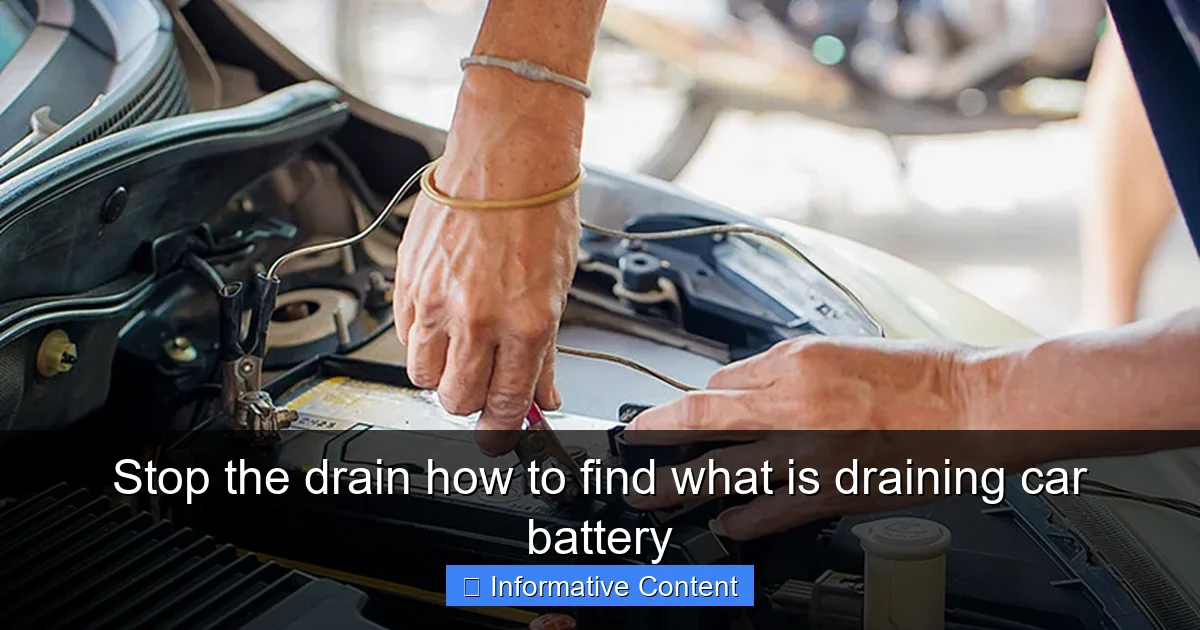
- Disconnect the Negative Terminal: Using your wrench, carefully disconnect the negative (black) battery cable from the negative battery post.
- Connect the Multimeter in Series: This is crucial. Connect the red lead of your multimeter to the negative battery cable you just removed. Connect the black lead of your multimeter to the negative battery post. The multimeter is now completing the circuit, so all the current flowing out of the battery will pass through it.
- Read the Amperage: Once everything is connected and the car has “gone to sleep,” look at your multimeter display. An acceptable parasitic draw is typically between 20-50 mA (0.020-0.050 Amps). Some luxury vehicles with more electronics might be slightly higher, up to 80 mA. If your reading is significantly higher than this (e.g., 200 mA, 1 Amp, or more), then you definitely have something draining car battery excessively.
- Adjust Multimeter Range (if needed): If your initial reading is very low (e.g., 0.005A), you might switch your multimeter to a lower mA range for a more precise reading, just be careful not to exceed the multimeter’s max mA rating, or you’ll blow its internal fuse.
The Fuse Pulling Method – Pinpointing the Problem
Now that you’ve confirmed an excessive draw, it’s time to play detective with the fuse box. This method helps you identify which specific circuit is responsible for draining car battery.
Systematically Isolating the Circuit
With your multimeter still connected and showing the high draw:
- Locate Fuse Boxes: Your car likely has multiple fuse boxes – one under the hood and possibly one or two inside the cabin (under the dashboard, side of the dash, or in the trunk). Consult your owner’s manual for their locations and fuse diagrams.
- Start Pulling Fuses: Begin by carefully pulling fuses one by one. After pulling each fuse, glance at your multimeter.
- Watch for the Drop: When you pull a fuse and the amperage reading on your multimeter drops significantly (ideally to within the acceptable 20-50 mA range), you’ve found the circuit that’s causing the parasitic drain!
- Reinsert and Document: Once you’ve identified the culprit fuse, reinsert it and move on. This method helps confirm it was indeed that circuit. Make a note of which fuse (and its number/label) caused the drop.
Common Draining Circuits to Check
While any circuit can develop a drain, some are more common culprits when it comes to draining car battery:
- Radio/Infotainment System: A faulty head unit or amplifier can stay partially on.
- Interior Lights/Switches: As mentioned before, a door switch or glove box switch that’s stuck on.
- Power Seats/Windows: Faulty switches or motors can sometimes draw power.
- Alarm System: Aftermarket or even factory alarm systems can malfunction.
- Alternator: A failing diode in the alternator can create a “back feed” and cause a significant drain. If the drain stops when you disconnect the main alternator wire, this is a strong indicator.
- Body Control Module (BCM): This central computer controls many functions. A faulty BCM can prevent other modules from shutting down.
- HVAC System: Blower motor relays or control modules can sometimes stick.
What to Do Once You’ve Found the Drain
You’ve done the hard work of pinpointing the problematic circuit. Congratulations, detective! Now, what’s next for stopping your car battery from draining?
Investigating the Culprit Circuit
Once you’ve identified the circuit, you can start looking for the specific component. For example, if it’s the “Dome Light” fuse:
- Inspect all interior lights and their switches. Is one physically stuck or constantly receiving power?
- Check door jamb switches – these tell the car if a door is open or closed. They can wear out.
- If it’s the “Radio” fuse, try disconnecting the radio unit itself to see if the drain disappears. This narrows it down to the radio versus the wiring leading to it.
For more complex circuits, you might need to consult a wiring diagram for your specific vehicle (often found in repair manuals or online). This shows you all the components connected to that fuse, helping you trace the problem.
Repair or Professional Help?
Sometimes, the fix is straightforward: replacing a faulty switch, reconnecting a loose wire, or upgrading an old accessory. However, if the drain is coming from a complex module (like a BCM or an internal alternator fault) or involves intricate wiring, it might be best to call in a professional mechanic. They have specialized diagnostic tools and expertise to tackle these trickier issues. Explain exactly what you found with your multimeter and fuse pulling – this will save them a lot of diagnostic time and save you money!
Remember, fixing the root cause of what is draining car battery is crucial. Simply jump-starting it every time or replacing the battery without addressing the drain will only lead to more frustration down the road.
Common Parasitic Draw Values & Culprits
Here’s a quick guide to understanding your multimeter readings:
| Multimeter Reading | Interpretation | Common Culprits (if high) |
|---|---|---|
| 0 – 50 mA (0.000 – 0.050 Amps) | Normal. Acceptable background draw for clock, radio memory, etc. | N/A (no excessive drain) |
| 50 – 200 mA (0.050 – 0.200 Amps) | Minor Drain. Can deplete battery over several days/weeks. | Interior lights (stuck), aftermarket alarm, faulty radio, glove box light. |
| 200 mA – 1 Amp (0.200 – 1.000 Amps) | Moderate Drain. Will deplete battery overnight or in a day or two. | Sticky relay, faulty alternator diode, convenience module, power seat module. |
| 1 Amp + (1.000 Amps +) | Severe Drain. Battery dead in hours. | Major component malfunction, short circuit, internal alternator fault, BCM failure. |
Finding what is draining car battery might seem daunting at first, but with a systematic approach and a little patience, you can often identify the problem yourself. It’s incredibly satisfying to solve a car mystery, and it equips you with valuable knowledge about your vehicle. Don’t be afraid to get your hands a little dirty, stay safe, and happy hunting!
Frequently Asked Questions
What commonly causes a car battery to drain unexpectedly?
The most common culprits for a draining car battery are parasitic electrical draws, where components like interior lights, radio, or even a faulty sensor remain active when the car is off. Other reasons include a failing alternator that isn’t recharging the battery effectively, or simply an old battery that can no longer hold a sufficient charge. Leaving lights on or having a faulty trunk latch switch can also lead to a significant drain.
How can I test my car for a parasitic drain using a multimeter?
To find what is draining your car battery, set your multimeter to measure amperes (amps) in the 10-amp or 20-amp range. Disconnect the negative battery terminal, then connect the multimeter in series between the negative battery post and the disconnected negative cable. After allowing the car’s computer systems to “sleep” (which can take 15-30 minutes), note the current draw reading to identify an abnormal parasitic drain.
What tools are essential to find what is draining my car battery?
The most crucial tool you’ll need to find what is draining your car battery is a digital multimeter capable of accurately measuring amperage (amps). You will also need basic hand tools such as a wrench or socket set to safely disconnect the battery terminals. A circuit diagram for your vehicle can also be very helpful.
What is an acceptable level of parasitic drain for a car battery?
A normal, healthy car should have a parasitic drain of no more than 50 milliamps (mA) once the vehicle has fully “gone to sleep” and all modules are powered down. Some newer cars with more electronics might allow up to 80 mA. Anything consistently above this level indicates a component is staying active and slowly draining your car battery.
Should I try to fix a draining car battery myself, or go to a mechanic?
You can certainly perform initial checks yourself, such as ensuring all lights are off, verifying the battery is fully charged, and using a multimeter to identify a parasitic draw. However, if the issue is complex or requires extensive electrical diagnostics to find what is draining your car battery, it’s often best to consult a professional mechanic. They have specialized tools and expertise to safely pinpoint and repair the problem.
What’s the first step to finding the cause of a draining car battery?
The very first step to effectively find what is draining your car battery is to fully charge the battery to rule out a low charge as the primary issue. Once charged, perform an amperage draw test using a multimeter to determine if there’s an abnormal parasitic drain while the car is off. This confirms if a component is drawing power when it shouldn’t be.